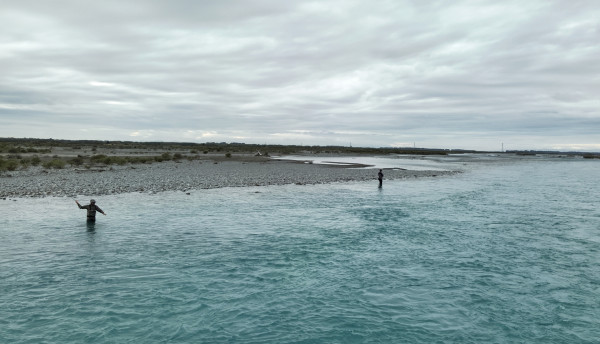
Know the Difference and the Regulations
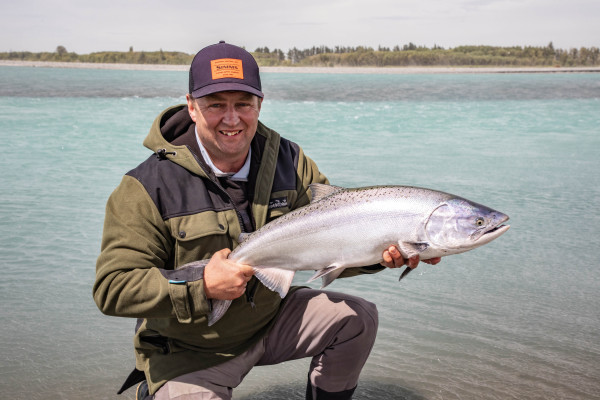
One important distinction for anglers is that sea-run salmon regulations do not apply to landlocked populations of Chinook salmon and sea-run salmon in regions other than North Canterbury and Central South Island.
- If you're fishing for salmon in a lake or canal (like Lake Coleridge, Mackenzie hydro canals, etc), you do not require a sea-run salmon licence.
- If you’re targeting sea-run salmon in rivers that are not in the North Canterbury and Central South Island regions (like the Clutha River, Paringa River, Clarence River, etc), you do not require a sea-run salmon licence.
- If you’re targeting sea-run salmon in sea-run salmon rivers in the North Canterbury and Central South Island regions (like the Waimakariri River, Rakaia River, Rangitata River, etc), you do need a sea-run salmon licence.
For clarity on where sea-run salmon regulations apply, refer to the official Sea-Run Salmon Waters list provided on the FAQs page.
New Zealand is fortunate to offer a variety of freshwater Chinook salmon fishing opportunities.
Alongside our iconic sea-run salmon, we also have thriving landlocked populations of Chinook salmon. While both are genetically the same species (Oncorhynchus tshawytscha), they differ significantly in behaviour, habitat, and life cycle due to environmental factors.
Sea-Run Chinook Salmon
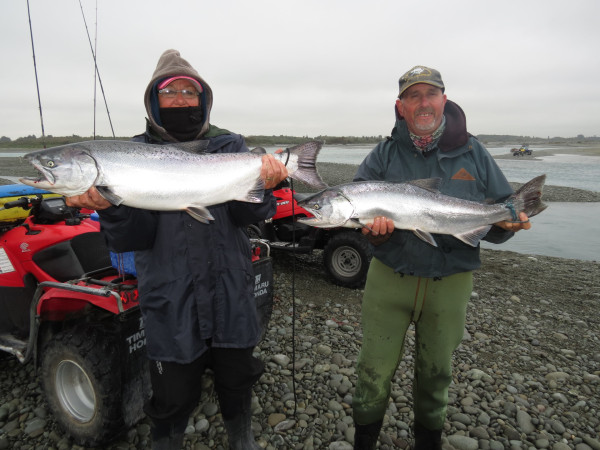
Sea-run salmon are the more well-known and iconic form of Chinook in New Zealand.
Key Characteristics:
- Migration Pattern: Born in freshwater rivers, they migrate to sea (typically the Pacific Ocean or estuarine coastal waters), then return to freshwater to spawn.
- Life Cycle Length: Usually 2–4 years.
- Size: Typically, larger than landlocked salmon, reaching as large as 20 lb in recent years, with some fish exceeding 30 lb historically.
- Location in NZ: Found predominantly in East Coast South Island rivers, from the Nelson/Marlborough region all the way to the Southland region.
- Fishing Season: Subject to regulated seasons and daily or season bag limits (season bag limits in NC and CSI). Always check local regulations before heading out.
Landlocked Chinook Salmon
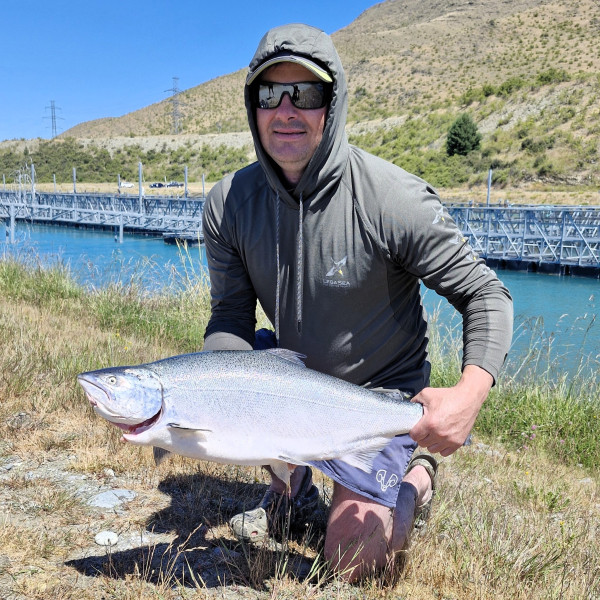
Landlocked salmon complete their entire life cycle in freshwater and never reach the ocean.
Key Characteristics:
- Migration Pattern: Spend their entire lives in lakes and connected rivers or canals, having no marine phase.
- Life Cycle Length: Typically, 2–4 years, entirely within freshwater.
- Size: Generally smaller due to more limited food sources; usually 1–3 lb. In some locations, such as the hydro canals, salmon can exceed 20lb.
- Location in NZ: Commonly found in the hydro lakes and canals of the Waitaki hydroelectric scheme (e.g. Lakes Tekapo, Pukaki, Ohau, Benmore, Aviemore, and Waitaki), as well as Lake Coleridge, Lake Wakatipu, Lake Wanaka, and other select locations.
- Fishing Season: Often open year-round, though local regulations still apply—always check the rules for your fishing area.