North Canterbury Fishing Report - 18th December 2025
- North Canterbury
- 18/12/2025
- Jackson Meecham
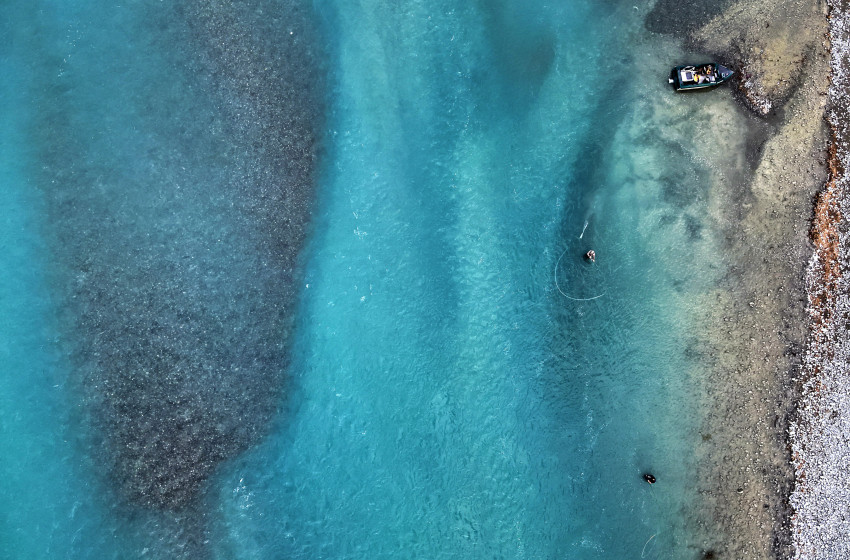
Hope For Holiday Flows
The Rakaia River has hardly caught a break so far this season, but anglers stay patiently on their toes for windows of action. (Image Above)
River flows across our large braided systems have finally begun to tell a different story.
For the first time this season, we’ve seen genuine signs of life. After months of sustained high, dirty water, river levels dropped away briefly and offered a small but critical window for anglers and for the fish themselves. While flows have lifted slightly again since, that short period of clarity was anything but insignificant. In fact, it may prove to be one of the most important moments of the season so far.
These windows are vital for braided rivers, particularly for sea‑run salmon.
For weeks, fish have been stacking up near river mouths, waiting patiently for that signal of clean, cooler water that tells them it’s time to move. When the rivers finally cleared, they didn’t hesitate.
That urgency was made abundantly clear at Birdlings Flat, where a notable number of anglers were successfully surf casting salmon, something long-time staff member and field officer Steve Terry says he has never seen or even heard of throughout his many years involved in the management of sea‑run salmon. It’s a remarkable sight, and a powerful indicator of just how ready these fish are to run.
Once the rivers cleared, we also saw confirmation upstream, with a sea-run salmon landed in one of our rivers during that brief opportunity. The message is simple and unmistakable: opportunities for salmon to move this season have been limited, and when a window opens, the fish will be primed and moving with purpose.

Kiwi angler Hans hooks up with an excellent brown trout last Friday in some sunny weather.
For anglers, this means readiness is everything.
Have your salmon gear organised, your spey rod rigged, your zed spinners sharp, and your plans flexible. When flows drop and the water clears, even for a short time, you need to be able to act. Those who give themselves the best chance of capitalising on these fleeting moments will enjoy far greater success than those caught unprepared, watching the window close.
It’s also worth remembering that salmon fishing on braided rivers is not confined to the mouths or lower reaches. Often, fish are intent on rocketing through these sections as quickly as possible. Taking the time to scout alternative holding water, such as resting holes, deeper runs, or softer edges further upstream, can pay real dividends when the main channels appear quiet.
Of course, these impressive braided rivers offer far more than just salmon. They also provide outstanding trout fishing for both brown and rainbow trout, particularly for anglers willing to put in the effort. Due to the sheer scale and dynamic nature of these systems, fish are rarely spread evenly. Instead, they tend to concentrate in specific areas that offer shelter and food.
When targeting trout, focus on structure.
Grassy banks, large boulders, overhanging vegetation, and confluences where smaller rivers or streams enter the main channel are prime locations. Trout are opportunistic and energy‑conscious; they position themselves where food comes easily and effort is minimal.
Larger, dominant fish are often found at the heads of pools, commanding the best feeding lanes. However, don’t make the mistake of lifting too early. Keep your flies or lures working well past the pool heads, as powerful, hard-fighting fish frequently hold further back than expected.
In a season that has so far been defined by patience and persistence, the braided rivers are finally offering glimpses of what they are capable of. Stay alert, stay ready, and make the most of every opportunity because in these systems, even the smallest window can deliver unforgettable fishing.
Upcoming Creel Survey Project

Look out for this boat this season as staff and honorary rangers onboard will be checking licences and completing creel surveys with all anglers.
This season, we’ve launched a creel survey project across several of our high-country lakes. The aim is to better understand the experiences of anglers visiting these iconic waters.
What is a Creel Survey?
A creel survey is a brief interview carried out while anglers are fishing. We ask a few quick questions and, where relevant, measure and weigh any harvested fish. This information helps us assess the condition of fish populations and how these lakes are used throughout the season.
The data collected will play an important role in future regulation decisions. A big thank-you to all the anglers who have participated so far—we look forward to sharing the report with licence holders in the coming months.
Don't Miss An Update Make Sure Your Following Us In All The Right Places!


Summer is here, and with it comes the busy season on our lakes and rivers.
Across Waitaha Canterbury, the Check, Clean, Dry programme is working hard to protect our waterways from invasive freshwater pests like hornwort and lagarosiphon. These pests can easily travel on your wet gear, boat, or even the soles of your shoes, turning up in your favourite lake or river and ruining the places you love to fish, swim, or paddle.
The solution is simple: before you move between rivers and lakes, always check your gear for debris, clean it thoroughly, and dry it completely. It’s a small step that makes a big difference.
To help spread the word, we’ve welcomed two freshwater advocates to the region this summer. You’ll see them at popular spots around Lake Takapō and other Waitaha Canterbury waterways, chatting with visitors and locals, answering questions, and showing just how easy it is to follow the Check, Clean, Dry steps.
Why does this matter?
Once invasive species take hold, they’re almost impossible to remove. They can smother riverbeds, disrupt food chains, and impact tourism and local economies. Prevention is our best defence, and it starts with each of us. By taking a few minutes to check, clean, and dry your gear every time, you’re helping to protect the unique beauty and biodiversity of our lakes and rivers. Together, we can keep Takapō and the wider region pristine for all who love it.
Holiday Period Fishing Reports
Over the holiday period this year, there is no need to worry, Fishing Reports will continue at the same however, we will be stopping video reports until the 15th of January 2025. This is to allow for staff leave and continue to provide anglers with the highest quality communications. To substitute this, we will be providing our email reports weekly during this period.
Schedule for Holiday Period
- Friday 26th December 2025 (email and website report)
- Friday 2nd January 2026 (email and website report)
- Thursday 8th January 2026 (email and website report)
- Thursday 15th January 2026 Video Reports Return (Facebook, Instagram and YouTube)
Compliance Update

Kiwi angler Hans with an excellent brown trout caught last Friday in some sunny weather.
We’re pleased to report excellent levels of compliance so far this season across North Canterbury waters.
Since 1 October 2025, our rangers have:
- Checked 360 anglers
- Covered 25 different waterways
- Encountered just one angler without a valid fishing licence
A big thank you to the vast majority of anglers who are doing the right thing. If you’re heading out, please remember to carry your licence with you and make sure it’s valid for the water and species you’re fishing.
Video Fishing Report From Last Week
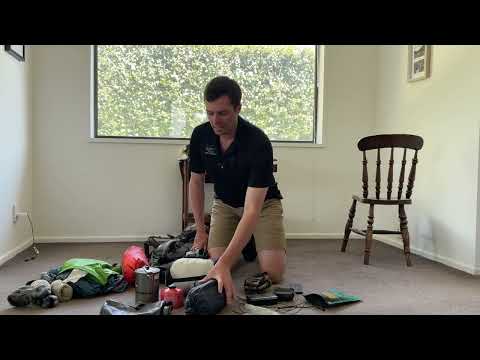
This week’s report follows on from Harry’s video last month, where he discussed what he packs for a single-day fishing trip.
In this update, he takes things a step further and shares all the additional gear he brings along for multi-day adventures. There are definitely a few valuable tips in here for anglers heading into the holiday season.
Click the image below to watch the video from last week.
Tackle Tip Of The Week
Braid vs Nylon: Which Should You Choose?
When it comes to choosing the right line for your setup, the debate between braid and nylon (monofilament) is one every angler bumps into sooner or later. Both have their strengths and weaknesses, and understanding them can make a big difference in how your gear performs on the water.

Braid – Pros
- Zero Stretch: Exceptional sensitivity means you feel every bump, tap, and touch—perfect for soft-baiting, jigging, or lure fishing where detecting subtle strikes is key.
- Thin Diameter: You can fit more line on a spool, and it cuts through the water better, giving longer casts and better lure control.
- Durability: High abrasion resistance and long life span—braid can last for years if looked after.
Braid – Cons
- Price: Generally more expensive than nylon, especially quality brands.
- Visibility: Highly visible in clear water, often requiring a fluorocarbon leader to avoid spooking fish.
- Wind Knots: Without good technique or proper spool tension, it’s more prone to tangles and wind knots.
- Low Shock Absorption: With no stretch, sudden hits or aggressive hook-sets can lead to pulled hooks if you're not careful.

Nylon (Monofilament) – Pros
- Stretch: Built-in shock absorption is forgiving on both you and the fish—great for trolling and bait fishing.
- Low Visibility: Naturally less visible underwater, which can be an advantage in clear rivers, lakes, and estuaries.
- Cost-Effective: Cheaper to buy and easy to replace regularly.
- User-Friendly: Less prone to wind knots and easier to manage for beginners.
Nylon (Monofilament) – Cons
- Memory: It can develop coils on the spool, affecting casting and presentation.
- Thicker Diameter: More drag in the water and reduced casting distance compared to braid.
- Shorter Lifespan: Sunlight and abrasion break it down faster — needs to be replaced more often.
- Less Sensitivity: The stretch that makes it forgiving also dulls those subtle bites.
Which Should You Choose?
It really comes down to your fishing style:
- Lure or soft-bait fishing: Braid with a fluorocarbon leader is hard to beat.
- Trolling or bait fishing: Nylon offers reliability and forgiveness.
- High-country lakes or clear rivers: Nylon or a long fluoro leader on braid helps avoid spooking wary trout.
Both lines have a place in your tackle kit. Understanding when to use each one—and why—will improve your hookup rates and make your time on the water far more enjoyable.
Community Corner
Stories this week!
FISHING LAKE GRASMERE
By John Kent
We were 14 years of age at Easter 1950 when my good friend Jim and I loaded our bikes onto the 'perishable' train from Christchurch to Springfield.
After spending the night with friends, we ground our way up Porters Pass, mostly on foot, as the road was steep, rough, and unsealed. A neighbour had made saddlebags for my bike, which straddled the carrier behind my seat. If I had too much gear, the front wheel would lift off the ground. Naturally, my aim was to catch a trout, as I had been addicted to trout fishing from an early age, fishing the Avon and its tributaries in Christchurch. I had previously been to this lake and watched an angler land a magnificent 4 kg rainbow on a dry fly. Our bikes were heavy, with only three gears, and mine had been inherited from my grandfather. My mother called it "the galloping bedstead". After a long and tiring ride through the mountains, we reached the lake and erected our small, fragile pup tent under a group of poplar trees on the lakeshore.
That night, we froze under just a couple of blankets on a groundsheet, and the fog didn’t lift until 10 a.m. In the afternoon, a steady nor’wester developed, so I took my homemade bamboo rod around the lakeshore until the wind was behind me.
Each year, I cut my rod from Bamboo Island in the middle of the Avon River. I then bound on handmade copper wire rod rings with black sticky insulation tape. An ancient wooden Nottingham reel was attached in a similar manner and held 50 m of light cuttyhunk line with a catgut trace. Inevitably, my rod ended the season attached to tomato plant in my father’s garden.
I finally managed to get my Black Gnat dry fly away from the shore with a bow-and-arrow cast, then let the wind take it out further until it was over the drop-off.
I sat hidden behind a tussock and kept watching the fly. After ten minutes or so, I was horrified to see an enormous brown trout cruising towards my Black Gnat. It was twice the size of anything I had seen in the Avon.
Just before the leviathan took my fly, I hurriedly lifted it off the water and fell back into the tussocks with a racing pulse. If that fish had taken my fly, it might well have taken all my carefully made gear. The confused trout cruised around in a circle and then swam off to deeper water.
On the long bike ride home, I spent a lot of time working out how I could get better gear.
Spring Floods, Summer Promise
By Hannah Clement

Hannah with a cracker brown caught on opening day this season, she walked some km’s and covered some water and was rewarded with excellent trout.
We all saw the floods come and go this season, and although it was no surprise, the October opening arrived with rain.
Unfortunately, it just kept coming, and coming, and coming. This left many of our rivers totally unfishable and a lot of us feeling uneasy about the scale of the flood events we were experiencing.
That being said, I personally have had one of the best October and November periods I have had in many years. Due to the crazy, unstable weather, I was pushed to fish further afield and explore new waters that had been on my list for a long while. Often reaching outside of my region, I put in the time on the maps, drove the kilometres, and made the long walks to reach rivers that were running clear and, in some places, low. This led to finding happy fish, undisturbed water, and a bent rod. This opening had me fishing streamers a lot more, and I really loved working on how to present them better and more effectively. It is still a super visual way to fish and incredibly addictive, watching trout switch from nymphing to full predator mode as they charge down their prey.
Now, as we try to put the nor’wester weather pattern behind us and focus on more stable systems, I find myself looking for water that will hold early cicada action and consistent flows.
As fishers, we can be pretty finicky sometimes. It is always too much rain or not enough, too sunny or too shady, too warm or too cold. I often remind myself that conditions cannot always be perfect and that I need to make the most of the time I have on the river I have chosen for the day. Sometimes I fail, sometimes I succeed, but every day I learn more, and that is what is important. It is also an incredible mental recharge for me. Being out on the river allows me to completely forget about everyday life and be totally present while enjoying my time outdoors. It is invaluable to me personally, and I am sure many anglers can relate.

Hannah went out with the family for a wee scouting mission, which resulted in Skye netting and releasing this beast of a brownie that Hannah caught. So special to see her forming a love for fly fishing and the outdoors!
December has always been a great month to fish.
It is often warmer, and the longer days help extend time on the water. Cicadas start coming to the ground, and hearing them becomes more common. My leaders also start getting longer at this stage. I am normally three to five winds in on the reel, with the fly attached to the hook keeper on the rod, typically around 20 feet. Rivers begin to settle into that gin-clear phase, and presentation becomes critical. Fly selection becomes more refined, and in some places, certain bugs make their annual appearance, such as the Christmas beetle. I have had a wicked couple of weeks fishing that pattern and have really enjoyed setting it up for ambushing trout that willingly come to it, usually in still backwaters or large, deep pools where trout are searching the surface.
I also really look forward to spending time on the water when I am not busy guiding in a more relaxed way, with the kids in tow.
Teaching them how to fly fish and easing them into a sport and hobby that means a lot to me is something special. It is a fine balance between keeping them interested and not overwhelming them. Lots of snacks, actually hooking fish, or even just seeing them, seems to keep them engaged and involved. While the end of December does get busier on the water with school holidays and work breaks, there is still plenty of water out there to explore and share. I encourage anglers who meet on the water to have a chat and figure out each other’s plans. At the end of the day, we are all there for the same reason: to have a fish and enjoy the day. There is no reason it cannot be shared together.
Notice Board
News
Interested in Becoming an Honorary Ranger?

North Canterbury Fish & Game is hosting an Honorary Ranger Information Evening on the 29th of January 2026.
This is a great chance to learn what the role involves and how our volunteer rangers help protect our freshwater fisheries and game bird resources, while also supporting and promoting angling and hunting across the region.
You’ll get an overview of the recruitment and training process, hear about the challenges and satisfaction that come with the role, and have the opportunity to ask questions.
If you’ve ever wondered whether becoming an Honorary Ranger is right for you, come along and find out.
Date: 29 January 2026
Time: 6:30 pm - 7:30 pm
Space is limited. Please RSVP your interest to cryder@fishandgame.org.nz
North Canterbury Fish & Game – Office Holiday Hours
Our office, located at 595 Johns Road, will close at 4:30 pm on Tuesday, 23 December 2025 and will reopen on Monday, 5 January 2026 at 9.00 am.
Over this period, the office phone and North Canterbury email inbox will not be monitored.
Contacts over the festive season
For any general enquiries other than licencing contact Matt Garrick, via email at mgarrick@fishandgame.org.nz
Should you have a licensing enquiry, contact Eyede on 0800 542 362 between 8.30 am and 5.00 pm.
Note: the contacts above will not be available on 25–26 December 2025 and 1–2 January 2026.
Fishing Reports will continue over this period however, the video reports stop until the 15th January 2025. Weekly email updates will continue.
To report pollution incidents or damage to waterways, please contact Environment Canterbury’s 24-hour Pollution Hotline on 0800 76 55 88.
Tight Line and Hot Barrels for the festive season from Councillors, staff, and honorary rangers of North Canterbury Fish & Game.
Controlled Fishery on the North and South Branches of the Upper Hurunui River Enters Second Season of Trial
Many anglers would be aware that both the sections of the North and South branches of the Upper Hurunui River are under a Trial Controlled Fishery for a two-season trial. The beginning of last season saw some early challenges with the booking software; however, we expect the system will operate as it did at the conclusion of last season.
For information or to make a booking, please click here.
Environment Canterbury Stopbank Spraying Operations
Notice directly from Environment Canterbury
Environment Canterbury is about to commence our ground-based spraying operations for the 25/26 spray season.
The extent of these operations is our stopbank network, selected berms, fairway sites and access tracks on the Waikirikiri Selwyn, Rakaia, Hakatere Ashburton and Hekeao Hinds rivers (see attached maps below for the North Canterbury Region).

Above: Waikirikiri Selwyn (works shown in red)

Above: Rakaia River (works shown in red)
This work is undertaken annually and involves the ground-based application of approved herbicides using either a knapsack or truck-mounted pressurised spray unit.
The spraying targets noxious weeds such as gorse, broom and willow, as unmanaged growth can compromise the integrity of the stopbank network and river systems.
Spraying operations will be completed in accordance with our permitted activity rules under the Canterbury Land and Water Regional Plan, or where required in accordance with our spray consent CRC222040.
Spray operations will commence in November and will continue through the summer period. It is hard to provide a precise estimate of when the spraying work will commence and for how long, as it is highly dependent on weather conditions and the growth of weeds throughout the year.
Please contact Environment Canterbury with any questions: 0800 324 636
Environment Canterbury Rakaia River Planned Works
Notice directly from Environment Canterbury
Due to recent high flow events in the Rakaia River, we have had some new erosion of flood protection vegetation occur downstream of SH1 on the South bank of the Rakaia and on the South Bank of Rakaia Island.


We are planning to undertake some slotted tree protection works at the site below SH1 and open up a high-flow braid upstream to help take pressure off the site.
The site on Rakaia Island will need 1 additional slotted tree, backfill and recover existing works. We have decided that a full diversion of the river braid at this site would be more disruptive to the site and down river habitats than undertaking some of the work in the water with a small gravel bund at the top of the site to reduce the flow rate through the site. The works will be timed to align with lower flows to reduce the amount of sediment being deposited in the waterway during works. We want to undertake these works as soon as possible to stop further trees from eroding and entering the river fairway.


Please contact Environment Canterbury with any questions: 0800 324 636
Weather Outlook
Christchurch

Rakaia

Waipara

Culverden

Hanmer Springs

Arthurs Pass

Lewis Pass

River Flows
Waiau Uwha at Malings Pass: 6.795
Waiau Uwha at Marble Point: 85.03
Hurunui River at No.2 Hut: 13.942
Hurunui River at SH1 Bridge: 45.724
Ashley River at Lees Valley: 1.778
Ashley River at SH1 Bridge: 0.917
Waimakariri River at Below Otarama: 118.775
Waimakariri River at Old Highway Bridge: 110.459
Selwyn River at Whitecliffs: 1.266
Selwyn River at Coes Ford: 1.021
Halswell River at Ryans Bridge: 1.051
Harts Creek at Timber Yard Road: 1.438
Rakaia River at Fighting Hill: 275.472
To help you plan your fishing adventures, be sure to check the following resources:
- E-Can River Flows: River Flow Data
- Outdoor Access Live Cameras: Live Cameras (subscription required)
- MetService Weather Warnings: Weather Warnings
- Windy: Wind Radar
- Yr Weather Service (most accurate for High Country): Yr Website
- Canterbury Weather Updates: Webcams and Website
Stay safe out there!
Please note: This weather update is current at the time of publishing. We recommend checking the latest forecasts, river flows and road conditions before heading out.
Click the licence below to get your licence today!

Next Video Report: 15th January 2026 (Facebook, YouTube and Instagram)
Next Written Report: Friday 26th December 2025 (Email and Website)
Tight Lines,
Jackson Meecham, North Canterbury Fish & Game Officer & the whole North Canterbury Team.
Disclaimer:
The information presented in these news items is based on the context and regulations in place at the time of publication. Please note that some articles may include reference to laws and regulatory standards that have since changed. For the most current and accurate information please check our Fishing Licences & Regulations pages or our Hunting Licences & Regulations pages.