North Canterbury Fishing Report - 19th February 2026
- North Canterbury
- 19/02/2026
- Jackson Meecham
Late-Summer Lift: Rivers Showing Promise as Conditions Settle
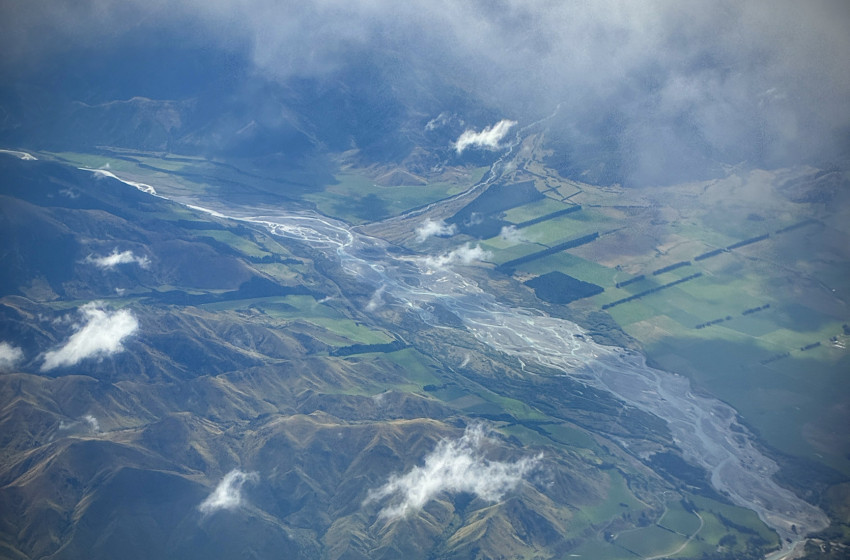
An image taken from a flight that shows the Waiau Uwha just above the Hanmer Springs bridge.
As we edge toward the back end of summer, it’s hard not to feel like the season has flown by. Technically, we’re nearing the close of those ‘longer days’, yet in true North Canterbury fashion, the best of the settled weather is only just beginning to make a consistent appearance. After a run of unsettled spells and frustrating wind, we’re finally seeing more stable conditions line up with fishable river flows, and that’s a combination anglers should be taking advantage of.
The Waimakariri is shaping up nicely at present. Flows have settled into a fishable range and clarity has improved, opening up good opportunities right throughout the system. Reports from the lower river are encouraging, with a confirmed salmon caught and released at Macintosh Rocks, which will certainly capture attention. The middle reaches have seen significant change in recent freshes, with braids shifting and some long-standing holding water disappearing. Anglers heading above the gorge will need to put in the legwork to relocate deeper channels and newly formed holes, but those prepared to explore are likely to be rewarded. Fresh structure often creates new holding water; it just takes a bit of time on the riverbank to figure it out.
The Rakaia is still showing signs of life. There have been a couple more confirmed salmon catches from the river mouth in recent days, a positive indicator as we move further into the run. Like the Waimakariri, the Rakaia’s middle reaches have undergone substantial reshaping. Gravel movement and channel shifts mean traditional spots may not be producing as they once did. Spending time reading the water, looking for defined current seams, deeper gut channels, and softer holding edges will be key. Early morning and evening tides around the mouth will continue to be prime windows, particularly if the current settled weather pattern holds.

Marc Jenson with a long brownie that had some attitude in its fight
Our lake fisheries have contended with some persistent wind this past week, but those anglers willing to work around it are still finding success. Lakes across the region are fishing steadily, particularly during calmer periods or when anglers position themselves along sheltered shorelines. Jigging and trolling continue to produce for those covering water, while fly anglers targeting structure and drop-offs are picking up fish when conditions allow for effective presentation.
Looking ahead to the weekend, rainfall totals are forecast to be lower than what we’ve experienced over the past few weeks. Provided this holds, we should see stable or gradually dropping river levels, giving anglers plenty of opportunity to get out and explore. With the rivers having shifted so dramatically through the middle sections, now is a good time to treat each outing as a learning mission as much as a fishing trip. Walk a little further, check out an extra braid or two, and take note of where the current has carved out fresh holding water.
As summer edges toward autumn, this period can often provide some of the most consistent fishing of the season. Settled weather, manageable flows, and fresh fish entering the systems all combine to create genuine opportunity. If you’ve been waiting for conditions to line up, now is the time to dust off the gear, put in the miles, and see what our North Canterbury rivers and lakes have to offer.
Don't Miss An Update Make Sure Your Following Us In All The Right Places!


Summer is here, and with it comes the busy season on our lakes and rivers.
Across Waitaha Canterbury, the Check, Clean, Dry programme is working hard to protect our waterways from invasive freshwater pests like hornwort and lagarosiphon. These pests can easily travel on your wet gear, boat, or even the soles of your shoes, turning up in your favourite lake or river and ruining the places you love to fish, swim, or paddle.
The solution is simple: before you move between rivers and lakes, always check your gear for debris, clean it thoroughly, and dry it completely. It’s a small step that makes a big difference.
To help spread the word, we’ve welcomed two freshwater advocates to the region this summer. You’ll see them at popular spots around Lake Takapō and other Waitaha Canterbury waterways, chatting with visitors and locals, answering questions, and showing just how easy it is to follow the Check, Clean, Dry steps.
Why does this matter?
Once invasive species take hold, they’re almost impossible to remove. They can smother riverbeds, disrupt food chains, and impact tourism and local economies. Prevention is our best defence, and it starts with each of us. By taking a few minutes to check, clean, and dry your gear every time, you’re helping to protect the unique beauty and biodiversity of our lakes and rivers. Together, we can keep Takapō and the wider region pristine for all who love it.
Management Closures on Hurunui River North Branch Booking System

A section of the Hurunui North Branch earlier this month.
This year, as part of our ongoing trout population monitoring programme, we are reinstating the North Branch of the Hurunui River into our annual drift dive schedule.
At this stage, we are planning to complete the dives during the second week of March, 9th March 2026 - 13th March 2026.
As much as we would love a weather wand (let us know if you know where to get one), conditions ultimately dictate when we can safely and effectively dive. To allow flexibility, we will temporarily close bookings on the system from Monday to Friday that week. Once we have assessed the weather and confirmed dive days (likely only one needed), all remaining days will be reopened for anglers to book and fish. We will keep anglers updated on the day(s) we are diving, so it will be clear what will become available on the booking system.
We’ve chosen to close the system during the dive window because we understand how hard it can be to secure a booking. The last thing we want is to impact someone’s day on the water by drifting through a pool and momentarily disturbing the fish.
And for those wondering, if you secure a booking for the day after the drift dive, rest assured the trout will be back to feeding as long as they’re hungry. From what we’ve observed over many years, fish quickly settle after we’ve floated through and normal behaviour resumes in a short period of time.

Click the image above to view the video from last years Lewis Pass Designated Waters drift dive.
Why do we drift dive?
Drift dives are an extremely valuable tool for assessing the health of a trout population over time. They allow staff to directly observe fish numbers, size classes and distribution, while also gaining insight into the density and type of food available beneath the surface. This long-term monitoring gives us a clear picture of how a fishery is performing and how environmental conditions may be influencing it.
Fish & Game New Zealand CEO Corina Jordan told The Press last year:
“Around the country Fish & Game staff dive about 100 rivers so we have an extremely robust data set which goes back about 30 years. This data is used to measure population numbers and trends but also set regulations like bag limits to ensure we are sustainably managing our fisheries. Staff also record water and ecosystem health trends which they pass on to regional councils.”
Adding the North Branch back into our annual programme is an important step in the management of this designated water and controlled fishery. Consistent monitoring ensures we are making evidence-based decisions to protect and enhance the angling experience both now and into the future.
Know the Difference!

Top Fish: Rainbow Trout
Bottom Fish: Land-Locked Chinook Salmon
Many anglers we encounter, especially on Lake Coleridge, have trouble telling their salmon and rainbow trout apart. The above image is a simple way you can look and distinguish some of the differentiating physical features.
North Branch Hurunui River Designated Waters Signage

Quick heads up for anyone heading up the North Branch Hurunui above Lake Sumner. We’ve had a few anglers let us know the Designated Waters sign is missing, so staff checked it out on a recent compliance run and can confirm it’s been taken out by the latest high flows.
We’re onto it and will get a replacement sign back in the ground as soon as able. In the meantime, it’s still on you to know where the boundary starts.
The Designated Waters and Controlled Fishery section begins 500 metres upstream of the Lake Sumner outlet. The boundary is marked on the map above, but if you’re on the river and don’t have a GPS handy, there’s an easy visual cue, the Lake Mason Track and a line of tall trees on the river’s true right sit roughly in line with where the Designated Waters begin.
Tackle Tip Of The Week: Don’t Forget the Floatant

As we move through the tail end of summer and river conditions continue to look promising around the region, it’s the perfect time to revisit one of the simplest but most overlooked items in your kit – floatant.
Whether you’re fishing the braids of the Waimakariri River or working a seam on the Rakaia River, keeping your dry fly riding high can make all the difference between a refusal and a confident take.
Floatant helps your dry flies sit naturally on the surface without becoming waterlogged. A well-presented fly drifting drag-free through a feeding lane is far more likely to be eaten than one sitting half-submerged. This is particularly important during late summer evenings when fish can become selective and cautious in lower, clearer flows.
There are a few options available:
-
Gel floatants – Great for most dry flies. Apply sparingly before you start fishing and rub it in gently.
-
Powder or desiccant floatants – Ideal for reviving a fly that’s already been slimed or waterlogged. A quick shake in the container can bring it back to life.
-
CDC-specific floatants – If you’re fishing CDC patterns, avoid standard gels and use products designed to maintain the natural properties of the feather.
Top tip: treat your flies before they hit the water, and carry a small drying patch so you can squeeze out moisture before reapplying floatant. It only takes a few seconds but can dramatically improve your drift and hook-up rate.
Sometimes it’s the smallest tweaks that make the biggest difference.
Last Weeks Video Fishing Report

Click the image above to watch last weeks video report.
This week, we’re sharing a compliance update for the season so far, and it’s a really positive one. Since 1 September 2025, Fish & Game staff and Honorary Rangers have carried out 799 licence checks across the North Canterbury region. From those checks, only six offenders were detected, committing a total of six offences. To put that into perspective, at the same point last season, there were 30 offenders responsible for 42 offences. What makes this even more encouraging is that we’ve completed more licence checks this season than we had at this time last year, so the figures genuinely reflect improved compliance across the region.
Great work anglers, keep it up.
Community Corner
Stories this week!
Picture this!
By Marc Jensen

Lake Mason
A stiff nor’wester pushing into a high country shoreline. Water so clear it feels like you’re looking through air. Beech forest leaning over a quiet bay, bronze leaves blown into a corner where the breeze has funnelled them tight against the edge. Trout cruising the margins, inspecting every single leaf. Is it a cicada? Is it worth the effort? Will the next one be yours?
That’s what I found.
But not without earning it.
This lake doesn’t give itself up easily. It demanded fitness and a willingness to trust the topo map. I was stopping often. Am I still on the right spur? Did I miss the saddle? Is this the gut I marked, or the next one over? The line I’d imagined from the ute looked very different on the ground. When I finally topped out and saw the water laid out below the tussock faces and dark beech margins, it felt like I’d stepped into somewhere properly wild.

Lake Mason Track
The first fish ate like it meant it.
It rose twice to the same cicada. I hooked it, fumbled it, and it popped off. Three seconds later the fish swung back on the same patrol line. I dropped the fly in front of it again and it smashed it. How often does that happen? It didn’t just happen once. It happened several times over the afternoon.
On one occasion I slipped a fish back, took a moment to look around with tussock glowing gold in the wind, the lake ruffled but clear along the edges and as I began winding in I spotted another cruiser. I had barely half a metre of line beyond the rod tip. I flicked the same sodden cicada, still half submerged, and it got absolutely woofed. I hadn’t even dried it.

Fish swims the edges in search of food on Lake Mason
That was the rhythm of the day. Nine fish in less than half a day. One on the nymph. One on an emerger. The rest on big cicadas that were eaten with intent. Not sipped politely. Not nudged. Hammered.
This lake sits in the shadow of famous South Island water. Just over the range are rivers anglers travel from all over the world to fish designated, controlled fisheries with reputations to match. But if those rivers are that good, what about the overlooked blue patch tucked behind them? What happens if, instead of turning right towards the well-known access point, you turn left and follow a faint line on the map?

A gate on the Lake Mason track
I wanted solitude. I found it.
Will you push through matagouri and skirt the edge of beech forest not knowing if you’ll break out onto brilliance or disappointment? Will you trust your navigation? Will you commit to the climb when your legs start questioning the plan? And when you finally stand alone on that shoreline, will a trout tip up beneath your fly and prove it was worth it?
There’s even a second lake up there I didn’t touch. I’ll be back for that one. I’ll happily grind through the hour-and-a-bit over the pass again. Why? Because sometimes the reward isn’t just the fish. It’s the effort. It’s choosing the harder option. It’s discovering that the unnamed water can rival the famous stuff.
Check the regulations. Pack properly. Study the map.
Then take a chance.
You might just find a trout that thinks every drifting beech leaf is your cicada.
We Encourage Best-Practice Catch and Release for Sea-Run Salmon

Please follow this link to the Fish & Game website for our full advice.
The catching and releasing parts are common practice, it’s the “care for the landed fish” part in between that is important to do really well to ensure a successful release. We are encouraging anglers to up their skills and use best-practice techniques for handling salmon.
Some anglers may practice catch and release as an intended conservation tool, as it may potentially allow more salmon to reach the spawning grounds. Other anglers may practice catch and release to enable them to continue to remain actively fishing for the season, as once an angler has kept their one sea-run salmon season bag limit, their season ends. There are also some legal requirements where you must release a sea-run salmon, e.g. You cannot continue to fish after having caught your season bag limit.
Best-practice catch and release techniques take knowledge and experience to perfect. When done well, it will often result in a healthy fish reaching the spawning grounds.
Poor catch and release that fails to care for the fish has a high chance of causing injury and or death; therefore, it can impact the sea-run salmon fishery. In the case that an angler fails to care for a salmon, we suggest it’s better to keep it as their one fish season bag limit.
Best Practice C&R for Sea-Run Salmon: Three Key Principles


Top Tips for the Best Practice C&R for Sea-Run Salmon Three Key Principles

Join the Great Willowherb Hunt

If you’re heading into the hills, across farmland, or exploring the backcountry tracks of Canterbury this summer, we need your keen outdoor eyes.
Great willowherb (Epilobium hirsutum) is rapidly invading our region’s wetlands and waterways, and we’re calling on all trampers, hunters, and outdoor enthusiasts to help us track it down.
Great willowherb may look pretty at first glance, with tall pink-flowering spikes that bloom through summer and autumn - but don’t let it fool you. This pest plant grows up to two metres tall, forming dense thickets that choke out native flora, block waterways, and modify the habitats that so many of our birds, invertebrates, and freshwater species rely on. Once established, it spreads aggressively along waterways, wet ground, and disturbed soils, making early detection crucial.
That’s where you come in.
Between now and 28 February, we’re encouraging anyone exploring the outdoors to help us map this invader. It’s simple:
- Spot it – Look for tall, hairy stems; lance-shaped leaves; and distinctive pink-purple flowers.
- Snap it – Take a clear photo of the plant.
- Tag the location – GPS coordinates or map pin.
- Report it – Upload your sightings to our iNaturalist project page or via reportpests.nz.
Every verified sighting you submit puts you in the draw to win a $100 Prezzie Card!
By lending your local knowledge and time in the field, you’re helping protect the ecosystems we hunt, tramp, and treasure. Let’s work together to stop great willowherb from spreading further across Canterbury.
Notice Board
News
Controlled Fishery on the North and South Branches of the Upper Hurunui River Enters Second Season of Trial
Many anglers would be aware that both the sections of the North and South branches of the Upper Hurunui River are under a Trial Controlled Fishery for a two-season trial. The beginning of last season saw some early challenges with the booking software; however, we expect the system will operate as it did at the conclusion of last season.
For information or to make a booking, please click here.
Environment Canterbury Stopbank Spraying Operations
Notice directly from Environment Canterbury
Environment Canterbury is about to commence our ground-based spraying operations for the 25/26 spray season.
The extent of these operations is our stopbank network, selected berms, fairway sites and access tracks on the Waikirikiri Selwyn, Rakaia, Hakatere Ashburton and Hekeao Hinds rivers (see attached maps below for the North Canterbury Region).

Above: Waikirikiri Selwyn (works shown in red)

Above: Rakaia River (works shown in red)
This work is undertaken annually and involves the ground-based application of approved herbicides using either a knapsack or truck-mounted pressurised spray unit.
The spraying targets noxious weeds such as gorse, broom and willow, as unmanaged growth can compromise the integrity of the stopbank network and river systems.
Spraying operations will be completed in accordance with our permitted activity rules under the Canterbury Land and Water Regional Plan, or where required in accordance with our spray consent CRC222040.
Spray operations will commence in November and will continue through the summer period. It is hard to provide a precise estimate of when the spraying work will commence and for how long, as it is highly dependent on weather conditions and the growth of weeds throughout the year.
Please contact Environment Canterbury with any questions: 0800 324 636
Please contact Environment Canterbury with any questions: 0800 324 636
Weather Outlook
Christchurch

Rakaia

Waipara

Culverden

Hanmer Springs

Arthurs Pass

Lewis Pass

River Flows
Waiau Uwha at Malings Pass: 3.204
Waiau Uwha at Marble Point: 71.51
Hurunui River at No.2 Hut: 5.86
Hurunui River at SH1 Bridge: 47.479
Ashley River at Lees Valley: 4.105
Ashley River at SH1 Bridge: 47.545
Waimakariri River at Below Otarama: 69.412
Waimakariri River at Old Highway Bridge: 72.315
Selwyn River at Whitecliffs: 3.223
Selwyn River at Coes Ford: 0.748
Halswell River at Ryans Bridge: 2.992
Harts Creek at Timber Yard Road: 2.25
Rakaia River at Fighting Hill: 123.802
To help you plan your fishing adventures, be sure to check the following resources:
- E-Can River Flows: River Flow Data
- Outdoor Access Live Cameras: Live Cameras (subscription required)
- MetService Weather Warnings: Weather Warnings
- Windy: Wind Radar
- Yr Weather Service (most accurate for High Country): Yr Website
- Canterbury Weather Updates: Webcams and Website
Stay safe out there!
Please note: This weather update is current at the time of publishing. We recommend checking the latest forecasts, river flows and road conditions before heading out.
Click the licence below to get your licence today!

Next Video Report: 26th February 2026 (Facebook, YouTube and Instagram)
Next Written Report: 5th March 2026 (Email and Website)
Tight Lines,
Jackson Meecham, North Canterbury Fish & Game Officer & the whole North Canterbury Team.
Disclaimer:
The information presented in these news items is based on the context and regulations in place at the time of publication. Please note that some articles may include reference to laws and regulatory standards that have since changed. For the most current and accurate information please check our Fishing Licences & Regulations pages or our Hunting Licences & Regulations pages.