North Canterbury Fishing Report - 22nd January 2026
- North Canterbury
- 22/01/2026
- Jackson Meecham
What Does All The Recent Rain Means For Anglers?
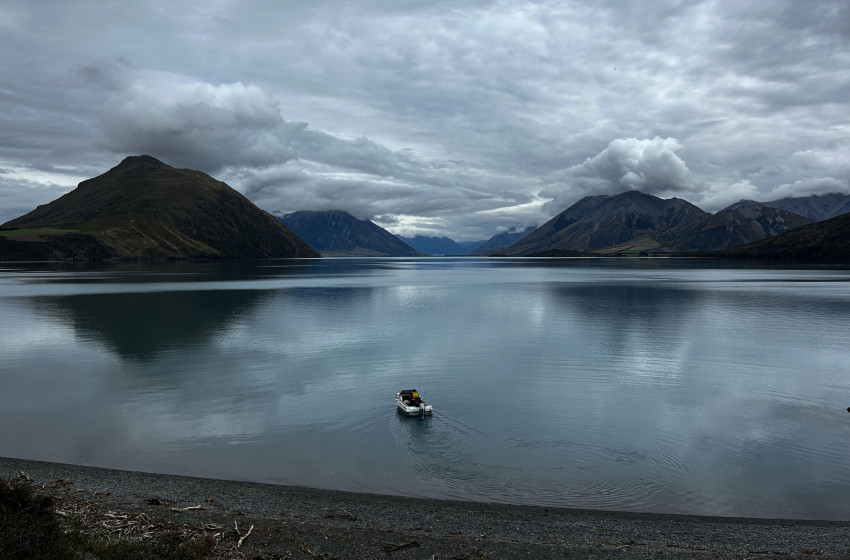
Some outstanding midweek still conditions in the North Canterbury high country. Unfortunately, these still conditions have been paired with potentially wet weather over the past week, but there is nothing a rain jacket can't fix, as we found many anglers still making the most of these calm opportunities. (Photo Above)
Over the past week, the region has received more rainfall, lifting flows in our lowland streams.
This is actually great news for both anglers and fish, as many of these waterways can become extremely low and even dry in places over the height of summer. As water levels settle and clarity improves, trout should be actively feeding and far less selective, making it a great time to present a fly or spinner with confidence.
Lakes across the region remain in excellent shape, with healthy water levels holding throughout. This allows trout to push into the flooded margins, where they can feed heavily on high-protein food sources and maintain excellent condition as the season progresses toward spawning.
On the salmon front, persistent unsettled weather has meant rivers haven’t yet had a long enough break to stabilise and become consistently fishable. As a result, it’s difficult to get a clear picture of what’s currently moving through the systems. Keep a close eye on the Outdoor Access cameras and Environment Canterbury river flow data, and when conditions finally line up, whenever that may be, be ready to get out there and start hunting down these sport fish.

A 1.2kg rainbow trout from Lake Coleridge that was destined for the smoker. The rainbow trout's belly was filled to the brim with caddis and snails.
It’s fair to say the first half of the season has been a frustrating one at times, with high, dirty rivers and strong winds limiting opportunities. To better understand changing conditions and plan trips around weather windows, we regularly use a range of forecasting tools. The following sites have proven particularly useful:
Windy and Windfinder are especially valuable for gauging wind strength in the high country, particularly when planning to use a boat on the larger lakes.
Don't Miss An Update Make Sure Your Following Us In All The Right Places!


Summer is here, and with it comes the busy season on our lakes and rivers.
Across Waitaha Canterbury, the Check, Clean, Dry programme is working hard to protect our waterways from invasive freshwater pests like hornwort and lagarosiphon. These pests can easily travel on your wet gear, boat, or even the soles of your shoes, turning up in your favourite lake or river and ruining the places you love to fish, swim, or paddle.
The solution is simple: before you move between rivers and lakes, always check your gear for debris, clean it thoroughly, and dry it completely. It’s a small step that makes a big difference.
To help spread the word, we’ve welcomed two freshwater advocates to the region this summer. You’ll see them at popular spots around Lake Takapō and other Waitaha Canterbury waterways, chatting with visitors and locals, answering questions, and showing just how easy it is to follow the Check, Clean, Dry steps.
Why does this matter?
Once invasive species take hold, they’re almost impossible to remove. They can smother riverbeds, disrupt food chains, and impact tourism and local economies. Prevention is our best defence, and it starts with each of us. By taking a few minutes to check, clean, and dry your gear every time, you’re helping to protect the unique beauty and biodiversity of our lakes and rivers. Together, we can keep Takapō and the wider region pristine for all who love it.
Introduction to Jigging for Trout and Landlocked Salmon

Young anglers Eddie, Toby and Alex (left to right) hold up a rainbow trout caught jigging on Lake Coleridge.
Jigging is a fishing method many anglers will have heard of and plenty will already use. Particularly used by saltwater anglers and anglers in the North Island where warmer surface temperatures often make it a go-to technique to get deeper down to those trout. But it’s a method that South Island anglers shouldn’t overlook.
Over recent seasons down south, we’ve seen a noticeable increase in anglers finding real success with jigging for trout and landlocked salmon. In this video, North Canterbury Fish & Game staff member Harry Graham-Samson breaks down what we’ve observed from the successful anglers and what has worked for us personally when giving it a go. We have then broken it all down into a practical, step-by-step “how-to” jigging guide.
Harry walks through the rod setup he uses, the rig he ties, and most importantly, why he ties it that way to get flies closer to the fish. He also explains how this freshwater jigging approach differs from more traditional sea jigging techniques, and how those small adjustments can be the reason you are or are not catching fish.
Whether you’re fishing in North Canterbury, elsewhere in the South Island, or anywhere, this video is designed to give you the confidence to give freshwater jigging a go and add another effective and rewarding method to your angling toolkit.

Click the image above to watch the Introduction to Jigging Video
Tackle Tip Of The Week
Tippet Rings

Tippet rings are a small piece of tackle that often get overlooked, but they can make a big difference to your fishing setup. These tiny metal rings are tied between your leader and tippet and offer a simple way to extend the life of your leader while keeping your rig neat and effective.
One of the biggest advantages of using tippet rings is leader longevity. Each time you change flies or tippet, you shorten your leader. By tying your leader to a tippet ring, all your fly changes happen at the tippet end, meaning your leader stays the same length and taper for much longer.
Tippet rings also make tippet changes quicker and easier, especially on the water. Instead of struggling to tie fine tippet directly to a thicker leader, you’re tying to a solid ring, which is far easier—particularly in cold and windy conditions.
Another benefit is improved turnover and presentation. Because tippet rings are very small and light, they don’t negatively affect how your leader turns over, even when fishing dry flies or light nymph rigs. In many cases, they help maintain a consistent taper, leading to more controlled and accurate presentations.

Rings come in a rage of diffrent sizes and are often easy to loose, we recommend storing them in a bag attached to a lure lock to keep them safe.
When using tippet rings, it’s important to choose the right size. Most freshwater anglers will find 2mm or smaller rings ideal, as they’re strong enough for trout fishing while remaining unobtrusive. Make sure your knots are well seated and trimmed neatly to avoid any weak points.
In short, tippet rings are a simple, affordable addition to your fishing kit that save time, extend leader life, and make on-water adjustments easier. If you haven’t tried them yet, they’re well worth adding to your tackle box.
Last Weeks Video Fishing Report

Click the image above to watch last weeks video report.
Here is last week's report in case you missed it:
With many people now heading back to work after the Christmas and New Year break, we’re confident that anglers made the most of every opportunity to get out on lakes and rivers around the country when conditions allowed. The large braided river systems did offer a handful of fishable days, with encouraging reports of sea-run salmon being landed. Lowland and middle-reach trout fishing has also been productive across several rivers during brief clean-water windows.
As rivers begin to clear, anglers are encouraged to focus towards the stable, consistently clear streams and the confluences where these meet the main rivers. Trout often shelter in clear side braids during flood events and are quick to move back into nearby main channels to feed, rarely travelling far from these stable areas.
Lake fishing has continued to shine over the past week. Lake Coleridge has delivered outstanding results for those willing to put time on the water, while Lakes Selfe and Georgina have been popular during the early hours of the day. Lakes Taylor, Sheppard, Sumner and Loch Katrine have also fished well, although opportunities have been limited at times due to repeated challenging weather moving through the area.
In North Canterbury, our staff were out completing compliance checks throughout the holiday period and were pleased to see plenty of happy and successful anglers on both rivers and lakes. One thing rangers did note, however, was that not all anglers harvesting fish were taking the necessary steps to keep them fresh for consumption at the end of the day.
This is a key focus of this week’s fishing report video, where Harry runs through a couple of practical options for anglers looking to take a fish or two home for the table. These options span a wide range of price points, from budget-friendly solutions starting around $25 through to higher-end setups costing several hundred dollars. Reusable ice bricks, in particular, can be picked up very cheaply, and for those without them, freezing water in a bottle is a simple and effective alternative. While bringing ice from home or a service station is also an option, these tend to be single-use and less cost-effective over time.
Harry also touches on the importance of bleeding and cleaning your fish as soon as possible while still on the water. Doing so helps preserve flavour and quality, especially when there’s likely to be a delay before getting home to properly process and cook your catch.
If you need further advice on caring for your catch after harvest, please don’t hesitate to get in touch with your local Fish & Game region — they’ll be happy to provide guidance tailored to local conditions.
Community Corner
Stories this week!
Learn Your A's, B's and C's
By Caleb Ryder

Harry displays the rewards before releasing the brown back for the next angler.
It always pays to have a Plan A, B and C when heading out on a fishing trip especially around here, where conditions can change quickly.
A recent trip really drove that home for me. Local weather and river conditions weren’t shaping up in our favour, so Harry and I made the call to head west instead. We kept an eye on the forecasts, found a small weather window, and decided to hike into a tributary of a larger river system that neither of us had fished before. It turned out to be a great decision, being rewarded by reasonable numbers of hungry brown trout actively feeding.
Having backup options in mind can make all the difference, and in practice planning might look something like this:
Plan A could be targeting a tributary of a larger river system. When high flows affect main rivers, trout will often push into quieter water such as backwaters, side channels, and inflowing streams where they can shelter from the current and continue feeding.
Plan B might be fishing a spring creek. These systems are generally far less affected by fluctuating river levels and can provide consistent, clear water even when the larger braided rivers around are high and dirty.
Plan C could be a high-country lake. While weather conditions can still present challenges, lakes are unlikely to lose water clarity to the point of being unfishable, making them a reliable fallback option when rivers are off the cards.
A bit of flexibility and forward planning can turn a potentially frustrating day into a successful one — and often leads you to explore new water you might not have otherwise fished.
We Encourage Best-Practice Catch and Release

Please follow this link to the Fish & Game website for our full advice.
The catching and releasing parts are common practice, it’s the “care for the landed fish” part in between that is important to do really well to ensure a successful release. We are encouraging anglers to up their skills and use best-practice techniques for handling salmon.
Some anglers may practice catch and release as an intended conservation tool, as it may potentially allow more salmon to reach the spawning grounds. Other anglers may practice catch and release to enable them to continue to remain actively fishing for the season, as once an angler has kept their one sea-run salmon season bag limit, their season ends. There are also some legal requirements where you must release a sea-run salmon, e.g. You cannot continue to fish after having caught your season bag limit.
Best-practice catch and release techniques take knowledge and experience to perfect. When done well, it will often result in a healthy fish reaching the spawning grounds.
Poor catch and release that fails to care for the fish has a high chance of causing injury and or death; therefore, it can impact the sea-run salmon fishery. In the case that an angler fails to care for a salmon, we suggest it’s better to keep it as their one fish season bag limit.
Best Practice C&R for Sea-Run Salmon: Three Key Principles


Top Tips for the Best Practice C&R for Sea-Run Salmon Three Key Principles

Notice Board
*LOST FLY BOX FOUND AT LAKE LYNDON*
While completing compliance at Lake Lyndon this week, staff found a fly box that had been dropped and left on the lake edge. If you think this might be your fly box, send a description of the box's appearance, what day you likely left it behind, a description roughly of what and how many flies it contains and approximately where on the lake you were fishing.
Please contact Field Officer Jackson Meecham at jmeecham@fishandgame.org.nz
If the owner is found, we will arrange collection from our office at 595 Johns Road.
News
Exploring Regulatory Changes To Increase Sea-Run Salmon Spawning – Your Feedback Is Sought

Update: Survey now available for all anglers and members of the public to complete.
Salmon populations are at critically low levels currently requiring the Central South Island and North Canterbury Fish and Game Councils to explore further regulation options, in addition to the season bag limit, that enable a greater proportion of the run to spawn. Changes to the regulations may impact your fishing activities and your sea-run salmon fishery values, so we are seeking your feedback to support future decision-making.
What is Fish & Game Seeking Feedback On?
Fish & Game is seeking your feedback on a variety of potential regulatory changes to the sea-run salmon fishery within the current management framework, including:
- Reducing season length
- Limiting fishing areas
- Implementing a catch-and-release fishery (0-season bag limit)
- Implementing a temporary season closure
How and when can I provide feedback?
You can provide feedback via our online survey now. The survey will be emailed to sea-run salmon licence holders and posted on our webpage for all anglers and members of the public.
The survey period closes 31 January 2026 at 11:59 pm NZDT.
For more information, to review our information pack, and to complete the survey, visit our website: CLICK HERE
Interested in Becoming an Honorary Ranger?

North Canterbury Fish & Game is hosting an Honorary Ranger Information Evening on the 29th of January 2026.
This is a great chance to learn what the role involves and how our volunteer rangers help protect our freshwater fisheries and game bird resources, while also supporting and promoting angling and hunting across the region.
You’ll get an overview of the recruitment and training process, hear about the challenges and satisfaction that come with the role, and have the opportunity to ask questions.
If you’ve ever wondered whether becoming an Honorary Ranger is right for you, come along and find out.
Date: 29 January 2026
Time: 6:30 pm - 7:30 pm
Space is limited. Please RSVP your interest to cryder@fishandgame.org.nz
Controlled Fishery on the North and South Branches of the Upper Hurunui River Enters Second Season of Trial
Many anglers would be aware that both the sections of the North and South branches of the Upper Hurunui River are under a Trial Controlled Fishery for a two-season trial. The beginning of last season saw some early challenges with the booking software; however, we expect the system will operate as it did at the conclusion of last season.
For information or to make a booking, please click here.
Environment Canterbury Stopbank Spraying Operations
Notice directly from Environment Canterbury
Environment Canterbury is about to commence our ground-based spraying operations for the 25/26 spray season.
The extent of these operations is our stopbank network, selected berms, fairway sites and access tracks on the Waikirikiri Selwyn, Rakaia, Hakatere Ashburton and Hekeao Hinds rivers (see attached maps below for the North Canterbury Region).

Above: Waikirikiri Selwyn (works shown in red)

Above: Rakaia River (works shown in red)
This work is undertaken annually and involves the ground-based application of approved herbicides using either a knapsack or truck-mounted pressurised spray unit.
The spraying targets noxious weeds such as gorse, broom and willow, as unmanaged growth can compromise the integrity of the stopbank network and river systems.
Spraying operations will be completed in accordance with our permitted activity rules under the Canterbury Land and Water Regional Plan, or where required in accordance with our spray consent CRC222040.
Spray operations will commence in November and will continue through the summer period. It is hard to provide a precise estimate of when the spraying work will commence and for how long, as it is highly dependent on weather conditions and the growth of weeds throughout the year.
Please contact Environment Canterbury with any questions: 0800 324 636
Please contact Environment Canterbury with any questions: 0800 324 636
Weather Outlook
Christchurch

Rakaia

Waipara

Culverden

Hanmer Springs

Arthurs Pass

Lewis Pass

River Flows
Waiau Uwha at Malings Pass: 7.477
Waiau Uwha at Marble Point: 86.799
Hurunui River at No.2 Hut: 11.491
Hurunui River at SH1 Bridge: 78.93
Ashley River at Lees Valley: 5.516
Ashley River at SH1 Bridge: 26.683
Waimakariri River at Below Otarama: 130.639
Waimakariri River at Old Highway Bridge: 121.691
Selwyn River at Whitecliffs: 5.554
Selwyn River at Coes Ford: 1.042
Halswell River at Ryans Bridge: 0.863
Harts Creek at Timber Yard Road: 1.875
Rakaia River at Fighting Hill: 210.421
To help you plan your fishing adventures, be sure to check the following resources:
- E-Can River Flows: River Flow Data
- Outdoor Access Live Cameras: Live Cameras (subscription required)
- MetService Weather Warnings: Weather Warnings
- Windy: Wind Radar
- Yr Weather Service (most accurate for High Country): Yr Website
- Canterbury Weather Updates: Webcams and Website
Stay safe out there!
Please note: This weather update is current at the time of publishing. We recommend checking the latest forecasts, river flows and road conditions before heading out.
Click the licence below to get your licence today!

Next Video Report: 29th January 2026 (Facebook, YouTube and Instagram)
Next Written Report: 5th February 2026 (Email and Website)
Tight Lines,
Jackson Meecham, North Canterbury Fish & Game Officer & the whole North Canterbury Team.
Disclaimer:
The information presented in these news items is based on the context and regulations in place at the time of publication. Please note that some articles may include reference to laws and regulatory standards that have since changed. For the most current and accurate information please check our Fishing Licences & Regulations pages or our Hunting Licences & Regulations pages.