North Canterbury Fishing Report - 5th February 2026
- North Canterbury
- 5/02/2026
- Jackson Meecham
Waitangi Day Fishing Opportunities
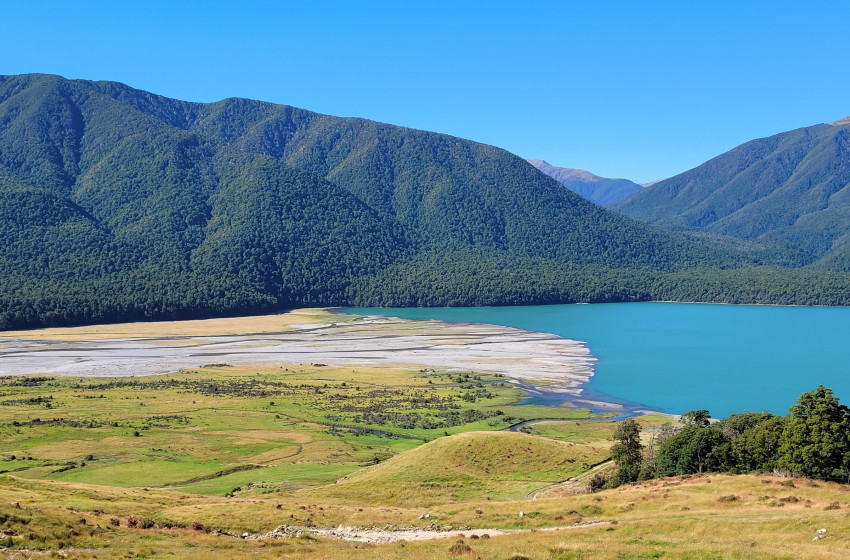
Photo Above: The view of Lake Sumner where the Hurunui North Branch flows into the lake from the beginning of the Lake Mason track.
With Waitangi Day tomorrow and the forecast shaping up near-primo for the region, it’s a good time for anglers to dust off the gear and lock in a plan.
After the rain earlier in the week, the Rakaia River had another lift, but the timing couldn’t be better as it has since dropped and cleared nicely just in time for the public holiday. With an extra day up our sleeve, Rakaia anglers are set up with a genuine opportunity to get out and make the most of the river.
Whether you’re planning to fish the lower river closer to the mouth or heading further upstream toward the gorge, conditions have changed again over the last few days (and months). A quick scouting mission this evening could pay dividends, as fresh structure and new holding water are almost guaranteed after all of the weather recently. Keep an eye out for soft seams, newly formed holes, and water where fish can sit out of the main flow; those are classic salmon spots for fish looking for a rest as they travel upstream. If getting out tonight isn’t on the cards, an early start tomorrow will be key. Pick a stretch you like, commit to a starting hole, and fish it properly before moving on rather than bouncing from spot to spot.

Chris Aldous (Budda) with a solid rainbow trout caught on Lake Coleridge in some still conditions.
Up in the high country, increasing wind around Lake Coleridge and Lake Sumner from about midmorning onwards is likely to limit opportunities for boat anglers tomorrow and possibly into Saturday as well.
That said, there may be a small early-morning window of conditions at Coleridge that could allow for a couple of productive hours on the water before the wind builds to uncomfortable levels. With a bit of planning, this can actually set up a nicely varied day, a dawn boat session followed by a move back to shore-based fishing on one of the smaller high-country lakes once the breeze kicks in.
Despite the wind, these conditions can work in favour of fly and spin anglers on smaller lakes. A ruffled surface gives you a bit more forgiveness with presentation, meaning slightly shorter leaders and even stepping up in leader strength won’t hurt. This is a good time to run larger, heavier, or more eye-catching patterns, particularly when paired with a small, subtle dropper off the back. Let the wind help break up your outline, and don’t be afraid to cover water; fish will still be feeding. For those using the spin rod, eye-catching soft baits or attractive spinning lures could work magic; ensure you're moving to cover as much water as possible.
Unfortunately, the lower and middle reaches of the Waimakariri and Hurunui Rivers aren’t looking ideal for the weekend. However, anglers willing to travel a bit further north may find better options. The Waiau Uwha above its confluence with the Hanmer River is shaping up as a strong contender and could offer some excellent trout fishing over the long weekend. Whether you’re swinging soft baits, working spinners, or using the trusty fly rod, there will be opportunities for those prepared to put in the time and explore.

Caleb Ryder with a typical Hurunui Lakes brown.
Rivers along the Lewis Pass may also show signs of life for designated waters anglers tomorrow or Saturday, particularly if flows remain stable.
As always, if you’re heading into designated waters in North Canterbury, make sure you hold the correct licence and carry it with you while on the water.
For anglers travelling out or region for the long weekend, firstly ENJOY! Secondly, do your research to make the most of your time. If you’re heading into the Central South Island or Otago regions, be sure to check out their fishing reports for region-specific advice. Please use these links respectively to find their reports:
Overall, there are solid options on the table this Waitangi Day weekend throughout North Canterbury and beyond. Remember, a bit of flexibility, an early start, and a willingness to adapt to conditions could make all the difference.
Don't Miss An Update Make Sure Your Following Us In All The Right Places!


Summer is here, and with it comes the busy season on our lakes and rivers.
Across Waitaha Canterbury, the Check, Clean, Dry programme is working hard to protect our waterways from invasive freshwater pests like hornwort and lagarosiphon. These pests can easily travel on your wet gear, boat, or even the soles of your shoes, turning up in your favourite lake or river and ruining the places you love to fish, swim, or paddle.
The solution is simple: before you move between rivers and lakes, always check your gear for debris, clean it thoroughly, and dry it completely. It’s a small step that makes a big difference.
To help spread the word, we’ve welcomed two freshwater advocates to the region this summer. You’ll see them at popular spots around Lake Takapō and other Waitaha Canterbury waterways, chatting with visitors and locals, answering questions, and showing just how easy it is to follow the Check, Clean, Dry steps.
Why does this matter?
Once invasive species take hold, they’re almost impossible to remove. They can smother riverbeds, disrupt food chains, and impact tourism and local economies. Prevention is our best defence, and it starts with each of us. By taking a few minutes to check, clean, and dry your gear every time, you’re helping to protect the unique beauty and biodiversity of our lakes and rivers. Together, we can keep Takapō and the wider region pristine for all who love it.
North Branch Hurunui River Designated Waters Signage

Quick heads up for anyone heading up the North Branch Hurunui above Lake Sumner. We’ve had a few anglers let us know the Designated Waters sign is missing, so staff checked it out on a recent compliance run and can confirm it’s been taken out by the latest high flows.
We’re onto it and will get a replacement sign back in the ground as soon as able. In the meantime, it’s still on you to know where the boundary starts.
The Designated Waters and Controlled Fishery section begins 500 metres upstream of the Lake Sumner outlet. The boundary is marked on the map above, but if you’re on the river and don’t have a GPS handy, there’s an easy visual cue, the Lake Mason Track and a line of tall trees on the river’s true right sit roughly in line with where the Designated Waters begin.
Tackle Tip Of The Week: Leader Length Matters

One of the most overlooked elements in freshwater fishing is leader length.
A leader that’s too short can spook wary fish, especially in clear water, while one that’s too long can be difficult to cast and manage. As a rule, use longer leaders in clear, calm conditions and shorter leaders when fishing faster water or in windy conditions. Adjusting your leader length to suit the situation can result in more confident takes and fewer refusals.
Last Weeks Video Fishing Report

Click the image above to watch last weeks video report.
With the recent rain, lowland rivers around the region are now running with good, consistent flows. In this week’s video, Caleb shares a few tips for fishing these smaller stream systems, spots that often get overlooked despite being right under our noses.
We often hear from anglers who struggle to spot fish or turn chances into hook-ups on these waters. The key is slowing down and really taking the time to read the water. Unless you strike perfect bluebird conditions, sight fishing can be tricky, so a lot of the time you’ll be fishing blind. Done right, this can be a very effective way to fish.
Another bonus of these local lowland spots is that they don’t require a full day’s commitment, leaving you time for family or whatever else is on the calendar.
Community Corner
Stories this week!
A Bit of Angler Etiquette Goes a Long Way
By Jackson Meecham

Paul Van Klink puts a couple of casts through one of the North Canterbury Designated Waters
This time of year in North Canterbury and around the country, it doesn’t take much of a weather window for things to get busy. As soon as the forecast starts looking half decent, anglers are quick to drop their plans, load the truck or car, and head for the water and fair enough too. We’ve only got so many good days, especially this season, and when conditions line up, everyone wants a crack.
With that in mind, I reckon it’s worth having a quick yarn about angler etiquette. Nothing over the top, just a few simple things that make a massive difference to everyone’s day on the river or lake.

Fish & Game signs can be picked up from most sports stores and any Fish & Game office.
One of the easiest wins is signage on the dashboard of your vehicle. Whether it’s one of the Fish & Game “upstream/downstream” signs or something as simple as a bit of cardboard with a marker pen with your day’s intentions, it lets others know someone’s already fishing that area. It doesn’t mean you own the river, but it does show a bit of courtesy and gives other anglers a heads-up before they walk straight in on top of you. In my experience, most issues can be avoided before they even start with something that simple.
On the water, the same rules apply: do not jump anglers. If you arrive at a river and someone’s already working a pool or run, take a moment to watch what they’re doing. Are they moving upstream? Downstream? Sitting in one spot? A bit of patience and awareness goes a long way. If you’re unsure, have a chat. A quick “G’day mate, which way are you heading?” can save a lot of frustration and usually leads to a better outcome for everyone.
More often than not, anglers are happy to work out something that works. Maybe you leapfrog pools, maybe you fish opposite banks, maybe you walk a certain distance upstream then start fishing and or maybe they are almost done and you come back shortly. Days are long this time of year, and there’s usually no need to crowd someone just to get a line wet.

Peter Meecham fishes one of the Lake Ellesmere Tributaries in the first hours of light.
It’s also worth remembering that this time of year is always busy. School holidays, long weekends, and improving weather all stack up, especially on well-known rivers and popular access points. A bit of patience is key. You might not get your first-choice spot straight away, but there’s usually another piece of water nearby that’s just as fishy and can be a lot more enjoyable without someone breathing down your neck.
At the end of the day, most of us are out there for the same reason: to enjoy the place, enjoy the fishing, and switch off from everything else for a few hours. A wave, a quick chat, or a bit of common courtesy can turn what could’ve been a tense encounter into a good yarn and a better day fishing for everyone.
We Encourage Best-Practice Catch and Release for Sea-Run Salmon

Please follow this link to the Fish & Game website for our full advice.
The catching and releasing parts are common practice, it’s the “care for the landed fish” part in between that is important to do really well to ensure a successful release. We are encouraging anglers to up their skills and use best-practice techniques for handling salmon.
Some anglers may practice catch and release as an intended conservation tool, as it may potentially allow more salmon to reach the spawning grounds. Other anglers may practice catch and release to enable them to continue to remain actively fishing for the season, as once an angler has kept their one sea-run salmon season bag limit, their season ends. There are also some legal requirements where you must release a sea-run salmon, e.g. You cannot continue to fish after having caught your season bag limit.
Best-practice catch and release techniques take knowledge and experience to perfect. When done well, it will often result in a healthy fish reaching the spawning grounds.
Poor catch and release that fails to care for the fish has a high chance of causing injury and or death; therefore, it can impact the sea-run salmon fishery. In the case that an angler fails to care for a salmon, we suggest it’s better to keep it as their one fish season bag limit.
Best Practice C&R for Sea-Run Salmon: Three Key Principles


Top Tips for the Best Practice C&R for Sea-Run Salmon Three Key Principles

Join the Great Willowherb Hunt

If you’re heading into the hills, across farmland, or exploring the backcountry tracks of Canterbury this summer, we need your keen outdoor eyes.
Great willowherb (Epilobium hirsutum) is rapidly invading our region’s wetlands and waterways, and we’re calling on all trampers, hunters, and outdoor enthusiasts to help us track it down.
Great willowherb may look pretty at first glance, with tall pink-flowering spikes that bloom through summer and autumn - but don’t let it fool you. This pest plant grows up to two metres tall, forming dense thickets that choke out native flora, block waterways, and modify the habitats that so many of our birds, invertebrates, and freshwater species rely on. Once established, it spreads aggressively along waterways, wet ground, and disturbed soils, making early detection crucial.
That’s where you come in.
Between now and 28 February, we’re encouraging anyone exploring the outdoors to help us map this invader. It’s simple:
- Spot it – Look for tall, hairy stems; lance-shaped leaves; and distinctive pink-purple flowers.
- Snap it – Take a clear photo of the plant.
- Tag the location – GPS coordinates or map pin.
- Report it – Upload your sightings to our iNaturalist project page or via reportpests.nz.
Every verified sighting you submit puts you in the draw to win a $100 Prezzie Card!
By lending your local knowledge and time in the field, you’re helping protect the ecosystems we hunt, tramp, and treasure. Let’s work together to stop great willowherb from spreading further across Canterbury.
Notice Board
News
Controlled Fishery on the North and South Branches of the Upper Hurunui River Enters Second Season of Trial
Many anglers would be aware that both the sections of the North and South branches of the Upper Hurunui River are under a Trial Controlled Fishery for a two-season trial. The beginning of last season saw some early challenges with the booking software; however, we expect the system will operate as it did at the conclusion of last season.
For information or to make a booking, please click here.
Environment Canterbury Stopbank Spraying Operations
Notice directly from Environment Canterbury
Environment Canterbury is about to commence our ground-based spraying operations for the 25/26 spray season.
The extent of these operations is our stopbank network, selected berms, fairway sites and access tracks on the Waikirikiri Selwyn, Rakaia, Hakatere Ashburton and Hekeao Hinds rivers (see attached maps below for the North Canterbury Region).

Above: Waikirikiri Selwyn (works shown in red)

Above: Rakaia River (works shown in red)
This work is undertaken annually and involves the ground-based application of approved herbicides using either a knapsack or truck-mounted pressurised spray unit.
The spraying targets noxious weeds such as gorse, broom and willow, as unmanaged growth can compromise the integrity of the stopbank network and river systems.
Spraying operations will be completed in accordance with our permitted activity rules under the Canterbury Land and Water Regional Plan, or where required in accordance with our spray consent CRC222040.
Spray operations will commence in November and will continue through the summer period. It is hard to provide a precise estimate of when the spraying work will commence and for how long, as it is highly dependent on weather conditions and the growth of weeds throughout the year.
Please contact Environment Canterbury with any questions: 0800 324 636
Please contact Environment Canterbury with any questions: 0800 324 636
Weather Outlook
Christchurch

Rakaia

Waipara

Culverden

Hanmer Springs

Arthurs Pass

Lewis Pass

River Flows
Waiau Uwha at Malings Pass: 4.319
Waiau Uwha at Marble Point: 92.573
Hurunui River at No.2 Hut: 8.149
Hurunui River at SH1 Bridge: 97.89
Ashley River at Lees Valley: 5.174
Ashley River at SH1 Bridge: 53.51
Waimakariri River at Below Otarama: 96.463
Waimakariri River at Old Highway Bridge: 106.621
Selwyn River at Whitecliffs: 8.554
Selwyn River at Coes Ford: 6.779
Halswell River at Ryans Bridge: 0.898
Harts Creek at Timber Yard Road: 2
Rakaia River at Fighting Hill: 170.983
To help you plan your fishing adventures, be sure to check the following resources:
- E-Can River Flows: River Flow Data
- Outdoor Access Live Cameras: Live Cameras (subscription required)
- MetService Weather Warnings: Weather Warnings
- Windy: Wind Radar
- Yr Weather Service (most accurate for High Country): Yr Website
- Canterbury Weather Updates: Webcams and Website
Stay safe out there!
Please note: This weather update is current at the time of publishing. We recommend checking the latest forecasts, river flows and road conditions before heading out.
Click the licence below to get your licence today!

Next Video Report: 12th February 2026 (Facebook, YouTube and Instagram)
Next Written Report: 26th February 2026 (Email and Website)
Tight Lines,
Jackson Meecham, North Canterbury Fish & Game Officer & the whole North Canterbury Team.
Disclaimer:
The information presented in these news items is based on the context and regulations in place at the time of publication. Please note that some articles may include reference to laws and regulatory standards that have since changed. For the most current and accurate information please check our Fishing Licences & Regulations pages or our Hunting Licences & Regulations pages.