North Canterbury Fishing Report - 5th March 2026
- North Canterbury
- 4/03/2026
- Jackson Meecham
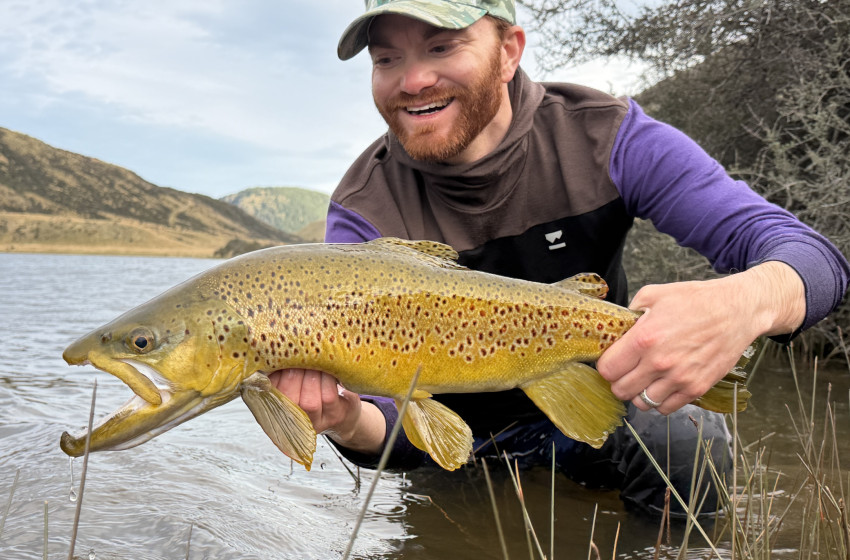
Autumn Signals & Late-Day OpportunitiesImage Above: An outstanding brown trout caught by an angler in one of the high country lakes in North Canterbury. It feels like we may have just had our first real hint of autumn across the region. Mornings have been cool and low cloud has been hanging around, definitely calling for an extra layer early on. That said, the days themselves have still been warm and settled, with sunshine stretching well into the evening in many areas. Those settled afternoons have created some great dry fly opportunities. Fish have been rising later in the day, and over the past two weeks our staff out completing compliance have seen anglers starting to find a bit more success during those late sessions. On some of the smaller high country lakes, anglers are also reporting better action once fish move into their second primary feed of the day. Timing has been key. Looking ahead to the weekend, conditions are shaping up well. There will be some wind to contend with, but don’t let that put you off. A bit of breeze can actually work in your favour, providing cover and allowing you to get away with slightly less-than-perfect casting and closer approaches.  Peter Doake with a 4lb rainbow caught from his kayak on one of North Canterbury high country lakes. The larger rivers are expected to remain clear, so opportunities are there for anglers willing to put in the hours. One consistent message we’re hearing lately is simple: you won’t catch fish unless you’re out there. Effort is being rewarded. Streamer and soft bait fishing continues to produce solid results. At this time of year, brown trout are starting to pack on condition ahead of spawning and are far more willing to chase a big, protein-rich meal. Slow-flowing water, backwaters, and softer edges are great places to target fish with streamers or soft baits. Retrieve speed can make all the difference. Imitating a slightly injured baitfish with slow, jerky, erratic movements is a proven tactic. Alternatively, a steady, slow retrieve can be just as effective. Stay in constant contact with your line to detect subtle takes, whether that’s maintaining tension on your fly line or using braided line on a spinning setup for maximum feel and sensitivity. With clear rivers, active fish, and improving late-day opportunities, it’s a great time to make the most of the conditions. Get out there and put the time in. Don't Miss An Update Make Sure Your Following Us In All The Right Places!    Applications to join Environment Canterbury’s Biosecurity Advisory Groups open on Monday, 2 March, providing an opportunity for community members to help shape how pests are managed across Waitaha Canterbury. Biosecurity Advisory Groups work closely with Environment Canterbury to support the objectives of the Canterbury Regional Pest Management Plan, contributing community insight, local knowledge, and practical experience to protect the region’s economy, cultural values, and recreational spaces. The groups provide advice on pest management priorities, help raise awareness about how pests spread, and encourage community involvement in biosecurity activities. Members also act as important links between Environment Canterbury and local communities - sharing concerns, relaying local intel, and supporting collaboration to respond to emerging threats. There are four advisory groups across the region -North, Central, South, and Christchurch/Banks Peninsula, each made up of community members, Papatipu Rūnanga representatives, councillors and local authority partners. Meetings are held three to four times a year, with venues rotating across each area, and sessions are open to the public. Members will also be remunerated for their time and contribution. If you’re passionate about protecting Canterbury’s environment and want to contribute your voice and local experience, we encourage you to apply before Friday, 27 March. More information will be available at haveyoursay.ecan.govt.nz. Management Closures on Hurunui River North Branch Booking System A section of the Hurunui North Branch last month. This year, as part of our ongoing trout population monitoring programme, we are reinstating the North Branch of the Hurunui River into our annual drift dive schedule. At this stage, we are planning to complete the dives during the second week of March, 9th March 2026 - 13th March 2026.As much as we would love a weather wand (let us know if you know where to get one), conditions ultimately dictate when we can safely and effectively dive. To allow flexibility, we will temporarily close bookings on the system from Monday to Friday that week. Once we have assessed the weather and confirmed dive days (likely only one needed), all remaining days will be reopened for anglers to book and fish. We will keep anglers updated on the day(s) we are diving, so it will be clear what will become available on the booking system. We’ve chosen to close the system during the dive window because we understand how hard it can be to secure a booking. The last thing we want is to impact someone’s day on the water by drifting through a pool and momentarily disturbing the fish. And for those wondering, if you secure a booking for the day after the drift dive, rest assured the trout will be back to feeding as long as they’re hungry. From what we’ve observed over many years, fish quickly settle after we’ve floated through and normal behaviour resumes in a short period of time.  Click the image above to view the video from last years Lewis Pass Designated Waters drift dive. Why do we drift dive?Drift dives are an extremely valuable tool for assessing the health of a trout population over time. They allow staff to directly observe fish numbers, size classes and distribution, while also gaining insight into the density and type of food available beneath the surface. This long-term monitoring gives us a clear picture of how a fishery is performing and how environmental conditions may be influencing it. Fish & Game New Zealand CEO Corina Jordan told The Press last year: “Around the country Fish & Game staff dive about 100 rivers so we have an extremely robust data set which goes back about 30 years. This data is used to measure population numbers and trends but also set regulations like bag limits to ensure we are sustainably managing our fisheries. Staff also record water and ecosystem health trends which they pass on to regional councils.” Adding the North Branch back into our annual programme is an important step in the management of this designated water and controlled fishery. Consistent monitoring ensures we are making evidence-based decisions to protect and enhance the angling experience both now and into the future. North Branch Hurunui River Designated Waters Signage Quick heads up for anyone heading up the North Branch Hurunui above Lake Sumner. We’ve had a few anglers let us know the Designated Waters sign is missing, so staff checked it out on a recent compliance run and can confirm it’s been taken out by the latest high flows. We’re onto it and will get a replacement sign back in the ground as soon as able. In the meantime, it’s still on you to know where the boundary starts. The Designated Waters and Controlled Fishery section begins 500 metres upstream of the Lake Sumner outlet. The boundary is marked on the map above, but if you’re on the river and don’t have a GPS handy, there’s an easy visual cue, the Lake Mason Track and a line of tall trees on the river’s true right sit roughly in line with where the Designated Waters begin. Tackle Tip Of The Week: Lightweight Tackle Catches Fish We’ve been noticing a few anglers out there recently running very heavy gear for both trout and salmon — and in many of our local waters, that can actually put you at a disadvantage. In North Canterbury, we often deal with clear water conditions, especially as flows settle. Trout in particular become incredibly wary in these situations, and even salmon can be surprisingly cautious in shallow or slow-moving water. Heavy line, oversized swivels, thick leaders and bulky terminal tackle are much easier for fish to spot — and that can be the difference between a follow and a take. Lighter, balanced setups generally fish better. For trout:
For salmon:
Heavy gear often:
There’s absolutely a time and place for heavier tackle — high flows, snaggy structure, or very dirty water — but in typical New Zealand, clear-semi clear conditions, downsizing can dramatically improve your success. Think presentation first. The more natural your offering looks and moves, the more likely a trout or salmon will eat it. Make the most of your opportunities out there, fish smart, fish balanced. Last Weeks Video Fishing Report Click the image above to watch last weeks video report. Last week’s fishing report was a little bit different. We put together a short walkthrough of the Fish & Game website to help you make the most of the information available to you. We regularly reference the website in our reports — whether it’s for accessing past fishing updates, looking up regional regulations, or finding access points — but we know not everyone is familiar with where everything sits or how to navigate it efficiently. This video steps you through the key areas of the site and shows you how to quickly find what you’re looking for. The website is a valuable tool for anglers and game bird hunters across the region, and it’s updated regularly with current information. Spending a few minutes getting familiar with it can save you time when doing your research at home. If you haven’t explored it fully before, this is a good place to start. As always, if you have any questions or feedback, feel free to get in touch with the team. Community CornerStories this week!The Mighty Rakaia River... so far this season.By Paul Hartnell Paul and another angler fish a stretch of the Rakaia River. What a fishing season this has been. For all the wrong reasons.Number one being the weather, which has affected the river conditions for all. Like most keen fishermen, I always look forward to the coming season and have a love of the Rakaia River. Unfortunately, river conditions play a big part in any trout or Salmon success, and the Rakaia, along with many other major rivers, just didn’t play the game. I found that on the odd day that the Rakaia became fishable, there was almost no one fishing. Even over the Christmas break, when traditionally I can remember counting over 15 jet boat trailers parked at the main road bridge, there were none. The mouth at times was barren of fishermen. Now this is perhaps a reflection of the perception that there are no salmon to be caught, but there are some for the angler who is prepared to put in the effort.  Three softbait patterns every angler should carry, proven, reliable, and effective in almost any waterway or condition, your truego-to options or maybe fail-safe options if you like a challenge first. The trout fishing is another underestimated fishery on the lower Rakaia.Many people who try may still be using the traditional small shiny or black Toby type spinner, which are successful but cannot compete with a softbait. Trout at or near the mouth just love them. My favourite is a paddle tail in a “bully” darker colour if the river is coloured ( around 200 cumecs and below ), moving to a silver / clear coloured one if the river is clearer. Trout seem to hold in the long “runs” as much as the holes near the mouth. Casting up and across, letting the bait swing is deadly. As the river clears to lower levels ( 100 / 120 cumecs )and days get warmer, it can be deadly fun fishing up side streams that are away from the main river. I think trout hanging around the mouth move up in search of food, mainly bullies. Tactics change here. A pair of shorts and some boots so you can cross and fish upstream. Casting soft baits up into small pools under willows or upstream into long runs and retrieving fast enough to keep the bait from hitting the bottom is hugely successful. Streams on the north side of the river are really productive, but anywhere where there are willows or structures for shelter, such as downed trees, can be good. As the Rakaia fishing competition ( thanks for the good work done )comes to a close, many Salmon anglers pack the rods away for the year. For years, I kept a record of who caught what salmon and where.  Successful fishing is often determined by getting out there at the right time, knowing when conditions suit matters more than most think. March is a really good salmon fishing month.The Rakaia seemed to have 2 “runs “ as such. The pre-Christmas November/ December run, or spring run as some call it, then the Autumn run. This is March. Salmon seem to travel more quickly; they are more active because of the cooler temperatures, they need to travel, and best of all, they bite more. Even on a clearer river. Flows around 160 cumecs or below are best. If the river is low, sometimes a southerly can cause a lift in river height. This triggers fish to move and bite, so keeping an eye on the Ecan website is helpful.  The Rakaia River in good fishing conditions also has the benefit of being spectacularly beautiful. Above all, I think it's important not to lose touch with the Rakaia.It's a magic river that is special in many ways. Remember its not just about catching a fish, there's more to it than that. I've got to say it, “never give up”, and please practice catch and release. Tight lines, Paul. Weird Summer Conditions Call For A Change In TacticsBy Jack Colley A tough brown trout that exceeds the size of the net it was landed in. I think we can all agree that we were robbed of our summer this year. With only a handful of days where it wasn't either dealing with high water, rain, or wind - there haven't been a lot of classic summer days this season. Nonetheless, the fishing opportunities have been prominent for those who brave the slightly 'under average' summer weather. With rain events happening on and off throughout, a lot of the smaller streams that get very low and warm have retained a good level of water and have provided some quite unique summer fishing opportunities. I have been focussing on these small waterways a lot this season and although the fish numbers are usually quite low, they're often quite impressive ones! One technique I have found quite useful in these small, tight areas is czech nymphing, also known as 'euro nymphing' or 'tight-lining'. Utilizing this method allows you to get your flies into the deep dark undercut banks where larger trout often hide during warm weather and low flows. My only other recommendation is make sure to use strong tippet to keep them out of the willow snags!  Jack wading in a gorge like area of a river. As we move into Autumn brown trout will start getting ready to spawn. This means we will see fish moving around a lot more, so it's a great time to check out those holes that didn't have fish on the last trip. It is also a great time to bust out the streamers/lures and take advantage of the more aggressive behaviour that browns will exhibit this time of year. You'll be surprised that often a tricky fish will be easily fooled by a streamer after expecting another nymph. With some very average conditions through summer, it should mean these last two months of the season will fish better than normal, so make the most of the dwindling days we have left and chase the magic we're blessed with here in the South Island. We Encourage Best-Practice Catch and Release for Sea-Run Salmon Please follow this link to the Fish & Game website for our full advice. The catching and releasing parts are common practice, it’s the “care for the landed fish” part in between that is important to do really well to ensure a successful release. We are encouraging anglers to up their skills and use best-practice techniques for handling salmon. Some anglers may practice catch and release as an intended conservation tool, as it may potentially allow more salmon to reach the spawning grounds. Other anglers may practice catch and release to enable them to continue to remain actively fishing for the season, as once an angler has kept their one sea-run salmon season bag limit, their season ends. There are also some legal requirements where you must release a sea-run salmon, e.g. You cannot continue to fish after having caught your season bag limit. Best-practice catch and release techniques take knowledge and experience to perfect. When done well, it will often result in a healthy fish reaching the spawning grounds. Poor catch and release that fails to care for the fish has a high chance of causing injury and or death; therefore, it can impact the sea-run salmon fishery. In the case that an angler fails to care for a salmon, we suggest it’s better to keep it as their one fish season bag limit. Best Practice C&R for Sea-Run Salmon: Three Key Principles   Top Tips for the Best Practice C&R for Sea-Run Salmon Three Key Principles Notice BoardNewsControlled Fishery on the North and South Branches of the Upper Hurunui River Enters Second Season of Trial Many anglers would be aware that both the sections of the North and South branches of the Upper Hurunui River are under a Trial Controlled Fishery for a two-season trial. The beginning of last season saw some early challenges with the booking software; however, we expect the system will operate as it did at the conclusion of last season. Environment Canterbury Stopbank Spraying OperationsNotice directly from Environment Canterbury Environment Canterbury is about to commence our ground-based spraying operations for the 25/26 spray season. The extent of these operations is our stopbank network, selected berms, fairway sites and access tracks on the Waikirikiri Selwyn, Rakaia, Hakatere Ashburton and Hekeao Hinds rivers (see attached maps below for the North Canterbury Region).  Above: Waikirikiri Selwyn (works shown in red)  Above: Rakaia River (works shown in red) This work is undertaken annually and involves the ground-based application of approved herbicides using either a knapsack or truck-mounted pressurised spray unit. The spraying targets noxious weeds such as gorse, broom and willow, as unmanaged growth can compromise the integrity of the stopbank network and river systems. Spraying operations will be completed in accordance with our permitted activity rules under the Canterbury Land and Water Regional Plan, or where required in accordance with our spray consent CRC222040. Spray operations will commence in November and will continue through the summer period. It is hard to provide a precise estimate of when the spraying work will commence and for how long, as it is highly dependent on weather conditions and the growth of weeds throughout the year. Please contact Environment Canterbury with any questions: 0800 324 636 Please contact Environment Canterbury with any questions: 0800 324 636 Weather OutlookChristchurch Rakaia Waipara Culverden Hanmer Springs Arthurs Pass Lewis Pass River FlowsWaiau Uwha at Malings Pass: 2.648 Waiau Uwha at Marble Point: 54.559 Hurunui River at No.2 Hut: 5.332 Hurunui River at SH1 Bridge: 43.055 Ashley River at Lees Valley: 4.864 Ashley River at SH1 Bridge: 42.327 Waimakariri River at Below Otarama: 63.904 Waimakariri River at Old Highway Bridge: 66.941 Selwyn River at Whitecliffs: 2.108 Selwyn River at Coes Ford: 1.589 Halswell River at Ryans Bridge: 1.256 Harts Creek at Timber Yard Road: 2.15 Rakaia River at Fighting Hill: 108.747 To help you plan your fishing adventures, be sure to check the following resources:
Stay safe out there! Please note: This weather update is current at the time of publishing. We recommend checking the latest forecasts, river flows and road conditions before heading out. Click the licence below to get your licence today! Next Video Report: 12th March 2026 (Facebook, YouTube and Instagram)
Tight Lines, Jackson Meecham, North Canterbury Fish & Game Officer & the whole North Canterbury Team. |
Disclaimer:
The information presented in these news items is based on the context and regulations in place at the time of publication. Please note that some articles may include reference to laws and regulatory standards that have since changed. For the most current and accurate information please check our Fishing Licences & Regulations pages or our Hunting Licences & Regulations pages.