Back to Hunting Knowledge Hub
Duck calling
Duck calling is a fundamental and very rewarding part of duck hunting.
There’s nothing quite like spotting a duck, delivering a well‑timed call, and watching it respond and fly into your decoys.
Calling is one of those things that waterfowl hunters can sometimes over‑complicate, but the good news is that it doesn’t need to be difficult or require expert skill. What matters most is getting the basics right and nailing your call timing.
Guides

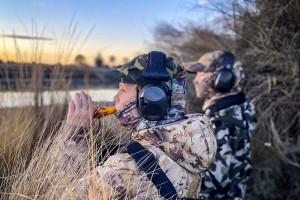
Duck calling 101
In practice, 95 per cent of the ducks you call in will be the result of one type of call: the greeting call.
This call mimics the familiar duck quacks you will hear if you visit your local domain duck pond. To do this basic call, keep the following in mind:
Call structure: The greeting call is comprised of about five quacks, starting loud and tapering off with each subsequent quack.
Technique: when blowing this call, push air in from your diaphragm (not your cheeks). Make a “whit,” “woot,” or “voot” note. Each quack should end abruptly.
Timing and volume: Call timing is just as important as how the call sounds. You can call louder and more frequently when ducks are farther away. In fact, a great time to use the greeting call is when the ducks are flying away from you. However, as they close in, reduce volume or stop calling altogether and let your decoys do the work. Never blast a loud greeting call when birds are circling close as it will likely scare them off.
Once you’re comfortable with the basic greeting call, you can experiment with other calls like the hail or feeding chuckle, but don’t get too caught up on perfecting them. Also, remember that your calls don’t need to be perfect; each duck quacks a little differently anyway.
Grab your caller and practice along with this example greeting call, and if your version sounds "close enough", you are ready to call in ducks.
Duck Calls
Duck calls can be made from a variety of materials with wood, plastic, and acrylic being the most common materials.
Each material can affect the call tone slightly. The reed setup within the call will be either single-reed or double-reed.
Single-reed calls offer greater range and versatility, making them ideal for producing a wide variety of duck sounds. However, they can be a bit trickier to master and may require more practice, especially for beginner hunters.
Double-reed calls are easier to use and more forgiving, which makes them a solid choice if you’re just getting started. They’re great for producing raspy, realistic quacks, although they don’t offer quite the same range as single-reed models.
There are many duck call makes and models on the market. When choosing one, it’s best to avoid the cheapest options, as they often lack realism in sound and may not hold up over time. A mid-range call, whether single or double reed, typically offers a reliable balance of performance, sound quality, and durability.
Remember, no matter what call you choose, the key to success is practice. Most calls will perform well while you are hunting when you’ve spent time learning to use it. Also, it pays to have a back-up call on hand in case your primary one becomes wet or clogged, which sometimes happens in the field.
In New Zealand, many hunters will also have a paradise shelduck call. These work well with a little practice and can be worth adding to your lanyard. Swan calls can also be purchased but require finesse to use successfully. Upland bird calls are not commonly used.
With all calls, make sure you know how to clean them during and after the season, and make sure you let calls dry naturally, not by heat (sun or heaters).