Back to Hunting Knowledge Hub
What to hunt
New Zealand offers a wide range of game bird hunting opportunities.
Each game bird species has its own habitat preferences and provides a unique hunting experience. In New Zealand, game birds can be broadly grouped into two categories: waterfowl and upland game.
Guides
Waterfowl
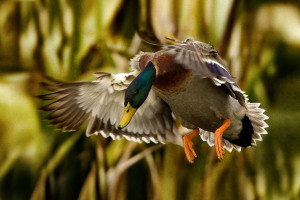
Mallard Duck (Greylard) (Rakiraki)
The mallard duck is an introduced game bird and the most hunted game bird species in New Zealand. Mallards are widespread and can be found throughout the country, frequenting wetlands, estuaries, rivers, lakes, and agricultural land. They are highly valued by hunters for both their sporting and eating qualities.
Paradise Shelduck (Pūtangitangi)
The paradise shelduck is a large duck, unique to New Zealand. The female has a brown body with a white head while the male is black in colour. They are often seen in male–female pairs and are commonly found on pasture, wetlands, and riverbeds across the country. Paradise shelduck are less wary than other waterfowl, so are a great option for beginner hunters. The “parry” is the second most targeted game bird in New Zealand.
Australasian Shoveler (Kuruwhengi)
The Australasian shoveler is a native game bird found across New Zealand. They are a smaller duck, easily recognised by their broad, spoon-shaped bill. Shoveler prefer large water bodies and although they are less common than other waterfowl, they are a highly regarded game bird, especially the males with their attractive plumage (feathers).
Black Swan (Kakīānau)
The black swan is a native game bird and the largest of New Zealand’s waterfowl. It is easily recognised by its large size, long neck, and distinctive body shape. Black swans are commonly found in estuaries, coastal lagoons, and large wetlands across the country.
Pukeko
The pukeko is a native game bird found across New Zealand, although population numbers vary widely between regions. In areas with strong populations, hunting is permitted, while in other areas with lower numbers, hunting pukeko is not permitted. Pukeko are commonly seen on pasture and around wetlands in the North Island and the Nelson/Marlborough and West Coast regions in the South Island. An under utilised resource for challenging hunting and good table fare.
Upland game
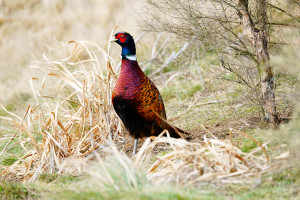
Pheasant (Peihana)
Pheasants are a highly regarded game bird, valued for both their sporting challenge and excellent eating qualities. While population strongholds are in the North Island, smaller populations also exist in the drier regions of the South Island. They are typically found in coastal dune areas, exotic forests, and dense cover such as lupin, broom, boxthorn, inkweed, and briar patches.
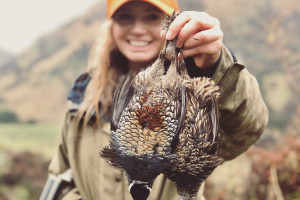
California Quail (Tikaokao)
The California quail is the most common of the three quail species found in New Zealand. These social birds typically gather in groups, known as coveys, ranging from 10 to 100 individuals. In the North Island, they are widespread and often share habitat with pheasants. In the South Island, they are present across most regions, although populations are limited in the West Coast and Southland regions.
Brown Quail (Kuera)
Brown quail have a limited distribution in New Zealand, primarily restricted to the upper half of the North Island. Due to their relatively small population and elusive nature, they are not actively targeted by many hunters.
Bobwhite Quail
The bobwhite quail is the least common of New Zealand’s quail species. Small populations remain in areas such as South Auckland and northern Hawke’s Bay. Due to their limited distribution and low numbers, bobwhite quail are not commonly targeted by hunters.
Chukar
Primarily found in the South Island, chukar prefer high, semi-arid environments with rocky slopes, low tussock, and scattered subalpine vegetation. They inhabit elevations up to 2000 metres, mostly on slopes east of the main divide. Their range stretches from Marlborough through to Otago. Populations of chukar are small, but these birds are highly prized by hunters.
Distinguishing Between Species
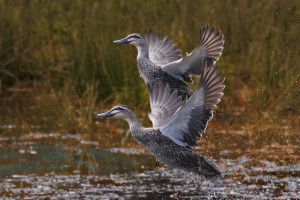
When waterfowl hunting, you will encounter both huntable game birds and protected species. Some of these protected waterfowl are endangered, so it's essential that you correctly identify your target before firing.
When waterfowl hunting, you will encounter both huntable game birds and protected species. Some of these protected waterfowl are endangered, so it's essential that you correctly identify your target before firing.
Click the Pdf documents for images to help you identify game birds and non-game birds in flight.
|
Game birds – waterfowl
|
Protected waterfowl – hunting not permitted |
|
Mallard duck Grey duck Paradise shelduck Shoveler duck Black swan Pukeko Canada Geese* |
Grey teal Brown teal Scaup Blue duck |
*Canada Geese are no longer classified as a game bird but still may be hunted.
Understanding the rules and regulations
To ensure sustainable management of game bird populations, each Fish & Game region monitors its local populations and uses this data to inform hunting regulations.
Because game bird numbers can vary significantly between regions, different rules are often required. For example, bag limits may vary by species, region, and even within regions. Likewise, hunting season lengths can differ depending on the species and location.
It is every hunter’s responsibility to know and comply with the current regulations for the area they plan to hunt. Don’t be daunted though, our regulations guide (below) has easy to understand information and clear maps showing regional boundaries.
To view the current game bird hunting regulations for your region, click the links below: