Newsletter March 2025
- 10/03/2025
CEO resigns to take up new challenge
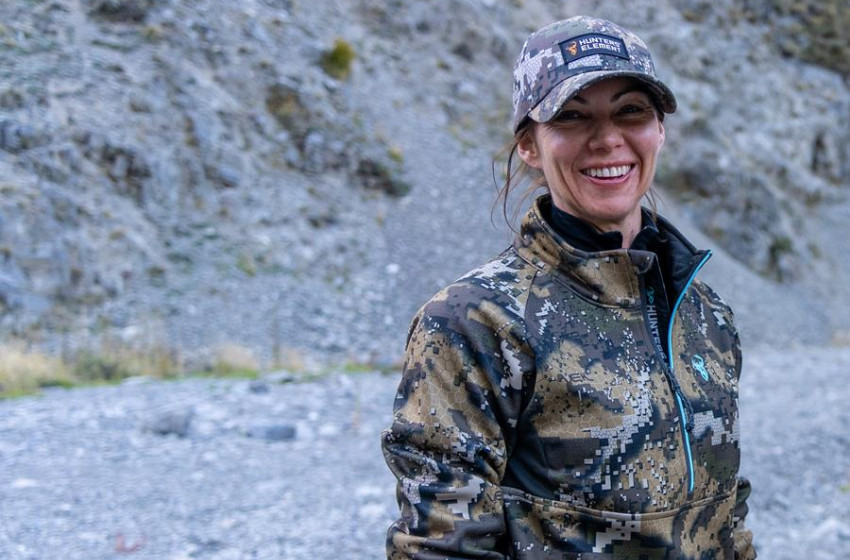
I am writing to let you know I have resigned from Fish & Game to take up the position of chief executive of the Game Animal Council (GAC).
I will remain here over the next three months to support Fish & Game to deliver key priorities and to transition to new leadership. Fish & Game New Zealand deputy chief executive Richie Cosgrove will lead the organisation in the interim.
It has been a pleasure and a privilege leading Fish & Game coming up to three years. I have enjoyed my time, the close-knit teams and appreciated the opportunity to work with you across the regions. In what other job can you drift dive a river in a wetsuit one week and then be standing in front of a select committee in a business suit the following week?
I have worked hard to prepare this organisation to be resilient and thrive into the future. Our organisational strategy, improved relationships across the sector and government, improved communications with our licence holders and our public awareness work mean that Fish & Game is engaged, responsive to your needs, and is a strong advocate for the interests of anglers and hunters.
My time spent with the organisation has been incredibly inspiring and one that I will genuinely cherish forever.
CE Update
My big news aside there's a lot going on at Fish & Game New Zealand as we work to enhance angling and hunting opportunities while advocating for our freshwater environments.
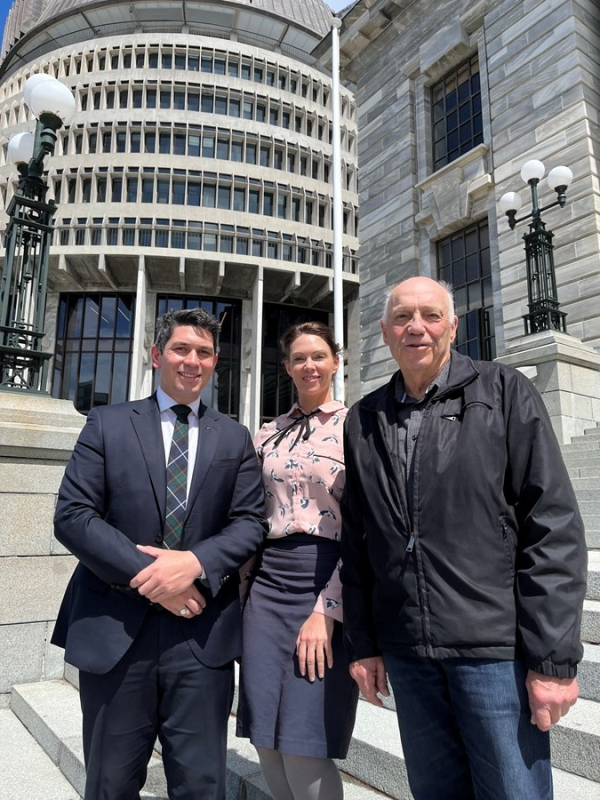
It was great to catch up with the Minister for Hunting and Fishing James Meager at Parliament recently. We really appreciate having a Minister who cares passionately about supporting people to get out and rewild themselves in nature by hunting and fishing. We are excited for the year ahead and positive change for our organisation to become more modern and responsive to our licence holders.
Rebuilding Relationships
At times, the relationship between Fish & Game and New Zealand's farming community has been framed as one of conflict. The issue of freshwater quality and land use in some parts of the country has seen the two groups at odds.
I wrote an opinion piece about this to help rebuild those relationships which has been published in several newspapers. It was great to run this published in the Stuff group of papers as they syndicate their content across the country, and it means it gets greater reach. It was picked up and run by The Press, The Post, Waikato Times, Southland Times. Stuff has a viewership of 2.2M unique visitors every month. It was also read by the Minister for Hunting and Fishing, along with other influential MP’s and Ministers.
Fostering the next generation of hunters
It is a privilege to work with the Ben and Gerard Wilson in Central Hawke's Bay to run a competition to provide eight young aspiring game bird hunters aged 14 to 17 s two days of hunting in outstanding established wetlands on farms near Waipukurau on the weekend of 24-25 May.
Events will include early morning and afternoon hunting adventures. Former New Zealand clay bird shooting champion Dave Hearn will take the winners through firearms safety and a clay bird shoot. All accommodation and meals, including a duck dinner, will be provided.
We have so many passionate young people in New Zealand, who would love the opportunity to experience game bird hunting. Gerald Wilson and Ben Wilson are passionate about supporting the next generation of hunters, so are offering use of their spectacular wetlands.
Wetlands and Media Coverage
In the Tasman district, the Motueka Catchment Collective shows what communities can achieve when they come together. At its heart are passionate landowners who recognised the need to look at the catchment holistically. Everyone loves the river and understands that what happens on the land matters to what happens in the water. These grassroots movements prove that co-operation, rather than conflict, delivers results.
We've been promoting the important message of "Think small to make a big difference" when it comes to wetlands creation. Some landowners are put off by the idea of creating wetlands on their properties because of regulation, but in Tasman, if you keep it small, it's not too hard to do. Wetlands are important habitat for all kinds of birds like ducks, and wherever you live, we can help you with your vision.
You can watch our TVNZ story about it here. And read our media release here.
I was also featured on NZ Hunter on Sunday night and bagged the first red deer of the episode. Do check it out on TVNZ+. It's free to register and watch shows.
Advocacy
We have been busy with submissions and information analysis for a range of legislative proposals. See the item in this newsletter for details. There's a significant amount of work involved with submissions and recently we've work on Biosecurity changes, Local Government Water Services, Afforestation, Conservation Law Reform and Arms reform. And of course, Resource Management is a key priority area.
Rewild Campaign
Our pre-hunting season Rewild campaign is about to start, encouraging New Zealanders to reconnect with nature through hunting. This initiative highlights the mental and physical benefits of outdoor activities while promoting sustainable interaction with our natural environment.
We are also running a TV ad, watch out for it during the NZ Hunter programme. The 30 second TV Commercial will run with all episodes of NZ Hunter Adventures Season 11 on TVNZ DUKE throughout 2025. That's eight episodes with 2-3 full season replays, reaching about 1 million NZ viewers across the year on DUKE.
Advocacy Update
BIM
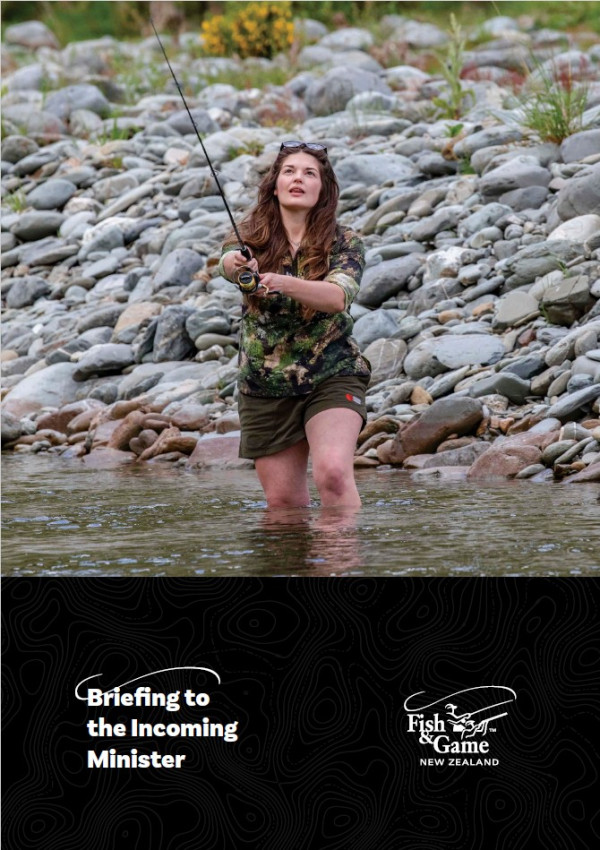
Read our Briefing to the Incoming Minister here.
Biosecurity Act Amendments
We have sent a submission to MPI covering issues for Fish and Game.
Conservation Law Reform
We have submitted on this DOC consultation. Two key issues will include paying for access to conservation land and criteria for land disposals. We have submitted against hunters and anglers paying for access.
Resource Management (Consenting and Other System Changes) Amendment Bill Resource
To align with changes introduced by the Resource Management (Freshwater and Other Matters) Amendment Act 2024, the Bill amends the scope of discharge rules under section 70 so that regional councils may include permitted activity discharge rules where standards will contribute to a reduction in adverse effects over time.
Clause 15 amends section 70 (which relates to rules about discharges) to enable a regional council to include a rule in a regional plan that allows, as a permitted activity, certain types of discharge that may allow significant adverse effects on aquatic life. Our submission will be presented to select committee in March and will be available on our website then.
Local Government (Water Services) Bill
Part 7 of this bill contains a number of amendments to the RMA that exempt wastewater discharges from the usual considerations and allows for wastewater standards set by Taumata Arowai to override plans, NES, NPS etc. The standards are still being developed by DIA. It appears from the commentary that longer terms (35 years) and lower standards will be the end result. The submission is here.
RMA Phase 3
We continue to meet with the Ministry for the Environment to discuss RMA reform and talk about the new National Direction (replacement National Policy Statement for Freshwater Management). We are preparing advice on Target Attribute States for this purpose.
Firearms Reform
The Ministry of Justice is consulting on the firearms law and regulation “for greater protection of public safety and simplify regulatory requirements to improve compliance”.
This review, rather than offering options to comment on, opened up to suggestions from the submitters.
We worked with the hunting sector leaders to share our expertise and promoted the submission process to 140,000+ of our licence holders and also shared our submission with anyone who wanted help with their submission.
Fishing season
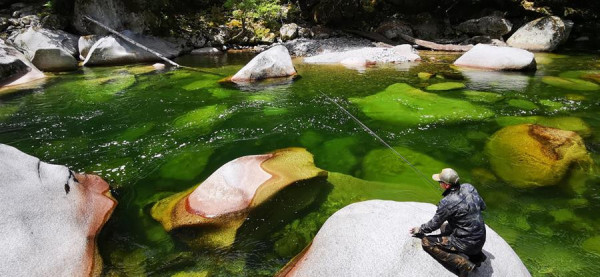
In the heart of Kahurangi National Park, New Zealand, towering limestone boulders, sculpted by centuries of rushing emerald water, dwarf an angler as he moves in sync with the river, fly rod in hand, stalking a fish—a moment where nature, art, and the quiet joy of fly fishing come together.
A beautiful example of rewilding yourself! Thanks to Luci Baus for this gorgeous photo and description.
Northland Fish & Game Connect with Rural Community at Field Days
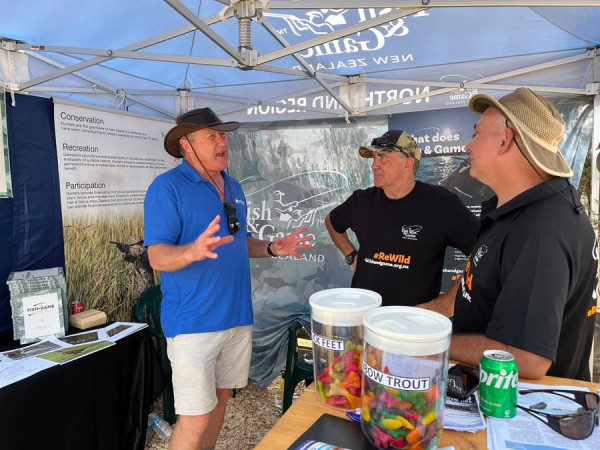
National MP Grant McCallum visited the stand and chatted with the team
Northland Fish & Game staff engaged with the rural community at the Northland Field Days which ran from 27 February to 1 March 2025.
Our presence aimed to strengthen relationships between Fish & Game and the rural community while improving public awareness about our organisation's roles and services. Our team had meaningful conversations with a diverse range of visitors.
Visitors approached our staff with various enquiries, with two main themes emerging:
- Questions about hunting and fishing seasons and regulations
- Advice on game bird management for pasture and cropping land
These conversations provided valuable opportunities to highlight how Fish & Game supports farmers and rural communities. The things we wanted to get across were:
Practical Support for Landowners
- Advice on landowner rights regarding hunting and fishing on private land
- Guidance on managing game birds that may impact crops, including permit requirements for controlling birds outside hunting seasons
- Information on maimai design, construction and registration
Wetland Creation and Restoration
- Planning and design services for creating wetlands that complement farm landscapes
- Connecting landowners with funding opportunities and grants for wetland projects
- Assistance turning "swampy bottom paddocks" into valuable assets that improve water quality, support biodiversity, reduce flood risks, and provide nutrient filtering
Supporting the Next Generation
- Partnership opportunities with farming leaders to support junior hunters develop skills and experience
The Field Days provided an excellent platform to demonstrate Fish & Game's commitment to ensuring hunting, angling and productive farming can go hand-in-hand.
Read more about how we work with rural communities here.
Family Fishing Day Brings Community Together Along Taylor (Omaka) River
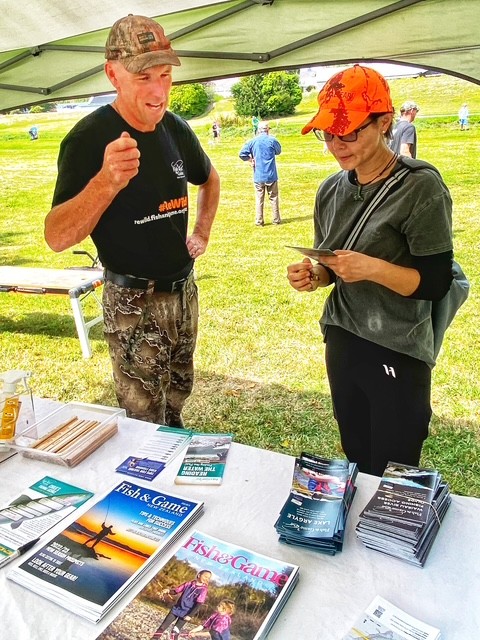
Fish & Game Nelson-Marlborough manager Rhys Barrier explaining options for catching Lake Argyle trout to a participant of the family fishing day
Nelson Marlborough Fish & Game councillor Guy Gardiner recently organised a family fishing event that drew 40-50 participants throughout the day along the Taylor/Omaka stream in Blenheim.
"While our region doesn't have many family-friendly fishing opportunities, with Lake Argyle being the nearest spot where families can readily fish, we do have the Taylor/Omaka stream right here in Blenheim," explains Gardiner. "It's a very high-quality spring creek flowing through town with a good number of trout."
The stream's location is particularly valuable as it has four or five schools within walking or cycling distance, making it one of the few places where young people can easily access fishing opportunities. Though Gardiner acknowledges that catching the trout can be challenging, he notes that research shows "the tug is the drug" - the excitement of feeling a fish on the line is what hooks many anglers.
The event aimed to create a holistic outdoor experience with strong community support. The Marlborough Freshwater Angling Club provided mentoring and set up a tent for participants. Henderson's generously donated 12 fishing sets as giveaways, while Fish & Game offered information and licence support.
Marlborough Primary Health contributed to the event's success by providing healthy food options including wild venison sausages and trout from the hatchery, emphasising the connections with healthy eating and active families programs.
Many attendees came via the Rangitāne Facebook page acknowledging mana whenua and reflecting the event's focus on connecting with the natural world and healthy kai.
"What resonated most with people," Gardiner observes, "is so young people can get off their screens and replace a device with a fishing rod after school."
The successful community event demonstrated how local resources can bring people together while promoting outdoor recreation and healthy lifestyle choices.
Duck banding
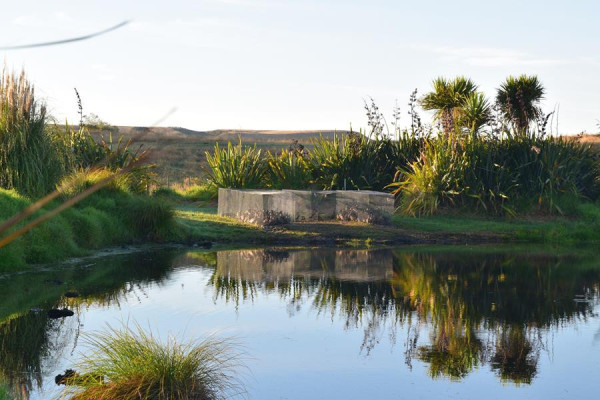
Teams around the North Island have been duck banding.
Fish & Game has been banding waterfowl for more than 30 years. It adds to our understanding of numbers and harvest rates so we can sustainably manage hunting.
Several thousand birds are banded in our Auckland-Waikato, Wellington-Taranaki and Eastern regions.
MPI have also used the duck banding as an opportunity to test large numbers of wild birds for HPAI – these banding events are the only opportunity they have to access bulk numbers of wild birds in one go. This year nearly 900 ducks were tested.
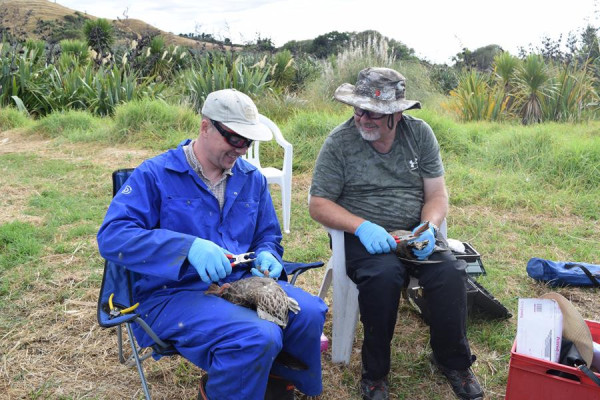
Taranaki Field Officer Jack Harland and Wellington -Taranaki Manager Phil Teal banding in Whanganui in early February
CSI Stream study
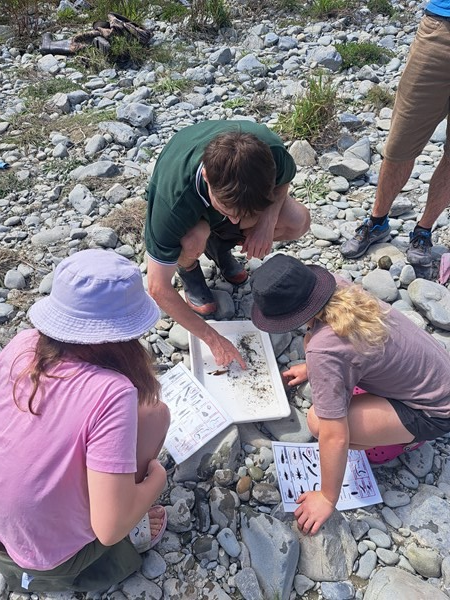
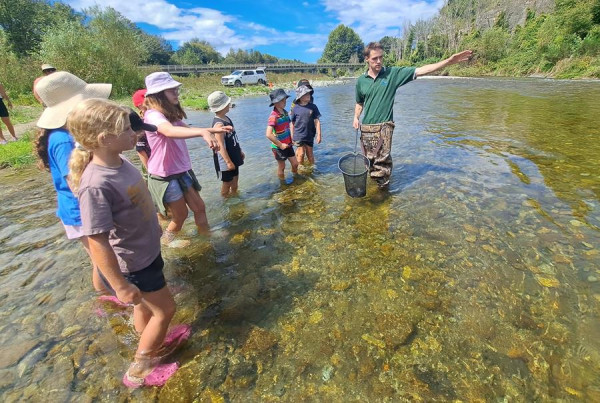
Beaconsfield School Stream students study invertebrates at Raincliffe Camp Ōpihi River
Blake Harper and Nikki Dellaway from Central South Island Fish & Game were invited to teach a stream study for a local school.
Students got hands-on with an invertebrate study, watched an electric fishing demonstration, and discovered river life, including bullies, juvenile brown trout, galaxiids, and the crowd favourite-longfin eels (tuna).
The key take home message for our future environmentalists: Everything is connected-the water, gravel, and aquatic life all play a crucial role in the ecosystem.
Women on the Fly
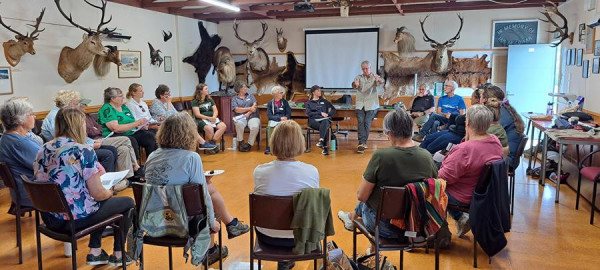
South Canterbury event encourages more women into fly fishing
A recent event in Timaru, organised by the South Canterbury Anglers Club with support from Women on the Fly NZ, introduced more women to fly fishing while showcasing local club opportunities. Held on 26 January, the event attracted 16 women from across Canterbury, eager to develop their skills and connect with others.
A day of learning and connection
The day began with a warm welcome from club members and Women on the Fly NZ mentors. Nikki Dellaway, Central South Island Fish & Game Officer, provided an overview of fishing licenses and regulations.
Participants engaged in hands-on learning, with senior South Canterbury Anglers Club members guiding them through essential skills like reading water and understanding fish behaviour. The supportive, women-led environment encouraged confidence, with many attendees enjoying the chance to learn together.
Growing the community
The event inspired more women to get involved, with eight attendees joining the South Canterbury Anglers Club and others connecting with clubs and networks across Canterbury.
Get involved
Women on the Fly NZ supports locally-led events that encourage more women into fly fishing. To organise an event or join our growing community, visit www.womenonthefly.nz.
ReWild Snap & Share photo competition
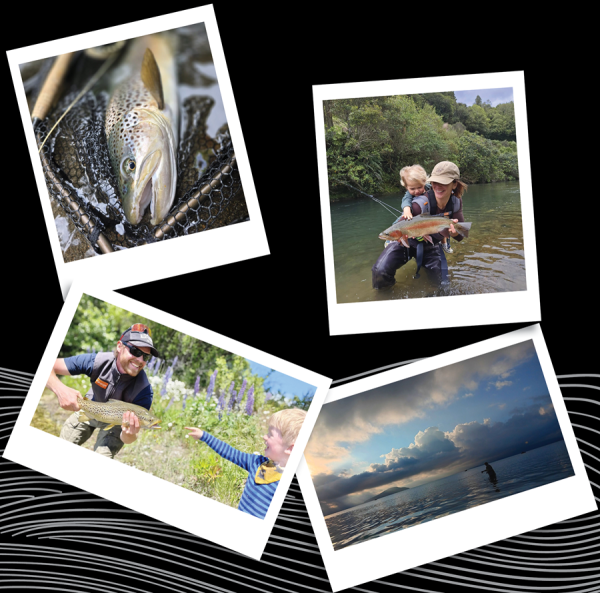
You get to chose which pic goes on your fishing licence!
It's time for you to judge the ReWild Snap & Share: Fish & Game Licence Photo Competition.
The images from left to right are:
December Winner - "Taranaki ring plain gold". Credit: Craig McEwen.
November Winner - "Me and my son Ryker flyfishing". Credit: Sharna Parker.
January Winner - ""My good mate Tom landed his first trout on the fly rod, while his son Elliot cheered with joy." Credit: Radek Baus.
February Winner - "Early morning on the Rotorua Lake flats chasing rainbows." Credit: Damon Mathfield.
Each monthly winner has won a $250 Voucher from Kilwell sports, and the overall winner will receive an additional $1000 voucher from Kilwell.Have your say on these stunning images by casting your vote here. https://www.fishandgame.org.nz/photo-competition-2024-2025
HPAI
We continue to monitor international developments with the spread of high pathogenicity avian influenza (HPAI).
Fish & Game is working with MPI to ensure our sector is involved in preparedness. MPI will be the lead response government agency.
Signs of HPAI
- The most obvious sign of HPAI in wild birds is several sick or dead birds in a group.
- Waterfowl in particular show signs of drowsiness, lack of coordination, and an inability to fly.
Protecting yourself and preventing the spread
- Avian influenza viruses rarely infect people but it’s important to minimise any risk.
- Avoid sick or dying birds.
- Practice good hygiene if you are handling wild birds.
- Report any find of 3 or more sick or dead birds to the exotic pest and disease hotline 0800 80 99 66.
See more detailed food safety advice and information for hunters on the MPI website and the Avian influenza information for game bird hunters – factsheet

Check, Clean, Dry
Protect Our Waterways: How you can help to stop invasive pests
New Zealand's pristine rivers and lakes face a serious threat from invasive freshwater pests like didymo and the invasive freshwater clams. These destructive organisms can spread with frightening ease – a single drop of water is all it takes to contaminate a new waterway.
The good news? Anglers can play a vital role in protecting our waters by following three simple steps between visits to different waterways:
CHECK Before leaving any river or lake:
South Island recreational freshwater users: Stick to the tried-and-true, pre-clam Check Clean Dry method!
- CHECK: Remove all plant and other material from items that have been in the water
- CLEAN: Mix 10% dishwashing detergent with water, use to soak or scrub all items and leave wet for 10 minutes.
- DRY: Dry items completely and leave for at least 48 hours.
North Island recreational freshwater users: Follow the clam-inclusive Check Clean Dry protocol that will kill the clam as well as other invasives.
- CHECK: Remove anything visible like mud, weed or clams from watercraft and gear. Drain all river or lake water.
- CLEAN: Wash down your gear (including boots) and craft with tap water, not into a stormwater system.
Use a cleaning treatment for absorbent materials:- Soak in hot water (55◦C) for at least 5 minutes OR
- Soak in 5% household bleach for an hour OR
- Freeze solid overnight.
- DRY: Dry any areas where water has pooled. Then dry watercraft and gear to touch, inside and out and leave to dry for 2 days.
Remember: If you prefer not to treat your gear, simply dedicate it to a single waterway. This option eliminates any risk of cross-contamination while still allowing you to enjoy fishing.
By following these guidelines, you're helping preserve our waterways for future generations of hunters and anglers. Every precaution counts when it comes to protecting New Zealand's precious freshwater ecosystems.
New Caps
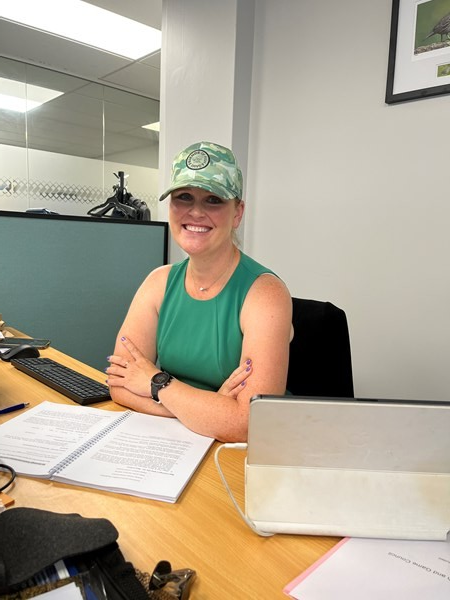
Here’s a hat you will want to hang onto, modelled by Ros at the New Zealand Council office.
The new Fish & Game friends’ cap is out and stunning in our bespoke camo fabric featuring all the birds and fish we manage so you can hunt them.
The caps are $20 each. Just drop us an email if you would like to order one. NZ Fish & Game Council nzcouncil@fishandgame.org.nz.
Chef Tony Smith's Trout Tacos recipe

Photo credit: Deborah Aspray
A recipe for the barbecue; with simple preparations this is easy to put together and a nice fresh dish that will be enjoyed by all. Although the recipe provided covers the traditional flavours associated with the use of taco bread wraps, you can add your own version of what you put in them.
The amount of ingredients below is a guide only. A nice way to serve these is self-help style; that is line up the prepared fillings or toppings and let everyone put together their own.
From a small trout you will make around 10-12 tacos
The pin boned fillets from a small trout; the one pictured was 500g
A packet of smaller tortilla wraps
- 1 fresh lime
- 2 radishes (sliced and cut into thin strips)
- 2 tomatoes (seeds removed and diced)
- ½ a small red onion (finely diced)
- 1 avocado
- 2 cups sliced lettuce
- 2 jalapeño pepper (optional) (finely dice)
- A little olive oil
- 60mls mayonnaise (good quality shop bought is fine)
- A handful of fresh coriander (chopped)
- Salt and black pepper to season
- Assemble all of the ingredients into small containers so that the tacos can be quickly assembled.
- Cut the trout into cigar sized pieces
- Heat your barbecue. Season and cook the fillets on the flat plate of the barbecue. They will only take a minute or two to cook, keep warm.
- Then with a pair of tongs place the tortillas onto the open barbecue bars, turn them over, take care not to overcook as you don’t want them to be crusty.
- Make up the tortilla and serve on a large rustic dish, or invite all to make their own.
- Probably the best order of ingredients is:
- A little lettuce, slices of avocado, optional jalapeños, the trout, tomatoes, mayonnaise, radish and coriander
- But remember anything goes here, mint, cucumber, gherkins, rocket, it’s about freshness, taste and texture. Enjoy
Disclaimer:
The information presented in these news items is based on the context and regulations in place at the time of publication. Please note that some articles may include reference to laws and regulatory standards that have since changed. For the most current and accurate information please check our Fishing Licences & Regulations pages or our Hunting Licences & Regulations pages.