Overlooked Angling Opportunities
- 10/10/2025
By Caleb Ryder
In today’s social media-driven world, where pristine bush-lined streams dominate the spotlight, many great angling opportunities are overlooked in the rush to beat-feet into the backcountry
Over the past few decades many anglers have made it their sole purpose to find the angling equivalent of the ‘holy grail’ – a completely new fishery no one has discovered. Online discourse and – at times – heated arguments would suggest no such spots exist. It is contended that thousands of intrepid anglers and international trout bums have covered every stretch of water in the country now.
But are we overlooking new and exciting fishing opportunities that exist in plain sight?
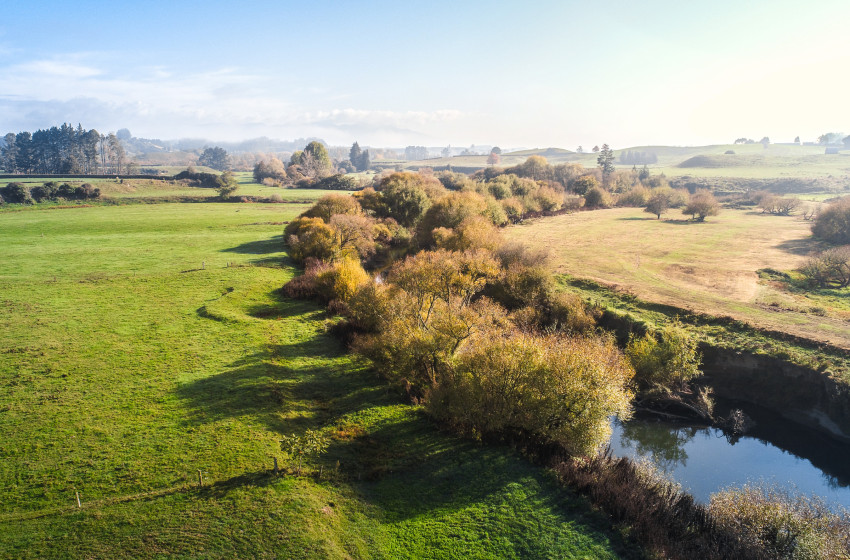
A variety of lesser-known waterways support thriving trout populations and, because they receive less attention, they’re often far less pressured than the more well-known destinations.
Where should I look for these spots?
Google Earth is an invaluable tool when scouting for new fishing spots. Look for smaller tributaries feeding into larger rivers and lakes known to have established trout populations. Areas that offer shelter for trout during adverse weather conditions are often well worth exploring.
Regional council websites are another great resource, providing real-time water level data and sometimes webcams. Planning trips to smaller streams and still waters when major rivers are running high can significantly improve your chances of success.
Fish & Game NZ also offers a range of helpful tools. Our website features access maps that identify public entry points to waterways (scan the QR code) and other useful information in an interactive format. Always verify the current season’s sports fishing regulations at these locations, available both online and in the regulations, booklet provided when you purchase your licence.
Additionally, Fish & Game publishes reports on their website from fish monitoring and salvage activities such as drift dives. These reports detail fish numbers and trends over time and can help identify catchments and reaches of river that are worth further investigation.
|
|
|
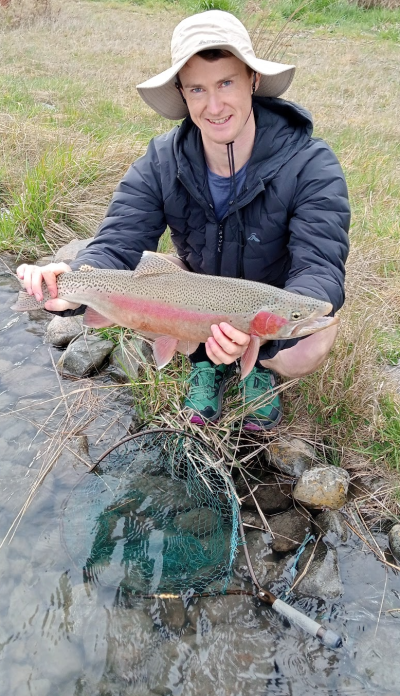
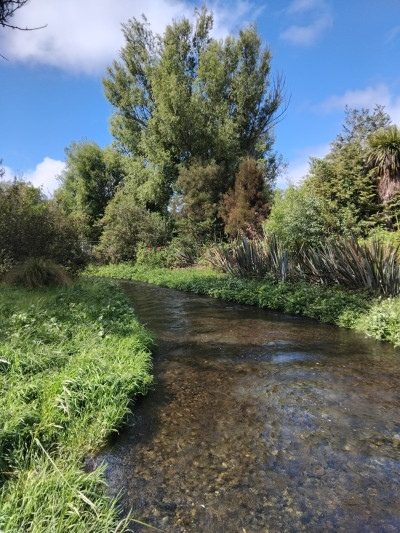
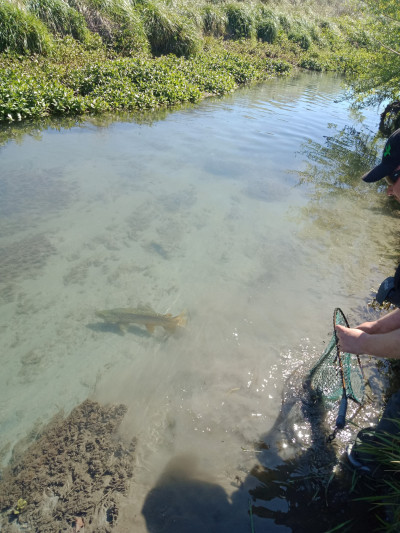
| Author with a healthy rainbow trout caught retrieving a streamer in an irrigation pond. | A healthy urban spring creek, a perfect place to explore. | Jake Shields watching a released brown trout cruise off in a roadside drain. |
Irrigation schemes
One type of location where I’ve experienced excellent angling over the past decade is irrigation ponds. In New Zealand, these waterbodies are widespread, and the trout they hold are often in exceptional condition, frequently reaching impressive sizes.
While water levels may fluctuate throughout the season due to extraction demands, these ponds typically provide stable habitats that support a diverse range of food sources, including bullies, snails, midges, water boatmen, and damsel nymphs.
When fishing irrigation ponds, keep an eye out for inflows, outflows, and man-made structures, as these areas often attract trout. It’s important to note that many of these ponds are located on private land so always seek permission from landowners before accessing them. Guidance on best practices for engaging with landowners is covered later in this article.
Closely linked to irrigation pond fishing are the races and canals that feed into and drain from these ponds. These waterways are typically stable and often support healthy weed beds along with a mix of other natural and artificial features. Under lower water conditions, trout can often be spotted and stalked in the clearer sections, while the more turbulent areas also provide productive fishing opportunities.
Always pay attention to any signage from landowners and water companies in these areas, and exercise caution around canal and race banks, as they can be steep or unstable.
These freshwaters may not be explicitly named in the Sports Fishing Regulations booklet, so in such instances the regulations will be covered by the freshwaters not mentioned for the region section of the Second Schedule of the Sports Fishing Regulations.
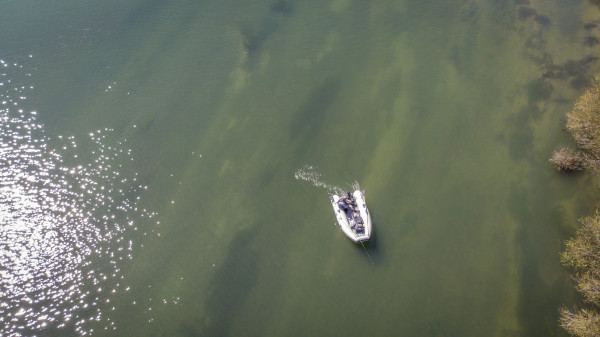
Look for bankside vegetation and structural features such as large boulders, weed beds, or silty shallows, as there often attract cruising fish
Wetlands and lakes
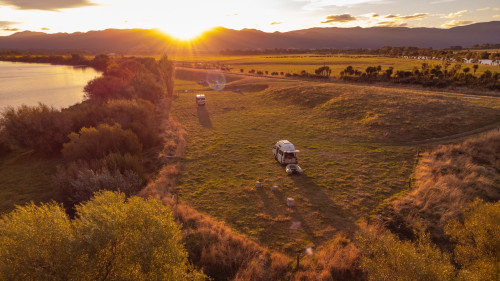
These waterways offer excellent alternatives when rivers are running high due to rainfall and are also ideal for relaxed, family-friendly outings. Where permitted, camping beside these waterbodies can be a major advantage, allowing keen anglers to fish at first light and again in the evening, when trout move into the shallows and tend to be less cautious.
Using kayaks, small boats, or even paddleboards can greatly expand your reach on these waterbodies. Such craft allow access to spots that may be out of range for shore-based anglers. Surprisingly, often trout can be seen cruising within just a few metres of these small watercraft, seemingly unfazed by the angler’s presence.
Recently a friend and I experienced some excellent angling at a high-country wetland with fish rising throughout the day. This was our second visit to this wetland where the first visit revealed few trout and limited activity. Our follow-up trip was the complete opposite, highlighting that if a promising location is visited make the effort to return because the angling can vary greatly from day to day.
|
|
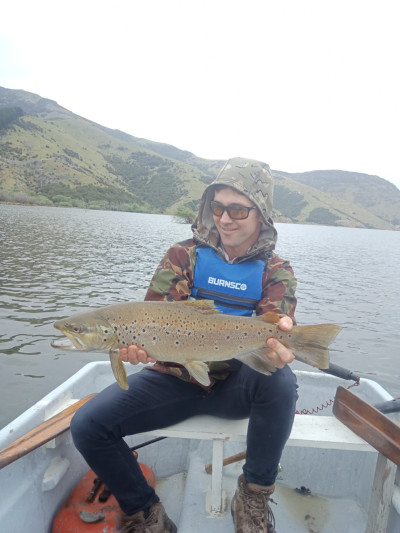
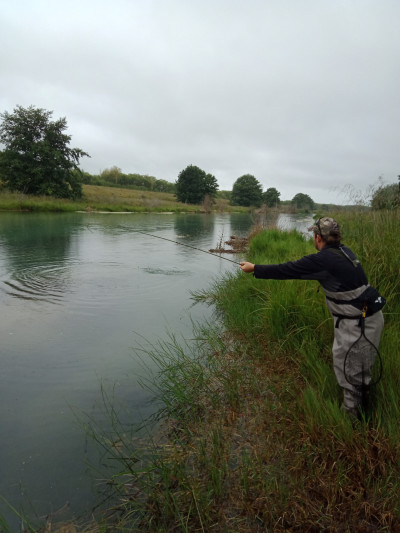
| Chan Ryder with a healthy brown trout from a coastal Canterbury lake | Jake Shields doing battle with a stubborn brown trout |
Small streams
It never ceases to amaze me how large some of the trout are in small streams. These waterways can be especially productive early and late in the season – when weed growth diminishes, trout often remain in the area early on or begin migrating upstream later in the season.
In such environments, the value of careful stalking cannot be overstated. Approach the stream quietly, be mindful of your shadow on sunny days, and avoid silhouetting your entire body – trout have excellent eyesight and will quickly detect any sign of danger.
Last season while peering into a North Canterbury spring creek from a bridge I spotted the tail of a trout swaying in the current, its head concealed by a culvert. Dangling a pheasant tail nymph incited an instant response and importantly some delicious fresh trout for my family!
Weed-cutting operations on some of these streams can improve fishing once the water clears. With the weed temporarily reduced, trout are easier to spot and hook, without the added challenge of fish burying themselves in dense aquatic weed during the ensuing battle.
Landowner etiquette
Many of the waterways discussed in this article are located on private land. In my experience, landowners are usually very receptive to polite and respectful requests for access. When seeking permission, always be mindful of their concerns, particularly around stock management, health and safety, and general farm operations. Never block gateways or access tracks, and it’s good practice to let the landowner know when you’ve left their property.
As a gesture of appreciation, consider sharing photos of your catch or providing a brief report on how your day went if the landowner is interested. This simple courtesy can go a long way in building ongoing, positive relationships.
Methods
A broad range of fishing methods can be effective in the waterways discussed here, regulations permitting. Ponds can be approached much like other still waters. I’ve found stalking along pond edges with a dry-dropper setup particularly successful when conditions allow for spotting fish.
When visibility is low, blind fishing becomes a reliable alternative. Aim to present your flies over drop-offs and weed beds and areas where glare and ripples may obscure fish from view. Casting lures and soft baits into deeper water or near inflowing currents can provoke aggressive strikes from trout hunting for prey.
Look for bankside vegetation and structural features such as large boulders, weed beds, or silty shallows, as these often attract cruising fish. Inflows from races frequently create productive hotspots where trout congregate. Prospecting these areas with a streamer can be particularly effective, especially when the inflowing water is discolored.
Spinning also performs well in these settings, particularly during higher flows or when fish are recovering from spawning. When retrieving, wind your lure as slowly as possible without snagging the bottom, since trout generally conserve energy by swimming at slower speeds. If you receive follows without strikes, try varying your retrieve speed, switching to a smaller lure, or selecting a more natural colour.
Bait fishing can also be productive where permitted, indicated by ‘FSB’ (Fly, Spin, Bait) in the authorised fishing methods column of the Sport Fishing Regulation’s booklet. Always refer to your region’s sports fishing regulations, available online or in your licence booklet to check which baits are allowed. Where permitted, bait fishing with a float or sinker (depending on water depth) is not only effective but also a family-friendly way to enjoy time on the water.
Disclaimer:
The information presented in these news items is based on the context and regulations in place at the time of publication. Please note that some articles may include reference to laws and regulatory standards that have since changed. For the most current and accurate information please check our Fishing Licences & Regulations pages or our Hunting Licences & Regulations pages.