Reel Life December 2025 - Central South Island
- Central South Island
- 12/12/2025
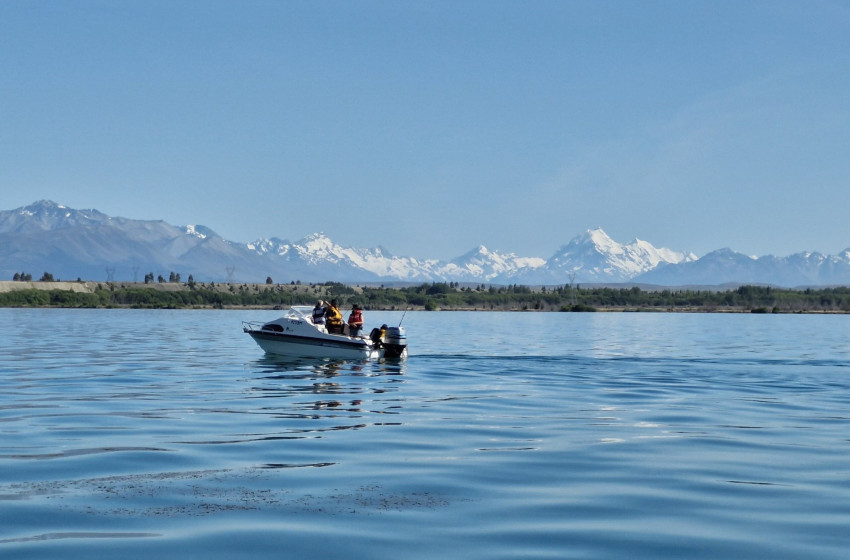
Summer fishing tips
For many anglers, the rod hasn’t been dusted off yet—some are still waiting for that first warm morning that “feels” like summer fishing. With the holidays on the horizon, it’s the perfect chance to get your gear ready and to start planning those missions with family and friends.
And for those planning to troll the lakes, don’t be discouraged if the first few laps feel like you’re towing lures through an empty bathtub. Summer trout often sit deeper during the heat of the day, so consider running your lures a little lower using led lines or downriggers, slowing your speed, or switching to brighter patterns when the sun is high. A small adjustment can be the difference between hours of quiet trolling and numerous hook ups.
- Flies to try in late December-January:
- Mayfly emergers in stony bottomed waters.
- Damselfly nymph pattern in still waters and ponds near weed beds.
- Green beetles are out in force at this time getting blown off shrubs and bushes and trout will take these during the day as this is when green beetles are at their most active.
- The willow grub are a trout favourite this time of year also. Long light leaders achieve the most realistic ‘touchdown’.
- Fish the early morning and take a well-deserved siesta in the afternoon.
- Spin fish for sockeye salmon at the Benmore Dam before they start their spawning run. Pink and silver are the recommended colours.
- Fly, spin or bait fish the Ōpihi –try an emerger or floating nymph.
- No fly rod? no worries! Try these spin fishing techniques.
- Fish the Waitaki River – Look for a caddis hatch later in the day or fish at night when there’s no moon.
If your Christmas shopping is not quite complete, why not gift someone a fishing licence and take them fishing! Click here to buy your licence online and learn about your options.
Alternatively, pop down to your local fishing shop and get one while you are picking up some new tackle.
If you do catch a nice fish over the summer be sure to send a photo and your report in to us at jvanbeers@fishandgame.org.nz
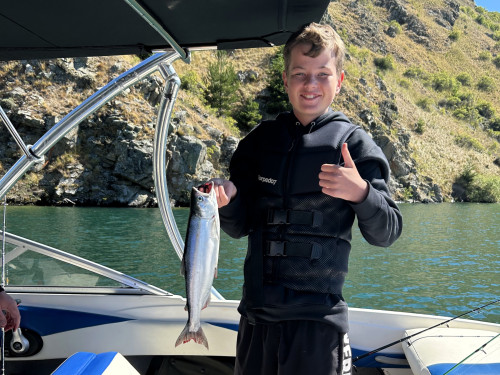
Summer catch! A nice 440mm long sockeye salmon
Sockeye Salmon Window Open Now
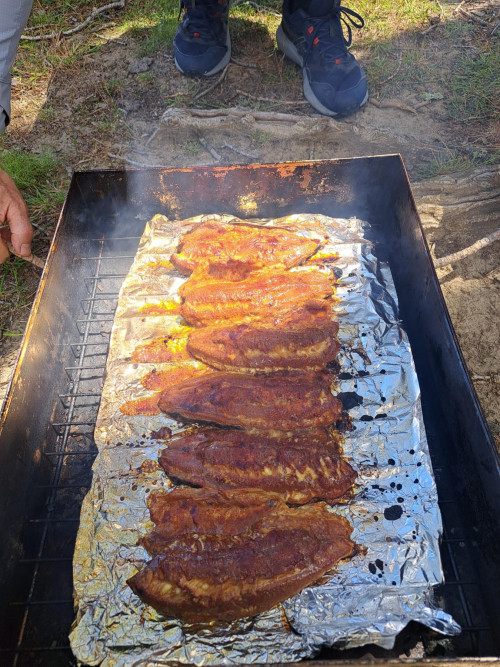
A spread of smoked sockeye salmon caught in December this year
The next couple of months there is a short window of opportunity to target Lake Benmore’s sockeye salmon prior to their spawning run.
At 300-440mm they are in peak eating condition and make a great meal for the table.
In late December - early February, sockeye tend to school up at the bottom of the lakes. (for example in Benmore, near the dam wall.)
By mid-February, sockeye begin to colour up in preparation for their late February to March spawning run, and as a result, they become less desirable for eating.
Last season Blake Harper caught up with expert sockeye anglers Howard and Nathan, to learn some successful sockeye fishing methods. Check the video here
Howard recommends two methods for targeting sockeye and for both, depth is the key.
The first is jigging while stationary or drifting, and the second was trolling through a school of sockeye.
Step number one though is to locate a school, the use of a fish finder is immensely helpful here, otherwise a bit of trial and error may be in order.
Try starting about 30 meters in front of Benmore Dam. Find the bottom with your jig, then bring it up a meter or two and begin jigging. If nothing happens after 10 minutes, move, and try again.
Howard used a pink and silver single hook toby and says anything flashy and colourful would probably work.
For trolling, Howard uses a downrigger but you could use lead lines or paravanes to achieve depth.
Sockeye fishing isn’t just for boaties though, we have heard of shoreline anglers having success spin fishing around the dam, some may be in reach.
Ahuriri River Research
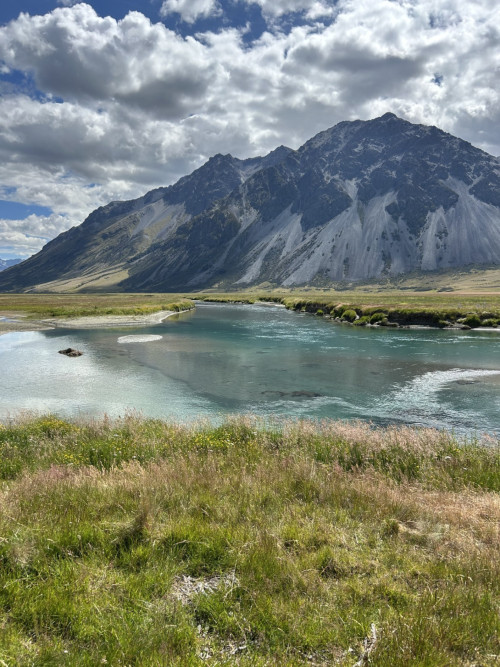
The pristine Ahuriri River
As part of ongoing work to better understand and manage the angling experience on the upper Ahuriri River, CSI Fish & Game is undertaking an in person angler use and satisfaction survey throughout the 2025/26 season.
This follows an online angler survey completed in 2024/25 as part of a multi-phase Pressure Sensitive Fishery (PSF) management pathway, where we set out to see if crowding on this river is negatively impacting the angling experience, and to gauge support for potential management tools. The survey showed that some anglers were avoiding certain times or sections of the river because of crowding, and support for potential management tools—such as voluntary beat systems or Designated Waters—was mixed.
What this earlier online survey didn’t tell us, however, was how often anglers are actually encountering each other on the river, or provide a baseline for angler use and satisfaction. Without that information, it’s difficult to evaluate whether any future management changes are working.
To address this gap, staff are now conducting on-river interviews to gather accurate data on angler numbers, encounter rates, and satisfaction levels. These results will help guide any future decisions and ensure that management actions are supported by measurable information.
We appreciate anglers taking a few minutes to participate when approached by staff on the river. Your input is an important part of looking after this fishery.
Hakatere/Fork Stream Mahika Kai Restoration project
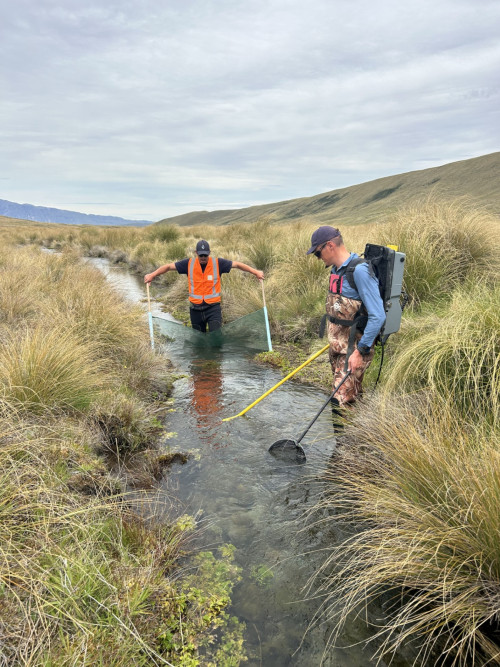
Hamish Stevens electric fishing with Che from rūnanga on the stop net
Earlier this week CSI Fish & Game supported a rūnanga-led project aimed at protecting taoka species in a small spring-fed tributary of Hakatere/Fork Stream near Tekapo/Takapō.
Hakatere/Fork Stream was part of a significant wetland area in Te Manahuna for gathering food.
In the past, southern Māori would harvest tuna and galaxiids/inaka throughout the wetland.
The purpose of this project is to remove the trout from this tributary to increase populations of mahika kai species.
It is hoped that future generations can sustainably harvest kai here, as thier tūpuna once did.
A concrete trout-barrier installed in 2018 prevents trout migrating upstream into the spring-fed tributary from the main stem of Fork Stream.
We worked alongside mana whenua rangatahi and the Department of Conservation to electric fish the creek above the barrier, finding and relocating trout back into the main stem.
Online resources
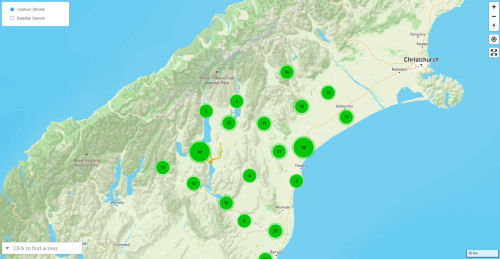
Our access mapping website details hundreds of fishing access points throughout the region
If you are new to fishing in Canterbury and North Otago or just looking to fish a bit further afield then we have some online resources for you!
Click here for our online access map website detailing over 300 access spots throughout the region.
Click here for park and cast options
Click Here for Fish & Game’s YouTube channel – find interesting videos from all over the country
Click here for online licence purchases
Message from Meridian
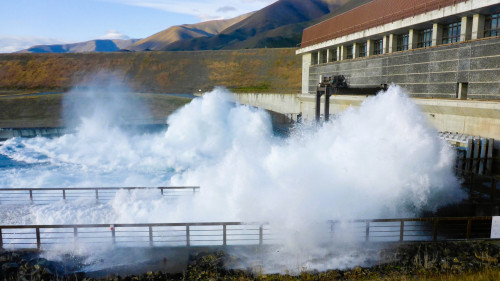
Fences and barriers are erected near power stations to keep you safe from emergency discharges as pictured here.
Summer is nearly here and there are a few things to remember when you’re out and about near our canals and hydro assets.
- Remember to park safely, well clear of the roadway and in designated parking areas.
- The rocks on the edge of the canal are super slippery and the canals quickly reach a 10m depth. Please be careful.
- Don’t climb fences around our structures – the fences are there to keep you safe.
- Take it easy when walking down the side of the canals - it’s easy to slip, fall and break something.
- Our hydro station’s water intake and discharge areas have fast flowing aerated water, undercurrents and unpredictable water releases. Please follow the safety information on our safety signs.
Enjoy the canals and hydro assets safely over the summer!
Happy fishing!
The Meridian team.
Connect with us on Facebook!
Central South Island Fish & Game are now on Facebook.
Like and follow us to stay up to date by searching for Central South Island Fish & Game on Facebook
We are excited to be able to bring you information on a different platform.
Your Feedback is sought! – Exploring Regulatory Changes To Increase Sea-Run Salmon Spawning
Salmon populations are at critically low levels currently requiring the Central South Island and North Canterbury Fish and Game Councils to explore further regulation options, in addition to the season bag limit, that enable a greater proportion of the run to spawn. Changes to the regulations may impact your fishing activities and your sea-run salmon fishery values, so we are seeking your feedback to support future decision making.
What is Fish & Game seeking feedback on?
Fish & Game is seeking your feedback on a variety of potential regulatory changes to the sea-run salmon fishery within the current management framework, including:
- Reducing season length
- Limiting fishing areas
- Implementing a catch-and-release fishery (0 season bag limit)
- Implementing a temporary season closure
How and when can I provide feedback?
You can provide feedback via our online survey. The survey will be available via email and posted on this webpage. There will be a staged release of the survey as follows:
- 1 December 2025: A randomised subset of sea-run salmon licence holders will be emailed, inviting them to complete the survey. Check your email now!
- 1 January 2026: A survey link will be emailed to all sea-run salmon licence holders who did not participate in the random survey. Additionally, the survey link will be available on our website for any angler or member of the public to complete.
- 31 January 2026: The survey period closes. All submissions must be made by 11:59 pm NZDT.
For more information and to view the full information pack, visit our webpage via the links in text.
Tight Lines,
CSI Fish and Game.
Disclaimer:
The information presented in these news items is based on the context and regulations in place at the time of publication. Please note that some articles may include reference to laws and regulatory standards that have since changed. For the most current and accurate information please check our Fishing Licences & Regulations pages or our Hunting Licences & Regulations pages.