Reel Life February 2026 - Hawke's Bay
- Hawkes Bay
- 20/02/2026
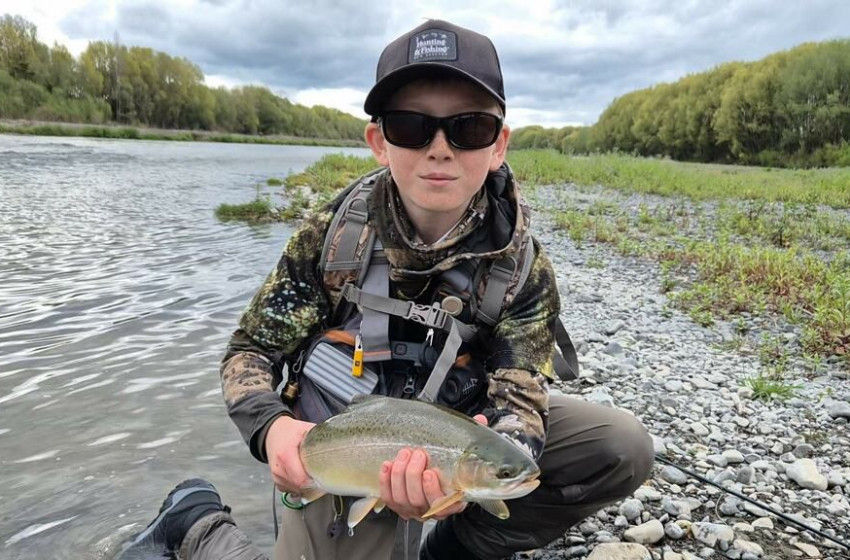
As expected we received a good dump of rain around the middle of January which gave most of the rivers a really good flush out with some sites back nearer the kaweka and Ruahine ranges getting around 100-120mm over a few days.
Image above: A Happy junior with a fine young rainbow.
Most rivers appear to have benefitted from it, with much of the “cowcress” weed removed in the smaller CHB rivers and streams, and the Tukituki and Waipawa particularly benefitting from the extra volume and cooler water temperatures. Some of our smaller high-country streams had very high flows that moved fish around a bit and changed a few pools and runs, but as far as we can see nothing has been too adversely effected.
Then came the rain on the weekend of 14/15 February that had many of us really fearing the worst, in short most of Hawkes Bay “dodged a bullet” in that event, unfortunately there was some significant impacts elsewhere in the country. Areas south of Waipukurau saw very high rain volumes and many streams in the Manawatu region around the gorge were really heavily impacted, no doubt we will see plenty of our neighbouring anglers from the Manawatu visiting the CHB as their rivers recover.
The fresh from January had been great for the fishing, making the fish easier to spot, and getting the fish feeding and fighting well again. As at 20 February most rivers were dropping and clearing well, after last weekends rain. The Mohaka and Waipunga off State Highway 5 were looking a bit green still and carrying some extra volume, but very fishable, particularly if you were spinning or euro Nymphing – the Mohaka was flowing 37 cumecs/ sec compared to normal summer level of 20 -25 cumecs/ sec.
The Mohaka has been fishing well although the higher water levels have made crossing and travel more difficult than normal for this time of the year- it has been great to see the increase in average size particularly in the Waitara and Glenfalls area below SH2 with a good number of 2- and 3-year-old trout in the 30 -45 cm range getting caught, with a few in the 60cm range landed too. This area was quite badly affected by Cyclone Gabrielle in February 2023 with a noticeable reduction in both trout numbers and size in the couple of years following, so it’s great to see the progeny of those that survived the cyclone and spawned, coming through now.
The Tukituki and Waipawa Rivers have continued to fish very well, although they have all been getting lots of angling pressure from both local and visiting anglers. The recent rain and cooler weather has cleared the weed and dropped the water temps, but it does appear the rain has moved some fish around and spread out some of the big concentrations that were seeking the cooler water around sides streams or back water springs. The likes of the Tukipo and Manganuku had been very low and choked with cowcress, but the rain in mid-January has done a great job of clearing the weed and revitalising these streams, and we have had some good reports of improved fishing in these and all the CHB streams.
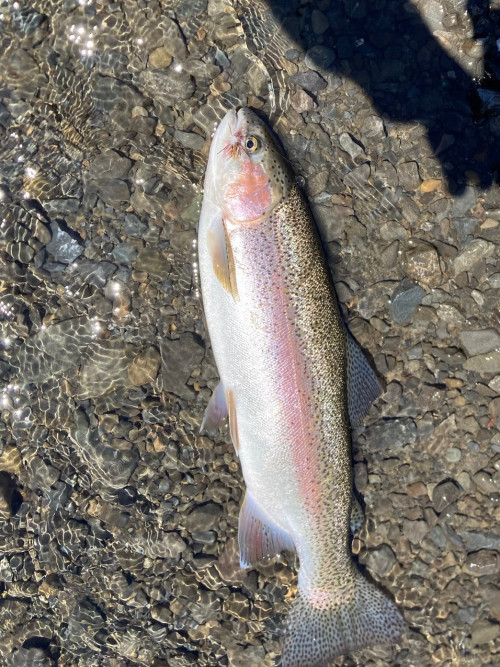
A nice dry fly caught HB rainbow
The Ngaruroro and Tutaekuri have been fairly good, although the Kuripapango area was busy over the holiday season and summer period. Anglers have commented on how the fishing has been a bit variable in both rivers so far this season; the recent rain appears to have brought large numbers of juveniles downstream into some lower reaches of the Ngaruroro. Several anglers have commented that in the Tutaekuri; whilst there are still reasonable numbers of younger fish around Redcliffe there didn’t seem to be as many larger fish as earlier in the season. The Tutaekuri and its major tributary the Mangaone were badly affected by Cyclone Gabrielle, which is why this river system only has a one fish limit, we need to protect as many of our mature fish , our prime “breeding stock” as we can, so they can spawn and restock these rivers, so we recommend if you must take a fish for the table, you target the bigger rivers that have a 2 fish limit.
The smaller northern rivers which still have many active slips in their catchments and have remained dirty for long periods after the recent rains, making fishing difficult. On a positive note, it should provide greater protection for the remaining trout in there, maximising their chances of surviving, spawning again and restocking these rivers.
Sport Fly Fishing NZ are holding a Fishing Competition the 21 February
Sport Flyfish NZ is holding a competition on the larger of the Twin Lake at Kurapapango on Saturday 21 February this is after an earlier event planned for January was postponed due to the rain. With up to 15 competition anglers, the lake will be quite busy, the competition will not preclude other anglers from fishing, and there will still be large sections of bank available for other anglers to fish if they want, but do expect the Twin lakes to be extra busy that day, so fishing somewhere else might be an option to consider. This will be a catch and release event, so anglers can rest assured it should be no effect on fish stocks.
It’s great to see SFFNZ with a strong biosecurity focus on their competitions, where it is a prerequisite for all competitors to declare where they have fished within the last month and to sign a declaration they have checked, sterilised and dried their gear prior to fishing another waterway. If anglers have fished in or downstream of “the clam zone” in the Waikato system within the last month, they prohibit any of these potential competitors fishing elsewhere. With the huge risk posed by Gold Clams to pristine areas like the twin lakes, it is vital we all play our part to ensure pest organisms aren’t introduced here.
We remind all anglers to ensure they check, clean, sterilize, then dry to be sure – dry to touch inside and out , then leave to dry for another 2 days before using again, when moving between rivers and lakes, this is particularly important for anyone travelling in from the Waikato or the South Island, with their respective gold clam and didymo risks. Once cleaned of any dirt, weed or other matter, all gear should be sterilised, Biosecurity NZ recommend soaking in a 5% bleach solution for a minimum of 1 hour, then dried as above. We have some great rivers, offering wonderful fishing in the north island, but the last thing anyone wants is someone introducing a pest species or organism. If you need any more information please check 'Check Clean Dry': help protect New Zealand's waterways | NZ Government
Twin Lakes Road and Carpark Closure with Alternative Route
Pan Pac have advised that due harvesting in the area around the ‘Twin lakes carpark” the road and carpark will be closed from 15 February through to July 2026, stopping access to the Tutaekuri river and Mackintosh hut from this point. There is an alternative route from Timpson road which will allow access to the Kuripapango hill track and the Twin lakes, this access point is approximately 2 kilometres before the twin lakes carpark off the same forestry road.
What to use?
With many of rivers carrying extra volume, but likely to end up really clear with less weed and turbidity once they do clear, it creates challenges for anglers. If you are nymph fishing, you need a reasonable amount of weight to get down to where the fish are but still need fine leaders and smaller flies. Whilst they are still carrying some colour for nymph fishing - weight, colour and flash are likely to help. With dry flies either big visible terrestrials or small traditional patterns should work well – no matter what technique you are using, being prepared to experiment with a range of patterns will often pay dividends, remembering that just because the last trout ate a particular pattern, there is no guarantee it will work on the next one!
Spinning and soft baiting are likely to be successful with the extra volume and particularly if there is still some colour in the water.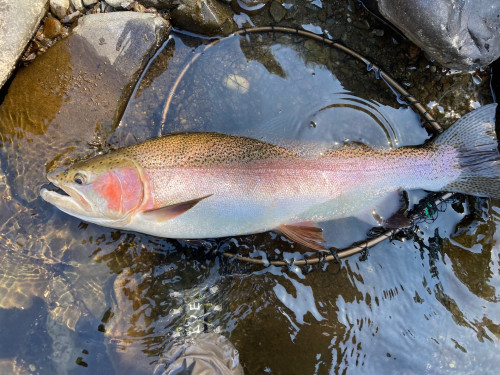
A nice mature Hawkes Bay rainbow photo John Lumsden
Low bag Limits and releasing trout
With relatively low bag limits, and regulations that state an angler must cease fishing once the daily bag limit has been reached, Hawkes Bay anglers may find that they want to selectively harvest, meaning they need to release trout, so they can continue fishing.
All anglers need to be aware that how they handle the fish is critical to its survival after being released.
Here are our ‘Quick 5’ tips for handling fish with care:
- Always wet your hands before handling a fish and if possible, use a knotless landing net.
- Keep the fish in the water while removing the hook – a specialized hook remover or forceps readily available on your vest, will definitely help.
- Do not squeeze the fish and never touch the gills.
- If you feel you must photograph your fish, do it in or over the water and make it quick - the fish should never be out of the water for more than 5 seconds.
- Revive the fish by facing into the current long enough for it to regain its swimming strength.
In the unfortunate instance that a fish you intended to release does end up bleeding from the gills or cannot maintain itself upright, so long as you can legally take that fish, we recommend you should keep it as part of your bag limit and utilize it.
If you want to harvest a trout for dinner we recommend you take a nice fat younger fish rather than a big mature spawner, as we still need them to help replenish our fisheries and let’s face it, a big mature trout is too valuable to be only caught once.
No Compliance and Poaching
We have had a couple reports of poaching recently that we are following up on and really appreciate anglers calling these incidents in. If you witness some illegal fishing or hunting, please give us a call or email, if you are safely able to record; ideally photograph, vehicles with registration numbers and a description of the people involved that would be great – But please, only if you can do so safely.
Making the most of the rest of the season
The mature trout that have spawned over the winter and younger fish should now be in peak condition after the great weather we have had since the start of the season on 1 October. The last two winters have been really kind to the trout and there has been a steady increase in trout numbers across the bay post Cyclone Gabrielle, so we look set for another great summer for The Bays trout anglers. So Grab your licence if you haven't got one already, make sure you carry it with you, read the regulations and make the most of the good conditions. Fishing Licence New Zealand - Fish & Game NZ
Our ranging team have very active this season and will continue to be, we are looking forward to catching up with anglers on the rivers, to hear of their successes, share some advice and ideally be complimenting them for being 100% compliant.
Disclaimer:
The information presented in these news items is based on the context and regulations in place at the time of publication. Please note that some articles may include reference to laws and regulatory standards that have since changed. For the most current and accurate information please check our Fishing Licences & Regulations pages or our Hunting Licences & Regulations pages.