Reel Life February 2026 - North Canterbury
- North Canterbury
- 20/02/2026
Fresh Opportunities Across Our Rivers and Lakes
It’s hard to believe we’re already nudging the latter stages of summer. While the calendar suggests the long, golden evenings are tapering off, North Canterbury seems to be delivering some of its most settled fishing weather right on cue. After weeks of mixed conditions and the usual wind interruptions, we’re finally seeing more consistent patterns settle in, and with that comes genuine opportunity on the water.
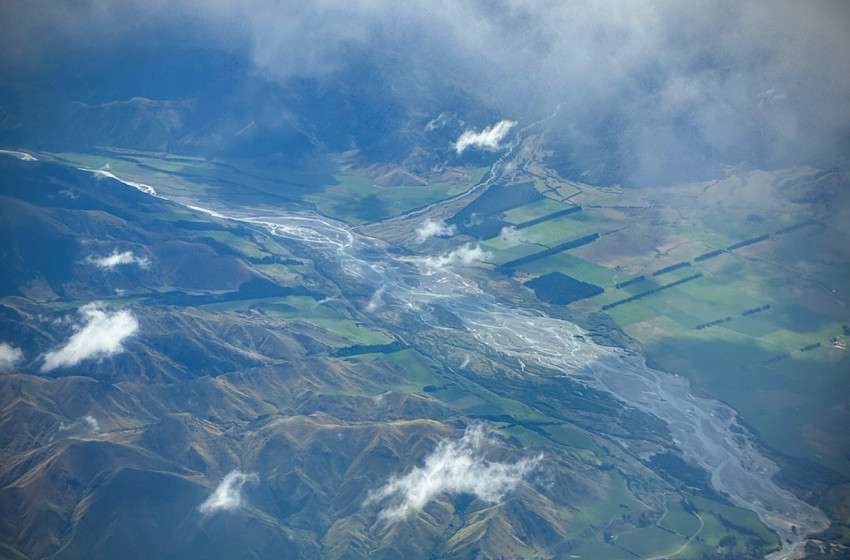
Image above: An image taken from a flight that shows the Waiau Uwha just above the Hanmer Springs bridge.
The Waimakariri River is currently presenting well. River levels have steadied, and visibility has improved, making much of the system accessible again. Encouragingly, a salmon was recently landed and released from the lower reaches at McIntosh’s Rocks, a positive sign that has certainly sparked interest among keen river-mouth anglers.
Further upstream, the river has been busy reshaping itself. Recent freshes have shifted braids, altered shingle banks, and redefined traditional holding water. Familiar spots may look very different, and some long-relied-on pools have disappeared altogether. That said, change often brings new opportunity. Newly formed channels and deeper cuts are beginning to establish themselves, and anglers willing to explore beyond their usual routes are likely to uncover productive water. A bit of walking and careful observation will go a long way right now.
The Rakaia River is also beginning to show encouraging activity. Additional salmon have been confirmed from the mouth area in recent days, signalling steady movement of fish through the system. As with the Waimakariri, structural changes through the middle reaches mean anglers will need to adapt. Reading the water carefully by identifying current lines, depth transitions, and softer edges will be key to success. Tidal influence around the mouth continues to offer prime windows, particularly during the calmer periods of the day.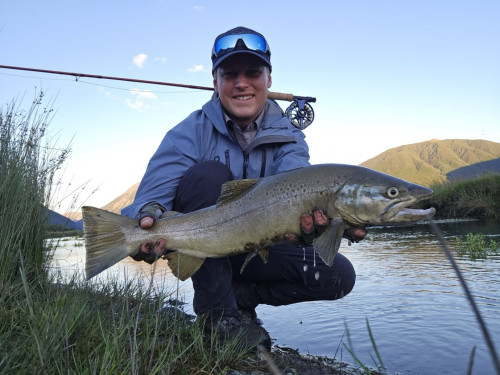
Marc Jensen with a long brownie that had some attitude in its fight.
Lake fisheries across the region have had to contend with persistent breezes lately, but those choosing their moments carefully are still producing fish. Early starts and sheltered shorelines have proven worthwhile. Boat anglers trolling or jigging are covering water effectively, while fly fishers working structure and drop-offs are finding success when the wind allows for accurate presentation. Flexibility has been the name of the game.
Looking ahead, forecasts suggest more settled conditions with lighter rainfall totals than we’ve seen recently. If this holds, we can expect rivers to remain stable or gradually ease back, creating reliable access across much of the region. Given how dramatically riverbeds have shifted this season, now is an excellent time to re-learn stretches of water. Treat each outing as reconnaissance as much as recreation. Take note of new channels, altered seams, and emerging holding water that could prove valuable in the weeks ahead.
Late summer transitioning into early autumn often delivers some of the most dependable fishing of the year. Stable weather, manageable flows, and fresh fish entering our systems combine to create real potential. If you’ve been waiting for a consistent run of conditions, this could well be it. Make the most of it while it’s here, our rivers and lakes are shaping up nicely.
Management Closures on Hurunui North Branch Booking System
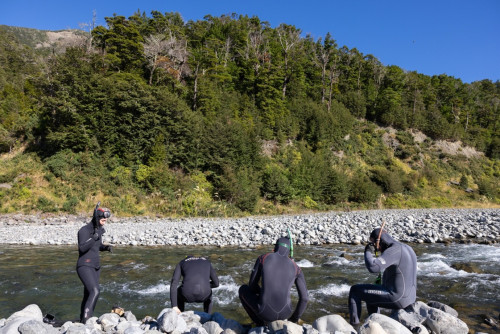
North Canterbury staff preparing to drift dive the Lewis Pass Designated Waters in 2025.
This year, as part of our ongoing trout population monitoring programme, we are reinstating the North Branch of the Hurunui River into our annual drift dive schedule.
At this stage, we are planning to complete the dives during the second week of March, 9th March 2026 - 13th March 2026.
As much as we would love a weather wand (let us know if you know where to get one), conditions ultimately dictate when we can safely and effectively dive. To allow flexibility, we will temporarily close bookings on the system from Monday to Friday that week. Once we have assessed the weather and confirmed dive days (likely only one needed), all remaining days will be reopened for anglers to book and fish. We will keep anglers updated on the day(s) we are diving, so it will be clear what will become available on the booking system.
We’ve chosen to close the system during the dive window because we understand how hard it can be to secure a booking. The last thing we want is to impact someone’s day on the water by drifting through a pool and momentarily disturbing the fish.
And for those wondering, if you secure a booking for the day after the drift dive, rest assured the trout will be back to feeding as long as they’re hungry. From what we’ve observed over many years, fish quickly settle after we’ve floated through and normal behaviour resumes in a short period of time.
Why do we drift dive?
Drift dives are an extremely valuable tool for assessing the health of a trout population over time. They allow staff to directly observe fish numbers, size classes and distribution, while also gaining insight into the density and type of food available beneath the surface. This long-term monitoring gives us a clear picture of how a fishery is performing and how environmental conditions may be influencing it.
Fish & Game New Zealand CEO Corina Jordan told The Press last year:
“Around the country Fish & Game staff dive about 100 rivers so we have an extremely robust data set which goes back about 30 years. This data is used to measure population numbers and trends but also set regulations like bag limits to ensure we are sustainably managing our fisheries. Staff also record water and ecosystem health trends which they pass on to regional councils.”
Adding the North Branch back into our annual programme is an important step in the management of this designated water and controlled fishery. Consistent monitoring ensures we are making evidence-based decisions to protect and enhance the angling experience both now and into the future.
Introduction to Jigging for Trout and Landlocked Salmon
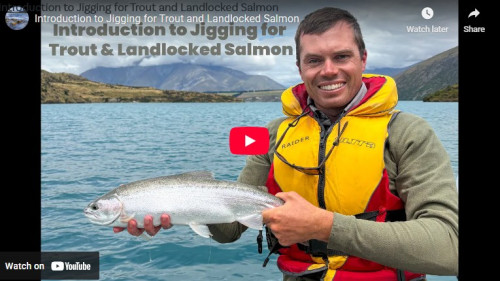
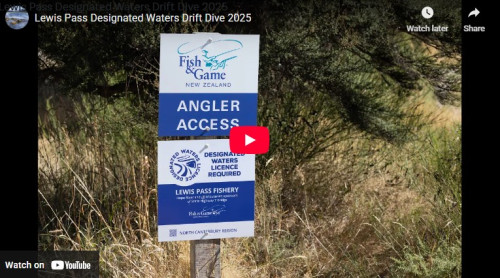
As mentioned in last month’s Reel Life, we’ve recently put together a comprehensive “how-to” video focused on freshwater jigging, a technique that many anglers will have heard about, and plenty are already using with great success. Traditionally popular among saltwater anglers and widely adopted in the North Island, where warmer surface temperatures often push fish deeper, jigging has proven to be an effective way to consistently reach trout holding well below the surface. It’s a method South Island anglers should no longer overlook.
In recent seasons across the South Island, we’ve seen a clear rise in anglers achieving outstanding results targeting trout and landlocked salmon using jigging techniques. The success hasn’t been accidental. Through observation, time on the water, and plenty of trial and error, patterns have emerged, and that’s exactly what this new video aims to share.
In the guide, North Canterbury Fish & Game staff member Harry Graham-Samson breaks down what we’ve learned from some of the most successful local jig anglers, alongside what has worked first-hand when we’ve put the method into practice ourselves. The video takes viewers through a practical, step-by-step approach, simplifying what can at first seem like a technical style of fishing.
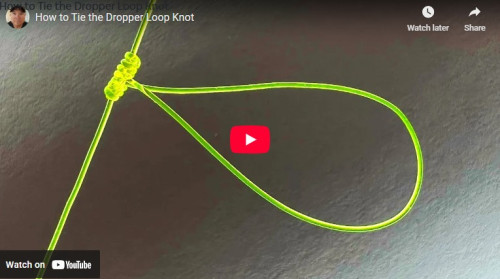
Harry covers the full setup from the rod and reel configuration he prefers to the specific rig he ties, but more importantly, he explains the reasoning behind it all. Understanding why the rig is constructed a certain way, and how that helps position flies precisely in the strike zone, is often the difference between simply dropping a line and consistently hooking fish. He also outlines how freshwater jigging differs from traditional saltwater jigging, and how subtle adjustments in technique, presentation, and gear can dramatically improve success rates.
Whether you’re fishing the lakes of North Canterbury, exploring other South Island waters, or looking to expand your skillset wherever you cast a line, this video is designed to build confidence and demystify the process. Freshwater jigging is an incredibly effective and rewarding technique, and with the right setup and understanding, it can quickly become a valuable addition to your angling toolkit.
Disclaimer:
The information presented in these news items is based on the context and regulations in place at the time of publication. Please note that some articles may include reference to laws and regulatory standards that have since changed. For the most current and accurate information please check our Fishing Licences & Regulations pages or our Hunting Licences & Regulations pages.