Reel Life February 2026 - Southland
- Southland
- 20/02/2026
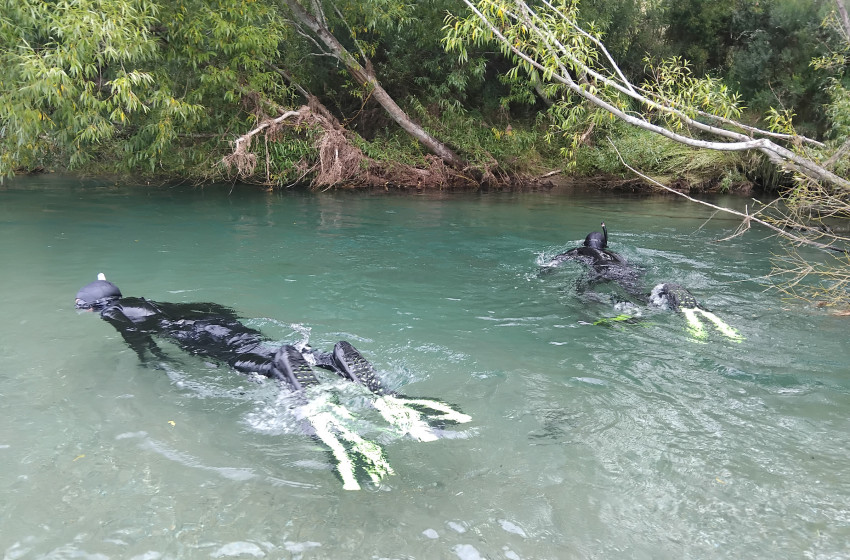
Summer drift diving results
Each year, Southland Fish & Game undertakes drift dive surveys on the mid and upper reaches of our medium and large rivers. By counting trout on the same reaches annually, we can estimate the number of trout per kilometre and track population trends over time.
Image above: Southland Fish & Game staff drift diving on the Mataura River
So far this summer, we have carried out drift dive surveys on five rivers, and overall, we have been pleased with our observations. On the upper Oreti River near Lincoln Hill and Three Kings, we observed approximately 30 large trout per kilometre which is consistent with recent counts.
In the middle reaches of the Mararoa River, between the Kiwiburn Bridge and Wash Creek, trout numbers were relatively low, with three brown trout and four rainbow trout per kilometre. These counts align closely with recent years’ observations. On the upper Mataura River near Garston, around 20 trout per kilometre were recorded, again similar to recent surveys.
After a few years of low counts, it was great to see an uptick in trout numbers in the Monowai River, with nine brown trout and seven rainbow trout per kilometre. It was also encouraging to see multiple smaller fish between 200–250 mm, which have not been common in previous years.
The drift dive survey on the Aparima River (between Etalvale and Wreys Bush) was unfortunately disrupted by unexpected rain and overcast conditions, preventing an accurate count. Despite this, fish condition appeared excellent, with several large, well-conditioned trout observed.
Further drift dives are planned for the upper and lower Waiau River, as well as the lower Mararoa River. We will be sure to keep anglers updated on those results as they become available.
Angler Etiquette Reminder
Summer is a busy time on Southland’s rivers, with many anglers keen to get out and explore. With more people on the water, encounters between anglers become more common, and we have unfortunately received several complaints regarding poor angler etiquette.
Practicing good angler etiquette helps ensure everyone has an enjoyable fishing experience. Please keep the following in mind when out on the water:
- Communicate politely with other anglers encountered on the river. A quick, friendly conversation about intentions and fishing direction can prevent misunderstandings.
- Avoid jumping in ahead of anglers already fishing a section of water and if you can, leave a note on your vehicle outlining whether you intend to fish upstream or downstream.
- Follow established fishing beat protocols on rivers where voluntary beat systems are used. These systems work well when everyone follows them as intended.
- Do not camp in areas where camping is not permitted. Camping where you shouldn’t risks damaging relationships with landowners and can threaten access arrangements.
- Leave gates, tapes, and access points exactly as found. Make a mental note of how they are set and return them to the same configuration. This is critical for stock safety and for maintaining ongoing access.
For more information, check out the Fishing Code of Conduct on the Fish & Game website. https://www.fishandgame.org.nz/freshwater-fishing-in-new-zealand/fishing-in-action/fishing-code-of-conduct/
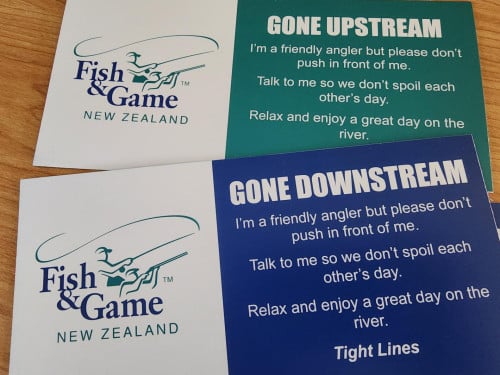
Leaving a note on your vehicle dashboard is a great way to let other anglers know where you are fishing.
Lake Monowai Creel Surveys
Southland Fish & Game staff have been out and about at Lake Monowai this season, talking with anglers and collecting catch information through creel surveys. These surveys help build a picture of how the fishery is performing and which methods are most effective on the lake.
So far, reports have been positive. Well-conditioned rainbow trout are being caught in good numbers and more frequently than brown trout. Trolling remains the most commonly used method, with a lead line fished close to shore and top lines set well back behind the boat producing the best results.
Anglers casting towards structure, such as submerged trees, weed beds, and stream mouths, have also enjoyed good success. On calm days, trout have been observed rising across the lake during the middle of the day, feeding on invertebrates blown onto the surface. The Walker River delta and Shallow Bay have stood out during these conditions, with fish clearly visible taking food off the surface.
If you bump into Fish & Game staff on the lake, they may ask for a quick chat and to record some of your catch information. It would be greatly appreciated if you could help us out as your catch information helps us build a better understanding of catch rates and supports the ongoing management of the fishery.
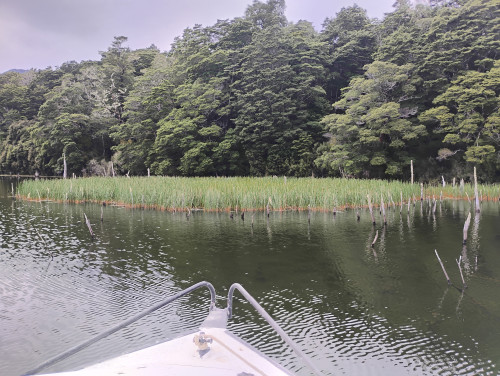
The native Kuta or spike sedge at the end of Rodger Inlet on Lake Monowai. These aquatic plants help fuel the food chain from the bottom up, providing shelter and nutrition for invertebrates who are then picked off by hungry trout. Try casting in and around these likely habitats.
Disclaimer:
The information presented in these news items is based on the context and regulations in place at the time of publication. Please note that some articles may include reference to laws and regulatory standards that have since changed. For the most current and accurate information please check our Fishing Licences & Regulations pages or our Hunting Licences & Regulations pages.