Reel Life January 2026 - Central South Island
- Central South Island
- 20/01/2026
High-Country Dry Fly Time!
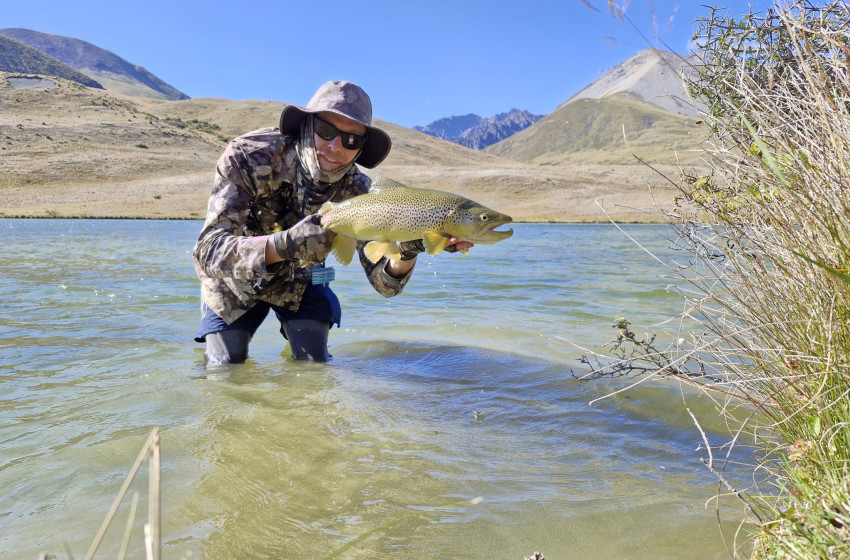
February is the month to head to the high-country and try a bit of dry fly fishing with mid-to-late summer bringing cicadas, hoppers, and blowflies onto the menu for trout.
Image above: A fat high-country brown trout caught on a grasshopper imitation on a hot, windy afternoon’- Photo Rhys Adams Fish & Game
To match the menu, catch an insect in the long grass and ensure your fly pattern mirrors the real thing, particularly in relation to size. Dry fly patterns worth having on stand-by are: blowflies, black gnat, royal wulff, hopper and flying ant.
Mackenzie lakes and rivers are also worthwhile, or fish the Ashburton Lakes.
Hydro Canal Fish Release
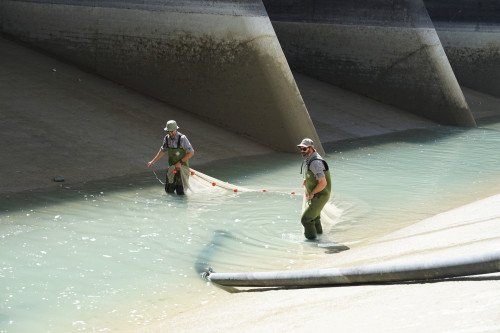
CSI staff Jase and Graeme rounding up fish for relocation
Hydro scheme spill events are occasionally required to manage high lake levels caused by big rain events and over the past few weeks Genesis Energy have been managing Lake Tekapo/Takapō water levels through Gate 16 and the Tekapo/Takapō riverbed spillway.
CSI Fish & Game staff have been collaborating with Genesis Energy staff to relocate stranded fish from the Tekapo/Takapō spillway. Together we have relocated 410 stranded fish including 204 rainbow, 205 brown trout and one salmon from the spillway to the Tekapo/Takapō Canal. Of these fish about 130 were juveniles but the majority were of a size that would provide a satisfying catch for anglers.
Additionally, 105 trout were tagged for the purpose of monitoring the growth and movement of fish of Lake Tekapo origin in the Tekapo/Takapō Canal and we have already seen the first return from this release with a tagged fish recaptured after travelling about 25km.
The tagging project at the Tekapo Canal/Takapō has been in place for over five years – check our facebook page for a clip of this release.
If you catch a tagged trout, please report your catch on our online form, here. Or phone 03 615 8400 or email csi@fishandgame.org.nz – you don’t have to have kept the fish. The key pieces of information we are after is the four digit tag number, an estimated weight, location and date caught.
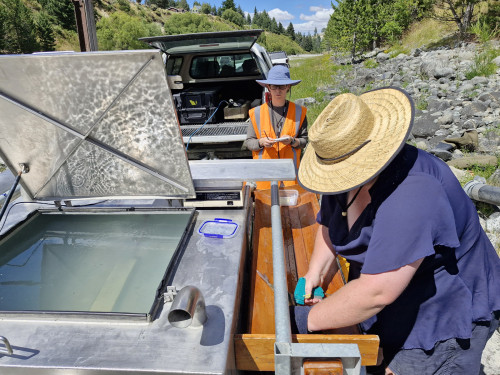
Katie (Genesis) and Nikki (CSIFG) working together to measure and tag fish before release after salvage
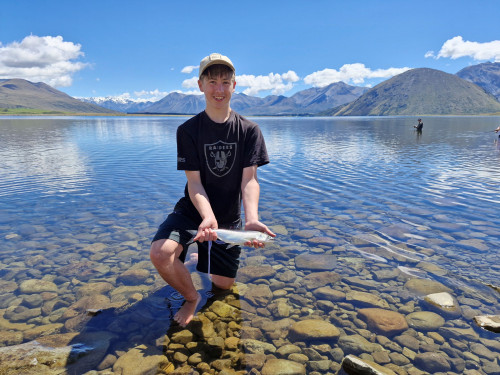
Angler Thomas Hampton with a lake-type salmon caught in Lake Heron- Photo Jase Van Beers Fish & Game
Have Your Say: Potential Fishing Rule Changes at Lake Heron
Fish & Game is inviting angler and public feedback on potential rule changes that manage the catch of sub-adult lake-type salmon at Lake Heron.
Lake Heron is a distinctive salmon fishery that provides a popular fishery of sub-adult lake-type salmon. After rearing in the lake for 2-4 years, lake-type salmon migrate to the Pacific Ocean and return to Lake Heron as adult sea-run salmon to spawn in a tributary stream. Although the sea-run salmon populations of Canterbury are at critically low levels, the salmon numbers returning to spawn in the Lake Heron tributary remain stable.
The Central South Island Fish & Game Council is consulting its fishing licence holders and the wider public on a range of options. Rules could be introduced to manage sub -adult lake-type salmon catch when sea-run salmon populations of the Canterbury fishery are within the “severe” population management band. The options may impact both trout and salmon anglers at Lake Heron and include: reducing the daily bag limit for salmon and temporary closure of the fishery to trout and salmon fishing.
The consultation period opens for submissions on 5 January 2026 and closes on 30 January 2026.
Central South Island Region sports fishing licence holders have been emailed the survey directly, and the survey is also publicly available on the Fish & Game website - Click here
An information pack outlining the rule change options and fishery background is available to read before completing the survey.
The Council will review submissions before making any recommendations on regulatory changes.
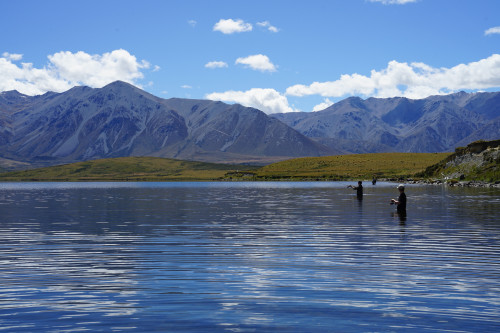
Lincoln High School Students fish Lake Heron, December 2025 - Photo Jase Van Beers Fish & Game
The Time is Now for Sea-Run Salmon
Traditionally, this time of year is when most salmon are caught. Last season across Central South Island and North Canterbury waters, 90% of all salmon harvested were caught after 1 January, with 29.5% taken in February and 26% in March. In the Waitaki River, 75% of all salmon were caught in April.
If you have finished salmon fishing for the season, or maybe you have left the region and are unlikely to return before 30 April, please remember to return the details of your salmon bag card to us. Even if you didn’t go fishing, or catch, or keep any sea-run salmon, your information is still important.
You can do this online by clicking here, give us a call on 03 615 8400, or email csi@fishandgame.org.nz or post the card to us at P.O Box 150 Temuka 7948.
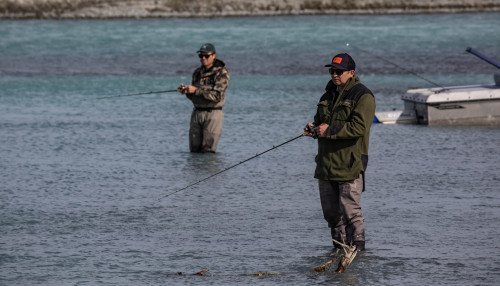
Sea-run salmon anglers
We Encourage Best-Practice Catch and Release for Sea-Run Salmon
With the sea-run salmon population in crisis and with the season bag limit of one fish in place anglers may choose to catch and release their sea-run salmon.
The catching and releasing parts are common practice and it’s the “care for the landed fish” part in between that is really important to do well to ensure a successful release. We are encouraging anglers to increase their skills and use best-practice techniques for handling salmon.
As catch and release is a new mindset and skill for many salmon anglers, we want to help you become a catch and release expert by sharing Central South Island and North Canterbury Fish & Game’s best-practice catch and release three key principles and top tips to achieve these.
Best Practice C&R for Sea-Run Salmon Three Key Principles
- Keep Salmon in the Water While Unhooking
- Wet Your Hands Before Handling Salmon
- Reduce Handling Time
Top Tips for the Best Practice C&R for Sea-Run Salmon Three Key Principles
- Use a wetted rubber net for landing salmon.
- Keep the salmon in the water while removing the hook.
- Carry easily accessible forceps/pliers to quickly remove the hook.
- Avoid squeezing it or touching the gills.
- If you need to handle the salmon, then submerge/ dunk your hands in the water for 5 seconds to completely wet, cool and clean them.
- Photograph the salmon in the water.
- If a salmon is struggling to revive, keep it as your season bag limit.
Last Chance to Give Feedback: Exploring Regulatory Changes To Increase Sea-Run Salmon Spawning
Salmon populations are at critically low levels currently requiring the Central South Island and North Canterbury Fish and Game Councils to explore further regulation options, in addition to the season bag limit, that enable a greater proportion of the run to spawn. Changes to the regulations may impact your fishing activities and your sea-run salmon fishery values, so we are seeking your feedback to support future decision making.
What is Fish & Game seeking feedback on?
Fish & Game is seeking your feedback on a variety of potential regulatory changes to the sea-run salmon fishery within the current management framework, including:
- Reducing season length
- Limiting fishing areas
- Implementing a catch-and-release fishery (0 season bag limit)
- Implementing a temporary season closure
How and when can I provide feedback?
You can provide feedback via our online survey. The survey is posted on this webpage. There has been a staged release of the survey as follows:
- 1 December 2025: A randomised subset of sea-run salmon licence holders was emailed, inviting them to complete the survey. Check your email now!
- 1 January 2026: A survey link was emailed to all sea-run salmon licence holders who did not participate in the random survey. Additionally, the survey link will be available on our website for any angler or member of the public to complete.
- 31 January 2026: The survey period closes. All submissions must be made by 11:59 pm NZDT.
For more information and to view the full information pack, visit our webpage via the links in text.
Tight Lines,
Nikki Dellaway - Central South Island Fish and Game
Disclaimer:
The information presented in these news items is based on the context and regulations in place at the time of publication. Please note that some articles may include reference to laws and regulatory standards that have since changed. For the most current and accurate information please check our Fishing Licences & Regulations pages or our Hunting Licences & Regulations pages.