Reel Life November 2025 - Hawke's Bay
- Hawkes Bay
- 20/11/2025
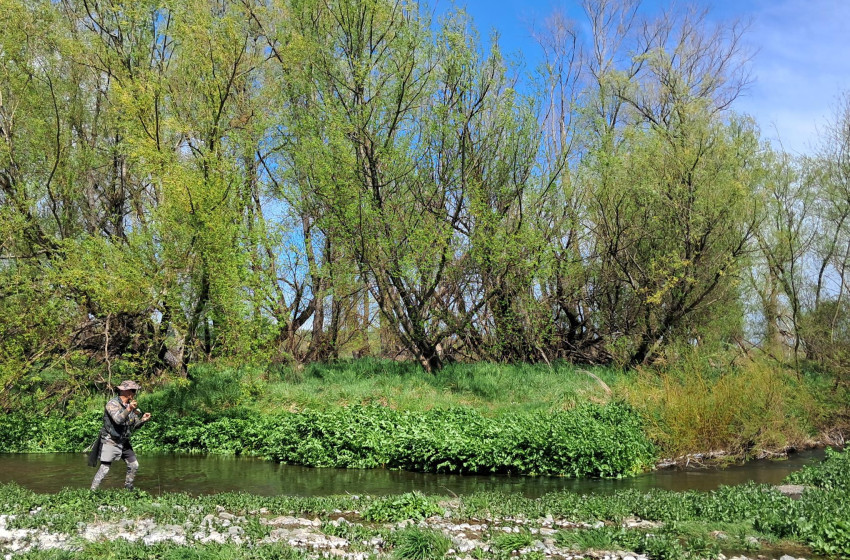
Well, it has been an interesting start to the 2025 Hawkes Bay Trout fishing season with some lovely calm, warm Hawkes Bay days, some howling westerly days and a few rainfall events thrown in to make things challenging at times. After long periods of strong westerlies, we all definitely appreciate the calmer days with a nice afternoon sea breeze when they arrive.
The strong gusty westerly winds made casting difficult at times, so it has been a case of casting between gusts and carefully extracting wayward flies form clothing at times, a good tight-fitting hat and sunglasses being a prerequisite for added protection.
A really noticeable issue has been the effect the persistent westerly winds and the large dumps of accompanying rain at times in the headwaters of our larger rivers. Many of our smaller rivers and even the tributaries of the larger rivers have avoided this rain and stayed low and clear, whilst the big rivers rising in the west have been badly effected by higher flows and dirty water, so we have had a real mixture of river conditions over the bay on any given day, where the Mohaka and Ngaruroro were high and dirty whilst many other rivers were low and clear.
There have been good numbers of fish caught and some large well conditioned trout caught; many anglers have been delighted to see the return of trout , albeit in lesser numbers to some rivers that were so badly effected by Cyclone Gabrielle in 2023. We have had reports of good fishing in the lower Tutaekuri and great fishing in the mid to lower Tukituki, Waipawa, and the Ngaruroro even when it’s been quite dirty.
Many anglers have been adapting to the conditions and have been very successful in the Ngaruroro when it has been quite high and dirty; whilst a spinner or a brightly coloured soft bait is a traditional choice, many anglers have been doing well with weighted nymphs either with some flash from a bead head, flash back or both, or alternately a dark nymph that stands out in the milky water. Such conditions really lend themselves to using an indicator, either a large buoyant dry fly or high floating dedicated indicator fished on a traditional nymphing setup or on a Czech / Euro nymphing rod. The coloured river conditions really favour Czech / Euro style nymphing, so when the river is a bit high and dirty, it may be a great time to give it a try, as the fish are less likely to see you close behind them as they might in low clear conditions. Fishing a relatively short line with a weighted fly near the edges, or some structure in the river might bring surprisingly good levels of success, as these are the places where the fish will tend to be holding and feeding in these higher water conditions.
|
|
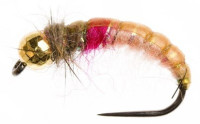
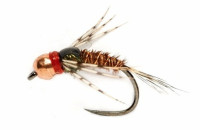
An example of a couple of Czech style flies.
|
|
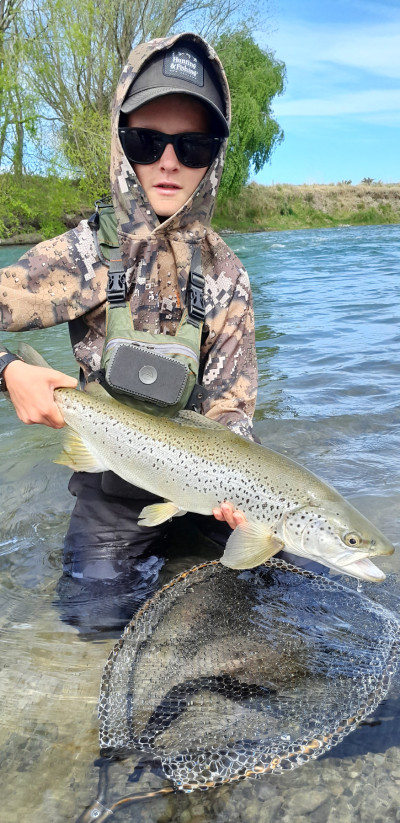
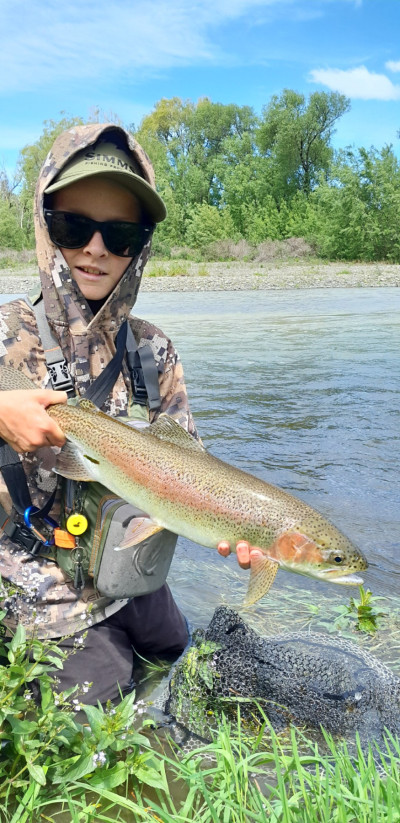
Patrick Stewart with a two nice Hawkes Bay trout – both caught euro nymphing on flies he tied himself – Photo Hayden Stewart.
Most of the smaller rivers have remained low and clear, making spotting trout easy, the downside to that is, if you can see the trout, then they can probably see you too. Some anglers have complained that the clear low conditions were making the fish unusually spooky, meaning you need to go lighter in tippet weight and to smaller more delicate flies and nymphs. In low clear conditions, fishing early or late in the day will often help as the fish will be more actively feeding and likely to drop their guard, the other thing to do is keep an eye out for is when we get some rain, often a shower or two won’t dirty the river much, but fresh water and slight increase in volume will really increase trout activity, the added advantage is any colour will make it a whole lot easier to fool a trout that may have already been caught and released this season and be extra wary.
Choice of Flies
In fast, deep and particularly broken water, more weight and a faster sink rate is generally better, whilst on low, clear, more gentle water a smaller lighter weighted nymph with correspondingly slower sink rate is better. Generally Czech style nymphs will have a large very heavy tungsten bead head and will sink very quickly; and normally land with a more noticeable splash that may frighten a wary trout. A bead headed traditional nymph may come with either tungsten bead or a brass bead but generally the bead will be proportionately smaller than a Czech style nymph and have a bulkier body, so sink rate will be slower and dependent on bead composition, nymphs without a bead will generally be slowest to sink. The same follows with soft baits and some lure flies; the heavier the head the faster they sink, a bead headed wolly bugger for example will sink faster and swim deeper than one without a bead head.
|
|
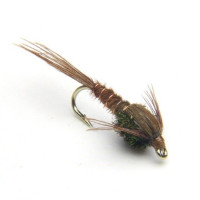
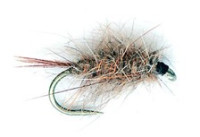
A traditional pheasant tail and hare and copper nymphs.
|
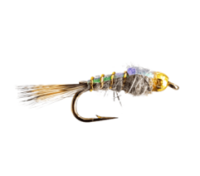
|
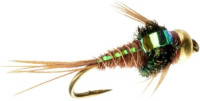
Bead headed and flash backed versions of the traditional nymphs above.
The Tukituki, Waipawa and particularly their tributaries saw lots of angling activity at the start of the season and continue to fish very well and many good sized rainbows and few nice browns have been caught,
Many backcountry rivers won’t have seen many anglers yet, so I’m sure as they clear many anglers will be heading to the high country,
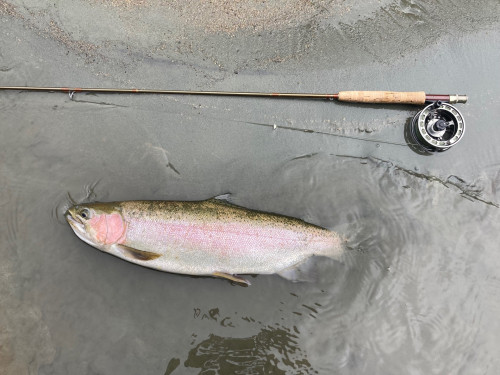
A Nice Hawkes bay rainbow – Photo John Lumsden
Low bag Limits and releasing trout.
With relatively low bag limits, and regulations that state an angler must cease fishing once the daily bag limit has been reached, anglers may find that they want to selectively harvest, meaning they need to release trout, so they can continue fishing.
All anglers need to be aware that how they handle the fish is critical to its survival after being released.
Here are our ‘Quick 5’ tips for handling fish with care:
- Always wet your hands before handling a fish and if possible, use a knotless landing net.
- Keep the fish in the water while removing the hook – a specialized hook remover or forceps readily available on your vest, will definitely help.
- Do not squeeze the fish and never touch the gills.
- If you feel you must photograph your fish, do it in or over the water and make it quick - the fish should never be out of the water for more than 5 seconds.
- Revive the fish by facing into the current long enough for it to regain its swimming strength.
In the unfortunate instance that a fish you intended to release does end up bleeding from the gills or cannot maintain itself upright, so long as you can legally take that fish, we recommend you should keep it as part of your bag limit and utilize it.
The last two winters have been really kind to the trout and its looking like there has a steady increase in trout numbers across the bay post Cyclone Gabrielle, so we look set for another great summer for the Bays trout anglers, so Grab your licence if you haven't got one already, read the regulations and make the most of the good conditions.
Illegal Fishing
If you see evidence of illegal fishing, please contact the Fish and Game team as soon as possible, if you can safely take photos and record vehicle registration numbers that will be greatly appreciated – but only if it is safe.
Illegal overfishing will quickly destroy a fishery, so we all need to work together to protect our fragile fisheries; this is more important now than ever before, after the damage Cyclone Gabrielle did to some of our rivers.
Don’t forget to take your New Season fishing Licence with you.
The favourable weather looks set to continue for our region for a while, so read the regulations and remember to carry your licence with you, and save yourself some time and hassle, because this season there is a better chance than ever, that you will get to meet the ranging team out on the river.
Disclaimer:
The information presented in these news items is based on the context and regulations in place at the time of publication. Please note that some articles may include reference to laws and regulatory standards that have since changed. For the most current and accurate information please check our Fishing Licences & Regulations pages or our Hunting Licences & Regulations pages.