Reel Life September 2025 - Hawke's Bay
- Hawkes Bay
- 19/09/2025
With many of our smaller rivers and the tributaries of our larger rivers due to open for trout fishing on 1 October, the countdown is well and truly on, for what promises to be another great Hawkes Bay Trout Fishing season. The 2025/26 open trout fishing season follows on from one of the most stable winter spawning seasons we have had for many years. The summer season last year was quite outstanding not only for the stable weather conditions and high number of fishable days, but for the size, condition and number of trout caught in many rivers. The incredible run of relatively settled weather has providing great growth conditions for the juvenile trout, so we expect to see some great conditioned 2 and 3 year old trout coming through this season, they may not have the weight of some of the older fish, but they make up for it with explosive jumps and raw speed that will break tippets and straighten hooks with ease, giving your angling companions a chuckle or two at your expense, if you aren’t 100% on your game.
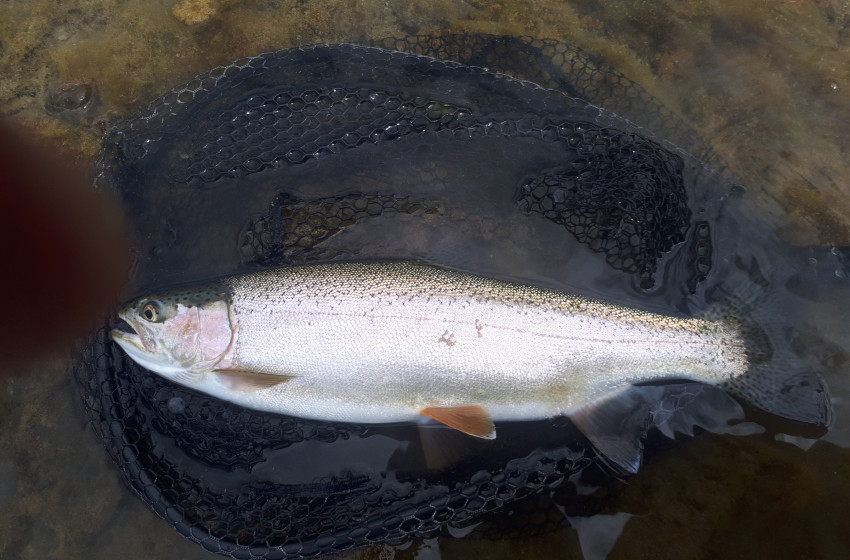
Photo above - A great conditioned young rainbow Photo Glenn Morgan
The Tukituki and Waipawa systems really stood out last season and we expect they will provide great fishing again this season too. The number of 2- 3kg rainbows in superb condition caught last season was truly amazing, our team saw photos of a keen junior angler releasing two rainbow jacks of 6 and 6 1/2 pound caught the same day from the same run there recently.
Our winter spawning counts in spawning streams showed very good numbers of trout of high average size, so, expect the great fishing with good numbers and some very large trout to continue. We expect the main stems and the tributaries of the Tukituki and Waipawa to provide great early season nymph and dry fly fishing.
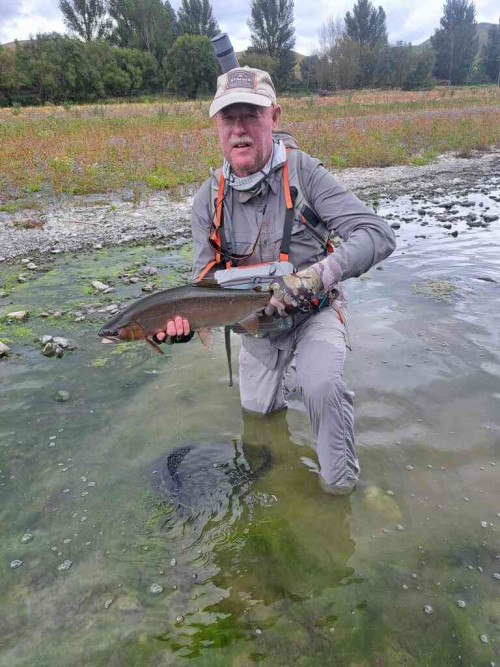
Colin Rose with a nice Tukituki Rainbow
The Mohaka around Glenfalls should provide some great fishing with lots of 2- and 3-year-old fish providing opportunities for anglers of all abilities. Many anglers reported high numbers of young trout in the 20 to 30 cm range around Glenfalls last summer, with one angler catching 41 trout in one session. The high numbers of 1and 2 year old fish last summer, augers well for the coming season, when these fish should be the 1- 2 kg range, whilst there may not the same high numbers of older mature fish in this area as there was pre Cyclone Gabrielle, we expect these young fit fish will really help this area to fire in the coming season. We look forward to the mid reaches of Mohaka continuing to improve after the drop in mature trout numbers because of Cyclone Gabrielle.
The Ngaruroro fished well last season, and with a gentle winter and autumn so far, we expect this theme to continue and strengthen through the coming season. We did note high concentrations of spawning activity in high country tributaries into late August, we realize many anglers target tributaries and upper river areas early in the season, so we would like to remind anglers fishing these incredibly important nursery areas early in the season, to avoid walking over any obvious redds and to be aware that trout may not be in the greatest condition for eating, as they recover from spawning. Most of these tributaries and upper river areas only have a 1 fish limit, so if you want a fish to take home, the mid and lower reaches of our larger rivers may be a better option, targeting younger fish or the mature trout that have dropped back earlier from spawning areas and have had a better chance of recovering, will provide a better fish for the table, than a dark, skinny fish that has just spawned.
One outstanding aspect of the 2024/ 25 season was the number of magnificent brown trout caught over several rivers, with quite a few being recorded over the magic old fashioned 10 Pound mark; these were complimented by some great rainbows over 3 kg too. Just remember that some areas have a maximum size limit of 550mm so any trout over that size cannot be taken and that these big fish are easily injured if they aren’t handled very carefully prior to release.
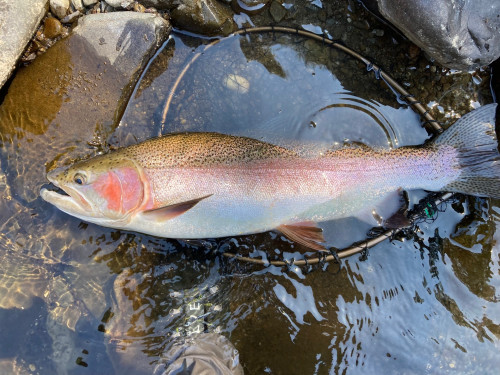
A 3.3 kg HB rainbow . photo John Lumsden
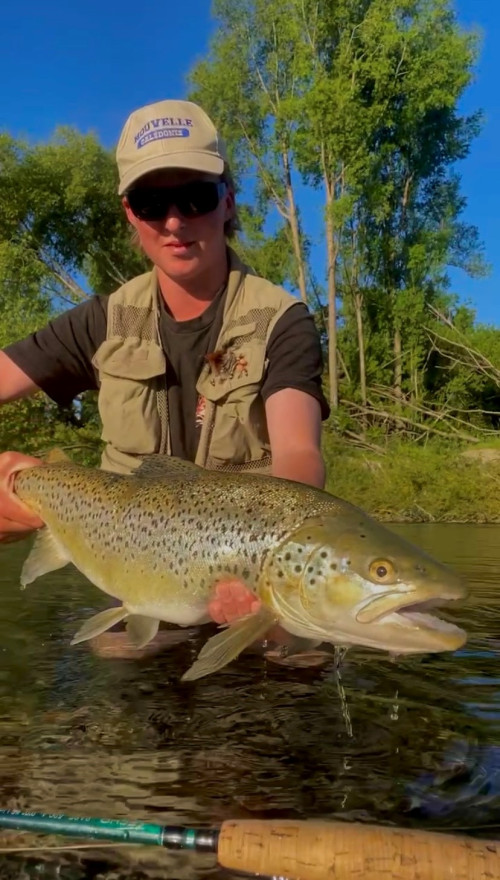
Ned Beard with a great Tukituki Brownie
We expect that the coming season will continue the themes of last season, with the Tukituki, Waipawa, Ngaruroro and Mohaka rivers recovering well post Cyclone Gabrielle, and suggest that if you are wanting to harvest a trout to take home, that you head for the Tukituki, Waipawa, mid to lower Ngaruroro or mid reaches of the Mohaka. We expect the smaller rivers like the Tutaekuri, Mangaone, Esk and Waikoau will take a little longer to fully recover, but will offer opportunities to the selective angler, we encourage anglers fishing these rivers to limit their harvest and treat any trout they release with utmost care. We have also released some more yearling rainbow trout into lake Hawkston, which will provide opportunity when the rivers are dirty – please contact the landowner for access.
Suggested methods
If the rivers are high and coloured, a spinner or brighter soft bait maybe the most successful, the same would apply to fly choices, a brightly coloured fly or a nymph with a bead head and some flash maybe more successful in coloured water. For those fishing a dry fly; mayfly or caddis patterns would be the logical starting point with the likes of an Adams, Kakahi Queen or Elk hair caddis being likely candidates. For nymphs pheasant tail, hare and copper and caddis patterns with a bead head or flashback depending on river conditions should be a good starting option, remembering that the ideal size of fly will vary from one river to another.
Selective Harvest and Releasing Fish
Most anglers like to take the occasional trout home for dinner, ideally it’s a nice fat maiden fish and killed within the daily bag limit regulations for that river, which means with such selective harvesting, many anglers are letting other trout go - the juveniles, the fish that haven’t fully recovered post spawning and the big mature spawners that we want to go on to spawn and possibly be caught by another angler.
To be selective with our harvesting, it is vitally important for our fisheries and social license that the fish we don’t choose to harvest survive. If the fish is hooked in the gills and likely to die, if legal, please harvest it and take it home, remembering that when you have killed your limit, you must cease fishing.
As the rivers drop and warm up, the chance of released fish dying increases, getting the fish to the bank, unhooked and back in the river facing into gentle current as soon as possible will maximise the chances of survival. Gently support the fish until it regains its strength and wants to swim away; whatever you do don’t drag it out of the water onto the hot stones or handle it with dry hands!
If you feel you must take a photo of that extra big fish, ideally do it with the fish in the water or if you must lift it out of the water, remember it should be out of the water for a maximum of 5 seconds – that’s 1 quick photo and let it go.
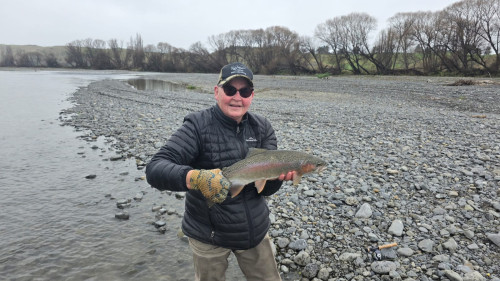
Dame Linda Topp with a nice Waipawa River rainbow. Photo Dave Hern
Fishing Regulations Changes for the 2025/ 26 Season.
The big news this season are there is no increase in cost for any Hawkes Bay Trout Fishing Licence and the changes to the family licence. These changes to the family Licence mean both adults will now receive their own individual named licence cards, have equal fishing rights and can now fish independently. To qualify, at least one qualifying child or grandchild must be named on the licence, these children or grandchildren will need to be accompanied by at least one of the licenced adults when they are fishing though. The aim is to maximise participation and encourage the introduction of young people to trout fishing.
The Council has not made any changes to the season conditions, the council made changes for last season aimed at maximising opportunity, whilst continuing a cautious approach to number of trout harvested on our rivers, as we recover from Cyclone Gabrielle. We were pleased to be able to relax some limits in the 2024/25 season, where the daily bag limit increased from 1 to 2 for some specific stretches. This 2 fish limit only applies to the main stems of the Karamu Stream, the Waipawa and Tukituki downstream of Highway 50, Ngaruroro downstream from the Kiwi Creek confluence, Mohaka downstream from the Mangatainoka confluence, and the main stem of the Waipunga, while the 1 fish limit still applies to all their tributaries and all other rivers. With these bag limits, some anglers may wish to practise selective harvest, anglers are also reminded that once they have taken their daily bag limit, they must stop fishing.
We urge all anglers to buy a license, check the regulations, and continue to enjoy the great fishing Hawkes Bay has to offer and remember to carry their license when they are out fishing. We look forward to seeing you on a river sometime this season.
Junior Fin & Feather Club – Term 4 Changes
We are absolutely delighted with the growing enthusiasm and participation of our juniors at our Monday afternoon sessions – it’s fantastic to see so many keen young anglers getting involved! With this growth, we’re making some adjustments to ensure everyone gets the most out of the program while staying within our resources.
From Term 4, our program will look like this:
All members will be graded to a three-tier system based on their abilities - novice, intermediate & advanced.
Monday Afternoons – Junior Fin & Feathers Course – 8 weeks Limited to 15 novice juniors per term. No charge.
- 3:30 – 4:00pm: Skills & knowledge workshop. Topics will include Spin & Fly fishing, Clay shoot, Firearms education, Spin Fishing, Fly Fishing, and river safety. More details TBC
- 4:00 – 5:00pm: Fishing on the ponds
- Register online here: https://forms.office.com/r/CC1tbgur3g
When the beginner’s course has been completed this qualifies you for:
Once a month catch ups, day TBC
- Open to all members who have completed the beginners course or have achieved intermediate & advanced status.
- We’ll be organising special trips to local rivers and fun activities such as clay bird shoots etc.
School Holidays
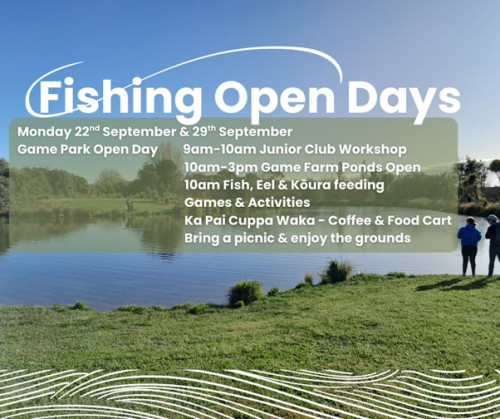
- Open Days once a week during school term holidays
- Open Days once a fortnight over the summer break (excluding Christmas/New Year period)
New Fresh Water Fishing Mentorship Program
- Advanced juniors can sign up to mentor novice anglers in spin or fly fishing.
- We will assess and certify potential mentors prior to starting.
- The mentors will be able to assist the novice programs, friends or family members who wish to learn more about trout fishing with our support.
- More details coming soon…
We’re so proud of the energy, passion, and commitment of our juniors. These changes are designed to make sure everyone is supported, challenged, and enjoying the very best experience possible.
Thank you for being part of the Fin & Feather Club – together, we’re building something really special.
Disclaimer:
The information presented in these news items is based on the context and regulations in place at the time of publication. Please note that some articles may include reference to laws and regulatory standards that have since changed. For the most current and accurate information please check our Fishing Licences & Regulations pages or our Hunting Licences & Regulations pages.