Otago Weekly Fishing Report - 15 January 2026
- 15/01/2026
Youth trust outing lands new personal best
This week Otago Fish & Game staff helped the Cromwell Youth Trust for a few hours of fishing.
The trust was also the first group this season to help us do native planting at Bendigo Wildlife Management Reserve back in spring. A keen group of 12 young anglers and four supervisors gathered at the edge of Lake Dunstan mid-morning on Wednesday, ranging from complete novices to more experienced fishers.
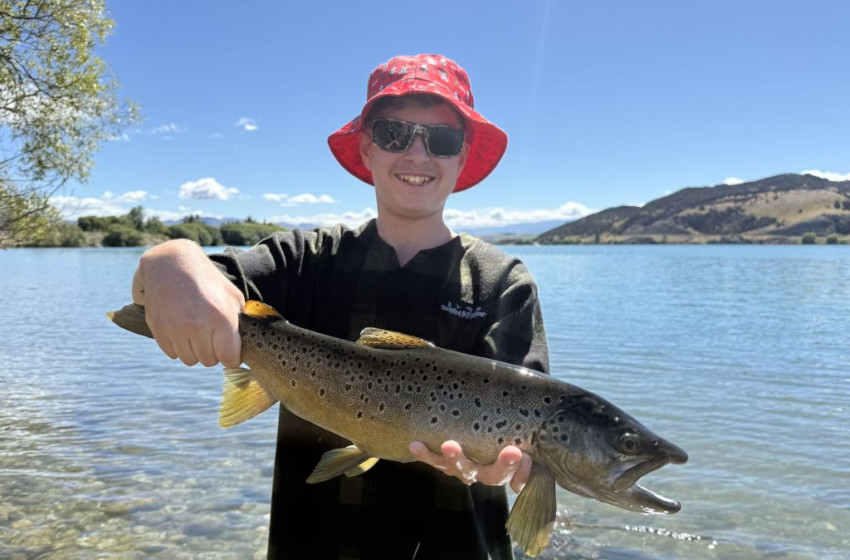
Octavier Neal (aged 15) with his second-ever trout, a lovely 4lb brown, caught fishing from the shore on Lake Dunstan. Photo: Mason Court.
After a casting demonstration and some tips from staff, the group headed out onto the water. Novice angler Eden landed the first fish, a 38cm perch on a black-and-gold Toby. The next catch was a 4lb brown trout, taken by Octavier on a traffic-light Toby. He had chosen a lighter lure with a single hook after his Tasmanian Devil, fitted with a treble hook, proved too heavy and kept getting caught in the weed along the lake edge. This was his second-ever trout and a new personal best.
The fish were iced for the table, and the group enjoyed a fantastic day, continuing to fish for several more hours in the afternoon.
Excellent compliance
Thank you to all the compliant anglers we’ve met this week.
Fish & Game has been ranging on and around the large Central lakes and recorded 100% compliance. Almost everyone was carrying their plastic licence card. If they didn’t have their card, they provided photo ID and the receipt. This made checks quick and easy, especially as afternoon winds picked up.
Anglers reported challenging fishing, with discoloured water leading to fewer bites. In these conditions, switching to black or other dark-coloured lures can be more effective than bright patterns, as they create a stronger silhouette.
A timely reminder when fishing lead line: keep steady pressure on the fish. Rangers watched an unlucky angler lose a solid rainbow at the boat after slack line allowed it to duck under the hull and jump on the far side — working the hook free (which explains the lack of a grinning photo for this section).
Clutha salmon
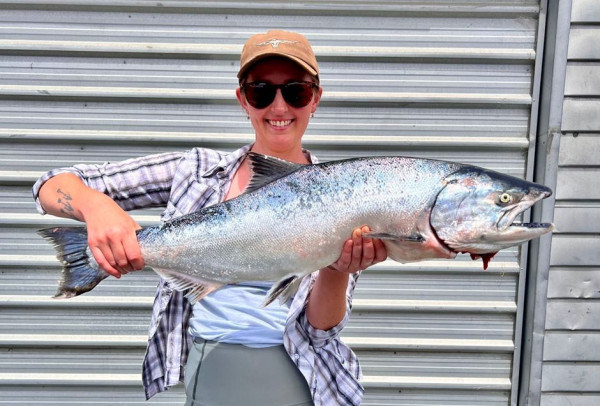
Megan Findlay with a 13lb Clutha sea-run salmon caught on light trout soft-baiting gear on the lower Clutha River. Photo supplied.
Megan Findlay recently achieved what has unfortunately become a very rare occurrence, landing a salmon in the Clutha / Mata-Au River. Making the capture even more remarkable, the fish was fin-clipped and taken on light trout gear using a soft-bait.
Hatcheries clip the adipose fin, the small fleshy fin just in front of the tail on a salmon’s back, to help monitor the size and number of returning fish. As there is currently no recreational salmon hatchery operating on the Clutha / Mata-Au, this fish most likely originated from a hatchery on the lower Waitaki or lower Rangitata rivers. A commercial salmon hatchery at Inch Clutha which supplies salmon farms does not release salmon for recreational fishing – we’re pretty sure it didn’t come from there.
If you are lucky enough to catch a salmon on the lower Clutha, we would love to hear from you. Please send through photos. Phone us on (03) 477 9076 or email otago@fishandgame.org.nz. If you retain the fish, keep the head in your freezer and contact us to arrange collection. A small bone at the base of the brain, known as the otolith, can be analysed to identify where the salmon was born, helping us better understand movements and protect those crucial habitats.
Knot sense
Fish & Game staff and rangers are often asked what the best knot is — whether it’s for tying on a lure, creating a loop for soft baits or flies, or joining braid to a leader.
There are many knots anglers can use, but the following are simple, reliable and widely used, making them a great starting point for most anglers.
Improved Albright Knot – Braid to Leader
The Improved Albright Knot is commonly used to join braided mainline to a mono or fluorocarbon leader. It is strong, compact, and passes smoothly through rod guides.
YouTube: https://www.youtube.com/watch?v=kbbYRAovo6o
Improved Clinch Knot – Hooks and Lures
The Improved Clinch Knot is one of the most common fishing knots. It is easy to tie and suitable for attaching hooks, lures, swivels, and flies.
YouTube: https://www.youtube.com/watch?v=2YO7JWNdVC0
Lefty’s Loop – Adding Movement
Lefty’s Loop creates a free-swinging loop that allows lures, spinners, soft baits, and flies to move more naturally in the water.
YouTube: https://www.youtube.com/watch?v=43ZO8n4J1HQ
Quick Tips
- Always wet knots before tightening. It reduces risk of knot damaging due to heat friction.
- Pull knots tight slowly and evenly.
- Always test your knots (when using braid be careful to use clothes or a towel to avoid the braid cutting you).
- Practise tying knots before heading out fishing. (The old saying “If you don’t know knots, tie lots” is true.)
Log watch
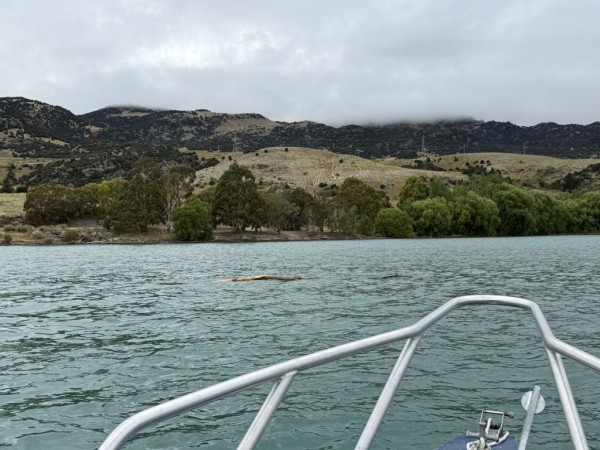
One of many large logs on Lake Dunstan during a creel survey on Thursday. Credit: Mason Court.
With recent rainfall and more rain forecast, a lot of debris has built up in the lakes.
Fish & Game rangers doing licence checks on Tuesday saw large numbers of branches and sizeable logs, particularly around the Dingle River mouth. Lake Dunstan is no exception, with multiple large logs sighted in the middle of the lake during a creel survey on Thursday morning, posing a serious hazard to boaties. Combined with slightly discoloured water, this debris can be difficult to see and avoid. Anglers and boaties are urged to take extra care, as some logs are up to four metres long and could cause significant damage to boats.
Mopping up the sushi train
This season has thrown up more windy days than anglers could care to count. You can sit at home and sulk or turn wind to your advantage.
On many lakes and reservoirs, wind often creates lanes — visible streaks of calmer-looking water where foam and debris collect. These foamy lanes are like sushi trains carrying beetles, hoppers, and cicadas blown off the land.
If you are in a boat or can reach a lane from the shore, target these lines. Trout will often cruise just below the surface, mopping up food. They generally feed upwind, so if you see a rise, quickly cast a few metres upwind of it because the fish will have already moved.
Wind-blown shores
Food for trout often accumulates where a steady wind blows onto shore.
The waves on the windward shore break up the surface making it harder for trout to see you. This makes them less spooky and more willing to strike lures and streamers. If you look closely, sometimes trout can be seen cruising through the face of waves.
Cast into the wind or along the shore. Use slightly heavier lures (weighted streamers, spinners or jig heads) to cut through the wind. When fly fishing, shorten your leader and use a heavier tippet.
Mixing and upwelling
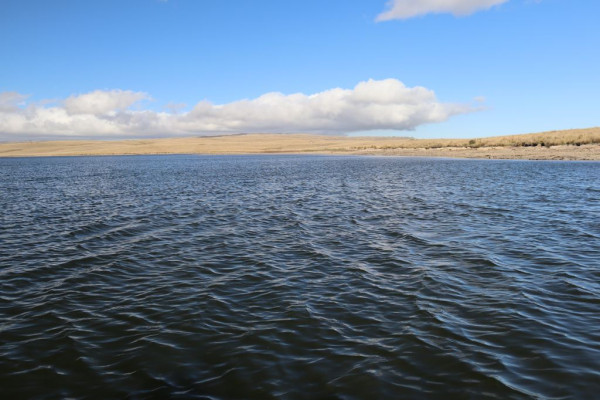
In hot and windy conditions, the surface water temperature can be cooler towards the windward shore because of an upwelling effect. Photo: Bruce Quirey
Wind acts as a mechanical engineer that moves water, and its effect on surface temperature is a result of two physical processes: vertical mixing and upwelling.
In lakes and reservoirs, water often sits in layers (stratification) because warm water is less dense and floats on top of colder water. Wind disrupts the balance.
Waves stir the water like a spoon in your coffee cup. Wind pushes warm surface water down and pulls cold water up, mixing the warm surface with cold water below, causing a quick drop in surface temperature.
But wind doesn’t just stir the water locally; in smaller lakes it pushes the entire top layer of warm water to one side.
As wind blows steadily in one direction, it pushes the warm surface layer towards the downwind shore. To fill the gap, cold water is pulled to the surface at the windward shore. You can end up with a lake that is significantly colder on one shore than the other.
Fishing the upwind shore on hot days
Trout are sensitive to water temperature. Their ideal range for feeding is between 10 and 16 deg C. In the peak of summer, surface water in small lakes can become too warm (above 19 deg C) causing trout to become lethargic or go deep.
On days like these, look for the shore where the wind is blowing away from the land, because it will be cooler. Trout can feed in surprisingly shallow water if it is cool enough.
The upwelling effect also brings up plankton and nutrients from the bottom. Small baitfish feed on plankton, and trout prey on baitfish.
Tanin stained tributaries
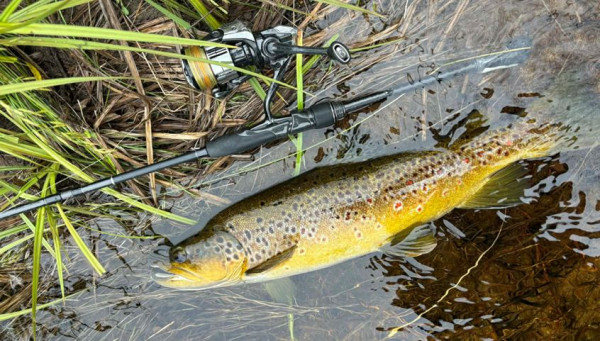
A beautifully coloured brown trout caught by Hadlee Edmunds from one of the tannin-stained lower Taieri tributaries. Photo: Supplied.
Often overlooked, the tributaries of the lower Taieri can provide excellent fishing on their day. These include Deep Stream, Lee Stream, Sutton Stream, and Waipori River.
These rivers are typically harder to see into compared to the clear rivers of Central Otago, with tannin staining the water. Despite this, they offer superb fishing for both fly and spin anglers. Late January and February are especially popular as fish begin to focus on terrestrial prey, such as cicadas.Dark-coloured soft baits and small spinners are effective for blind fishing in the darker pools and runs. Fly anglers often have success with gold bead pheasant tail flies in size 12 or olive woolly buggers.
To explore access points for the Taieri River and its tributaries, refer to the Otago Access Map: Click here
Don't forget to enter ReWild Snap & Share: the Fish & Game licence photo competition

The winning shot from November.
We’re loving seeing the entries coming in so far! Whether you’re heading out this week or already have some great summer photos, don’t forget to snap a pic or two – you could win a fantastic prize.
Whether it’s a memorable catch, a quiet sunrise on the water, your kid’s first cast, a laugh with friends, or a perfect solo day out – we want to see the moments that make fishing special for you.
Here’s what’s up for grabs:
- $250 Kilwell voucher EVERY month from November through February
- Grand Prize: Your winning photo featured on next season’s fishing licence PLUS a $1,000 Kilwell voucher!
Fish & Game would like to thank Kilwell for their continued support of the ReWild Photo Competition. Please read the full terms and conditions to ensure your photo complies with the competition rules.
Club updates
If your Otago club has an update or photo for inclusion in the Weekly Fishing Report, please email bquirey@fishandgame.org.nz by the Monday prior to publication on Thursday.

Members of the Wakatipu Anglers Club in good spirit after a presentation from Otago Fish & Game staff member Mason Court about the upcoming Anglers Notice and data from the Designated Waters survey. Photo: Mason Court.
Don’t forget your licence
Get your licence online or visit a local agent.
Click the link for a list of the agents in Otago where you can buy a licence.
Event calendar
Click here for upcoming fishing events throughout New Zealand.
Lake Hāwea webcam

A screengrab of the Lake Hāwea webcam taken at the time of writing.
A real-time webcam at Lake Hāwea is provided by Snowgrass Solutions and Contact Energy and can be accessed through their website or directly via this link.
Please note conditions at the southern end of the lake (near the dam) may not always reflect those north of The Neck. Weather can change quickly, so be prepared.
Clyde Dam live webcam
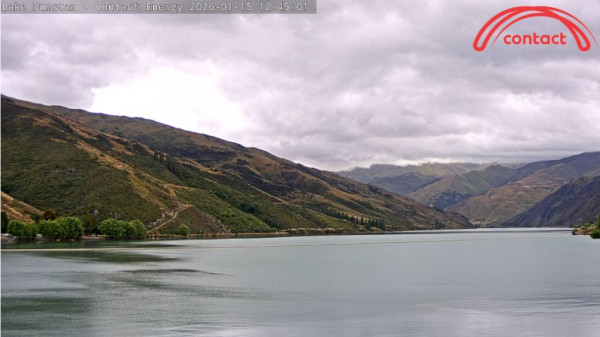
A screengrab of the Clyde Dam webcam taken at the time of writing.
Want to know conditions at Clyde Dam? Check this live webcam sponsored by Contact Energy updated every 15 minutes.
Lake Wānaka live webcam
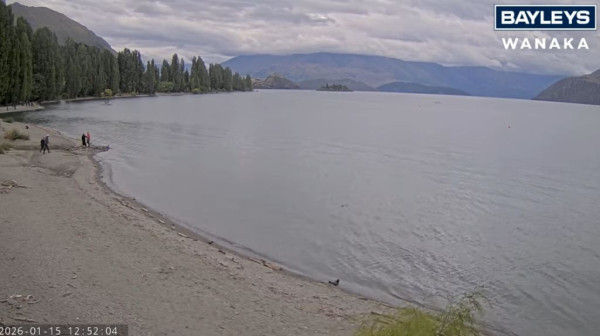
A screengrab of the Lake Wānaka webcam taken at the time of writing.
Want to know conditions at Lake Wānaka? Check this live webcam from the Wānaka Watersports Facility.
Bookmark the ORC Environmental Data Portal for real-time flows, temperature, and lake levels.
Here’s the weekend outlook:
Dunedin
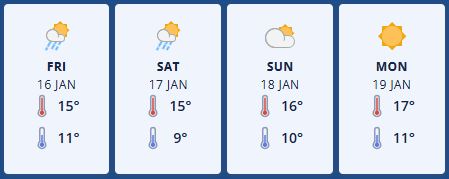
Sunday is shaping up to be the best day for fishing around Dunedin this weekend, with overcast conditions clearing and light easterly winds providing ideal angling weather. Rain and southerlies on Friday and Saturday will help keep river water temperatures at optimal levels, though it will feel chilly, with air temperatures only reaching the mid-teens.
The Taieri River at Outram was at 6.75 cumecs this morning. The water temperature was 16 degrees C.
Click here for live MetService weather updates
Wānaka
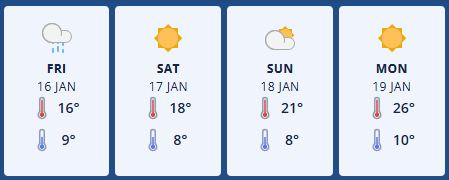
Similar to last week, Friday is expected to be wet before clearing on Saturday, with air temperatures remaining low and light southeasterly winds. Sunday looks to be the pick of the weekend, with temperatures climbing into the twenties, clear skies in the early morning, and light winds — ideal conditions for heading out on the lakes or fishing rivers that are clearing after Friday’s rain.
Click here for live MetService weather updates.
Alexandra
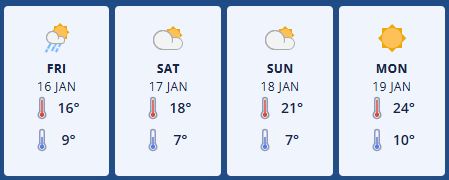
Light rain on Saturday and Sunday should leave rivers and reservoirs around Alexandra in excellent condition for angling come Sunday. Cloud is forecast to clear on Sunday and remain minimal through Monday evening, with light winds creating ideal conditions for heading out to the large reservoirs to sight fish along the edges or to explore the local rivers.
Click here for live MetService weather updates.
Clutha Regional Forecast
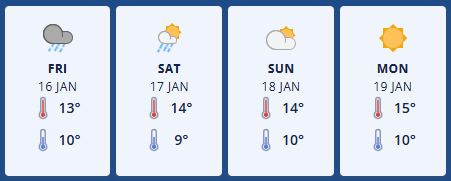
It’s a wet start to the weekend for the lower Clutha, with rain showers expected Friday and Saturday morning before clearing in the afternoons. If you’re heading out, don’t forget to pack an extra layer, as brisk southerly winds are forecast. Sunday is expected to be overcast with light winds, though easterlies may develop in the late afternoon. Anglers should take care on the lower Clutha River, as recent rain in the headwaters has pushed flows back over 1,000 cumecs.
The Pomahaka River at Burkes Ford was at 5 cumecs
The lower Clutha River at Balclutha was 1010 cumecs.
Click here for live MetService weather updates.
For more ORC water monitoring and alerts information click here.
Grab your licence online and let the angling adventures begin.
Got any Otago fishing news?
Send your fishing news and photos (with anglers’ names) to otago@fishandgame.org.nz for consideration in the weekly report.
Disclaimer:
The information presented in these news items is based on the context and regulations in place at the time of publication. Please note that some articles may include reference to laws and regulatory standards that have since changed. For the most current and accurate information please check our Fishing Licences & Regulations pages or our Hunting Licences & Regulations pages.