South Island season survey shows game bird hunting remains popular
- 8/04/2026
- Maggie Tait
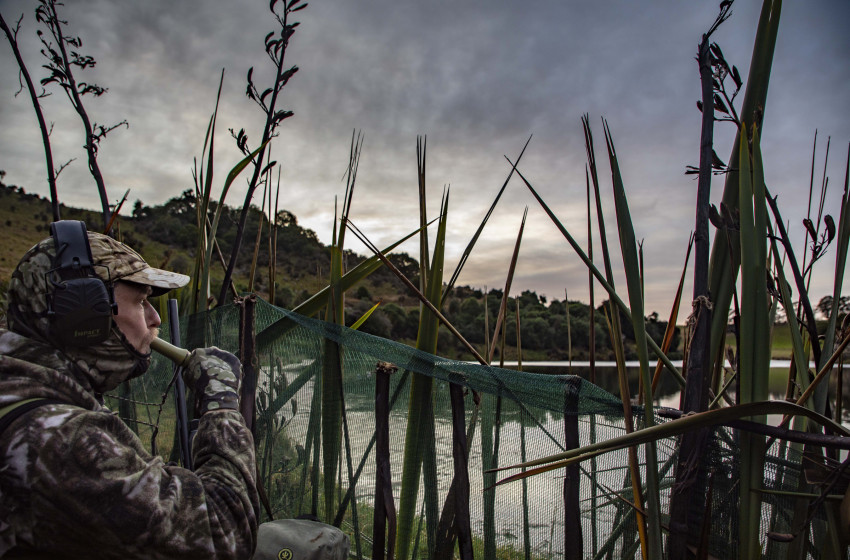
Hunters across the South Island spent more than 49,000 days in the field during the 2025 game bird season, according to Fish & Game’s latest Hunter Harvest Report.
Overall, the amount of hunting activity was similar to the 2024 season, and the distribution across regions remained largely consistent with long-term averages. While there has been a slight decline in hunter days since 2015, activity remains strong. The long-term average is 54,018 hunter days.
Opening weekend for ducks remained a key driver of hunting activity, accounting for 43 per cent of total hunter days across the South Island.
Hybrid Grey Ducks/Pārera and Mallards/Rakiraki (Grey-Mallards) dominated the harvest at over 254,000 birds. Paradise Shelducks/Pūtangitangi were the next most harvested species at almost 60,000.
Hunting and Fishing Minister James Meager said he was pleased to see Kiwis are continuing to participate in game-bird season.
"Game bird hunting is part of our national identity. It goes beyond recreation, through highlighting sustainable measures to harvest food, teaching the next generation important skills and maintaining connections to New Zealand’s important outdoor heritage.
“My priority is to make it as simple as possible for Kiwis to go hunting and fishing in New Zealand. I saw people from all walks of life come together to do just that, when I participated in the 2025 opening season, and look forward to doing so again in a few weeks’ time.”
Richie Cosgrove, Fish & Game New Zealand chief operating officer, said overall participation in game-bird hunting remained steady.
“Opening weekend in particular shows how important this season is for New Zealanders from all walks of life.
“It’s not just about hunting, it’s about getting outdoors, reconnecting with nature, and spending time with family and friends.
“Hunting continues to play an important role in putting sustainable, locally sourced food on the table for families. For many hunters, this is about more than recreation. It’s about harvesting your own kai, understanding where your food comes from and sharing that with others.”
Compared to 2024, the Grey-Mallard harvest increased by 27 per cent, while Paradise Shelduck harvest rose by four per cent.
The Australasian Shoveler/Kuruwhengi harvest declined by 34 per cent to 1,576 birds. Similarly, Black Swan/Kakīānau harvest declined by 30 per cent to 3,778, and Pūkeko numbers dropped by 43 per cent to 1,411.
Fish & Game has conducted a coordinated telephone harvest survey of full-season game bird licence holders since the 1993 season. Data from individual surveys is extrapolated to estimate total birds harvested and total hunter days, providing a robust estimate of harvest levels and hunting activity nationwide.
This is the third annual report presenting South Island hunter harvest and activity estimates, with results compiled at both regional and island-wide levels.
Regional summary
Southland
Southland recorded the highest Grey-Mallard harvest at 49 per cent of the South Island total. Hunters spent an estimated 19,083 days in the region, an increase of about four per cent on the 2024 season. The long-term average is 21,509 hunter days, with opening weekend accounting for 43 per cent of activity.
Hunters from Southland made up 76 per cent of total hunter days in the region, with nearly 20 per cent of hunter activity coming from Otago.
Otago
Otago recorded 11,045 hunter days, an eight per cent increase on 2024, and close to the long-term average of 11,173. The region accounted for 31 per cent of the Paradise Shelduck harvest and 25 per cent of the Black Swan harvest across the South Island. Opening weekend contributed 50 per cent of total hunter days.
Otago hunters made up 86 per cent of activity in the region, with smaller contributions from Central South Island, Southland, North Canterbury, and Nelson/Marlborough. Otago hunters also travelled widely, accounting for 19 per cent of hunter days in Southland and 11 per cent on the West Coast.
Central South Island
Hunters spent 7,842 days in the Central South Island, a decrease of about four per cent on 2024 and below the long-term average of 8,305. The region accounted for 29 per cent of the Black Swan harvest and 24 percent of the Paradise Shelduck harvest across the South Island. Opening weekend made up 50 per cent of activity.
Local hunters contributed 76 per cent of activity, with most of the remainder coming from North Canterbury and Otago.
North Canterbury
North Canterbury recorded 7,271 hunter days, down about three per cent on 2024, with a long-term average of 7,579. The region had the highest Australasian Shoveler harvest at 39 per cent of the South Island total. Opening weekend accounted for 28 per cent of activity.
Hunters from North Canterbury made up 89 per cent of activity in the region and were also significant contributors elsewhere, particularly on the West Coast and in the Central South Island.
Nelson/Marlborough
Hunter days totalled 2,392, a decrease of about 29 per cent on 2024 and below the long-term average of 3,455. The region accounted for 28 per cent of the Pūkeko harvest and 22 per cent of Black Swan harvest across the South Island. Opening weekend contributed 40 per cent of activity.
Local hunters made up 94 per cent of activity, with smaller numbers travelling from neighbouring regions.
West Coast
Hunters spent 1,452 days in the region, down about 25 per cent on 2024 and below the long-term average of 1,996. The West Coast accounted for 60 per cent of total South Island Pūkeko harvest. Opening weekend contributed 43 per cent of activity.
Just over half of hunter days were from local hunters, while 30 per cent of hunter activity was attributed to hunters from North Canterbury.
Disclaimer:
The information presented in these news items is based on the context and regulations in place at the time of publication. Please note that some articles may include reference to laws and regulatory standards that have since changed. For the most current and accurate information please check our Fishing Licences & Regulations pages or our Hunting Licences & Regulations pages.